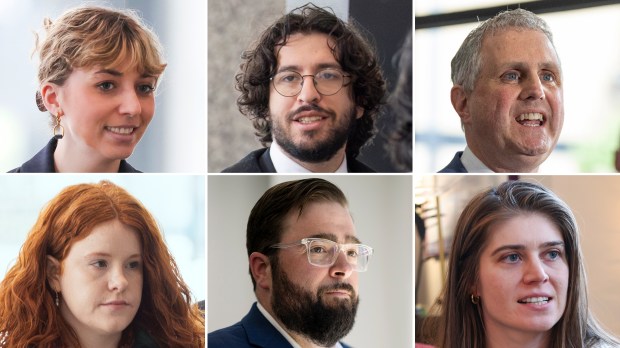
Background of the Broadview Six Indictment
On the afternoon of October 23, 2025, as Operation Midway Blitz impacted Chicago, a federal grand jury convened to determine if charges should be brought against six individuals accused of conspiring to obstruct an immigration officer outside the ICE facility in Broadview. From the onset, the grand jury sessions were contentious. No injuries resulted from the protest, which led to some members opposing felony charges, as revealed by the proceedings’ records.
In the first session, the jury rejected the charges. During a later session, a juror criticized the case and was excused. As others followed suit, the voting had to be halted. Despite these challenges, U.S. Attorney Andrew Boutros urged jurors to objectively apply the law. Difficulties persisted because the alleged conspiracy did not seem cohesive, and not all protesters interacted with the officer’s vehicle.
Assistant U.S. Attorney Sheri Mecklenburg acknowledged the complexities. Nevertheless, on that day, the grand jury filed an indictment against six activists, later dubbed the “Broadview Six.” Todd Blanche, then the Deputy U.S. Attorney General, heralded the charges as a necessary defense of law, although a year later, attention shifted to the law enforcement officials’ conduct.
Developments and Judicial Review
All charges were dismissed in May, due to claims of grand jury misconduct by Mecklenburg, but the case continues to affect proceedings in the Dirksen U.S. Courthouse. U.S. District Judge April Perry is examining potential justice obstruction by others in the office, considering sanctions or even appointing a special counsel.
Judge Perry demanded records of any communications indicating U.S. Justice Department involvement, which Boutros’ office denies. Perry also requested metadata related to a transcript sent to Boutros after the initial grand jury session. She left open the possibility of Boutros and his team testifying under oath.
The Experience of the Broadview Six
For the indicted, like Michael Rabbitt and Brian Straw, the year was tumultuous. They faced potential prison sentences and defamation but emerged as champions against immigration policies. Rabbitt emphasized the government’s failure to silence dissent. Several anniversaries of key events stirred reflection on past challenges.
Both Rabbitt and Straw were blindsided by the charges. Rabbitt was vacationing in Spain when notified by the FBI, initially dismissing it as a prank. Upon realization, he sought legal counsel. Straw, contacted at work, struggled to comprehend the FBI’s message, initially suspecting a scam.
Media and Political Impact
The indictment, revealed a week later, charged the defendants with obstructing an ICE agent’s vehicle. The U.S. attorney’s office, on October 29, detailed the alleged conspiracy, stating the activists impaired the agent’s movement by surrounding and hitting the vehicle. The statement warned that protestors crossing legal boundaries would face consequences.
Defendants’ attorneys argued the charges were politically motivated, pressured by the Trump administration to use the case as an example. Boutros denied political influence, but the defense’s call for disclosure of interdepartmental communications centered on Blanche’s interest raised suspicion.
Judicial and Public Reactions
Beyond the dismissed grand jury charges, Judge Perry focuses on potential non-disclosure or inaccuracies presented to her by Boutros’ office. She underscores that whether the misconduct was deliberate or to cover embarrassment is immaterial.
The fallout from this controversial prosecution affects other unrelated cases, with dropped charges and plea deals, as seen in a high-profile COVID-19 fraud case. Boutros, having implemented new grand jury reforms, faces trust issues among judges, including U.S. District Judge Sharon Johnson Coleman.
Personal Consequences
Both Straw and Rabbitt experienced significant personal impacts. Straw’s family endured threats, affecting his children’s well-being. Open communication helped them manage the ordeal. Rabbitt faced family trauma linked to his father’s past federal indictment.
For both, the case transcends personal implications, posing broader questions about protestor rights and First Amendment freedoms. They view Judge Perry’s investigation as a positive step toward resolving these issues.
While the outcome remains uncertain, Rabbitt and Straw remain hopeful for resolution. Their narrative, punctuated by ongoing anniversaries, fuels ongoing advocacy against suppressive enforcement actions.
 Debating Data Centers: A Political and Community Issue
 Maine’s Senate Race: A Close Look at Collins vs. Jackson
 Challenges for GOP as Working-Class Voters Show Signs of Shifting
 Vance Chooses Focus on U.S. Midterms Over Israeli Elections
 Matthew McConaughey Sparks Debate on Independent Voting
 Mike Rogers Criticizes Abdul El-Sayed at Michigan Town Hall