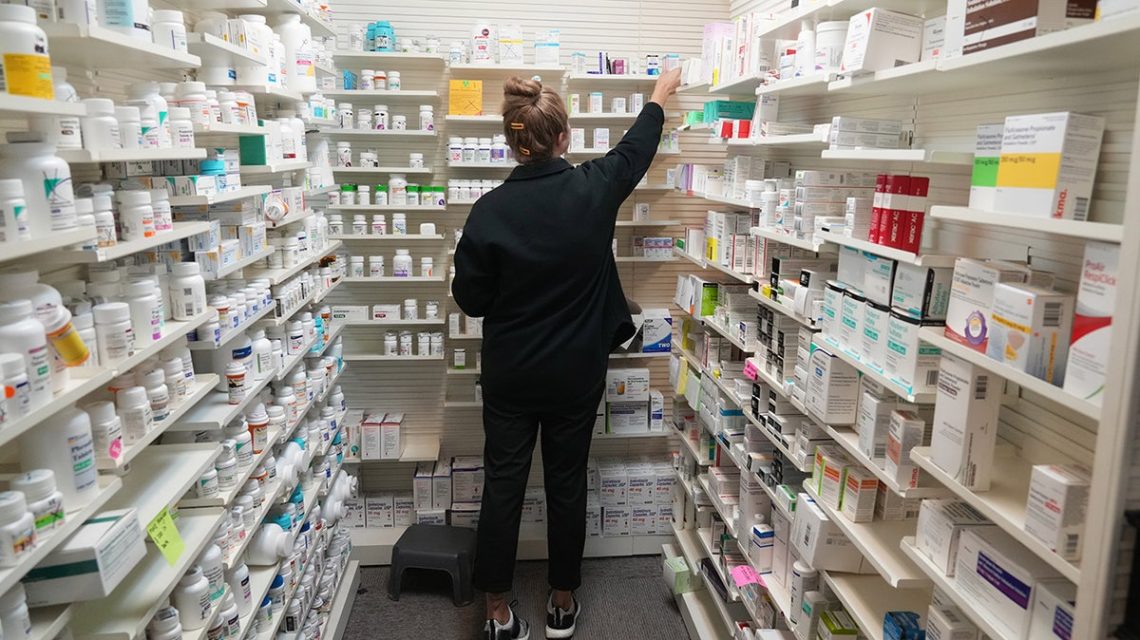
The United States produces only about 3% of the world’s active pharmaceutical ingredients, while China accounts for 45%. A study by Johns Hopkins indicates that China supplies over 60% of the essential components needed by American manufacturers for antibiotics. This situation is not merely an economic imbalance. It poses a risk to national sovereignty.
The healthcare of citizens, military personnel, and leaders relies heavily on China, an adversary that could potentially use this leverage to control the availability and safety of medications.
Past Manufacturing Trends
This issue has arisen due to decades of offshoring, which eroded the U.S. industrial base and outsourced essential manufacturing jobs. In 1981, the U.S. contributed 25% of global pharmaceutical ingredients. Today, China commands nearly half of the market. A nation incapable of producing its own antibiotics and controlling critical imports lacks full governance.
The Council on Foreign Relations describes this dependency as a ‘pharma choke point.’ This reliance extends beyond simple generics to advanced biologics.
China’s Supply Chain Dominance
The Chinese government has previously used supply chains as a tool of geopolitical pressure, as demonstrated with rare earths, semiconductor components, and metals vital to defense. The health sector may face similar threats from the Chinese Communist Party (CCP), considering its capacity for widescale harm.
The same supply networks that bring Chinese chemical precursors to U.S. pharmacies also fuel the fentanyl trade through Mexico. The University of Virginia’s research highlights these suppliers and cartels as an adaptive network bringing substances cheaply across borders.
Legislative Responses
Congress has taken initial steps with the BIOSECURE Act, passed in December 2025. This law restricts federal procurement of biotechnology from foreign-influenced firms. Additionally, previous executive actions targeted tariffs in the synthetic opioid supply chain. However, policies alone don’t create manufacturing infrastructure.
Domestic Production and Infrastructure
Investment in American manufacturing is crucial to reducing dependence. Ohio exemplifies a successful model through investment in semiconductor manufacturing, which combines infrastructure, funding, and skilled labor. CNBC ranks Ohio as top for business and infrastructure, illustrating potential for similar growth in pharmaceuticals.
Supporting domestic companies to establish advanced manufacturing hubs in the Midwest addresses both employment and national security concerns.
Call to Action
The U.S. must substantially invest in domestic pharmaceutical capacity to prevent China from gaining undue influence over vital medical supplies. Without tackling Chinese involvement in drug distribution to cartels, the national border remains vulnerable. Ensuring battlefield medicines are not sourced from potential adversaries strengthens military readiness.
Medical sovereignty should be a national priority. Building domestic facilities and reversing offshoring trends will enhance both independence and security.
Tricia McLaughlin previously served as assistant secretary for Public Affairs at the Department of Homeland Security during the Trump administration.
 Florida Man Claims ‘Lion Diet’ Transformed Health and Life
  Teen Arrested in Penn State Student’s Murder; Second Suspect at Large
  Concerns Over Food Safety and Its Impact on Families
  A Mother’s Tragic Journey Under Abortion Ban
  Carnival Panorama Passenger Jumped Overboard During Final Leg of Cruise
  Medical Diagnosis Errors: Understanding the Crisis