Mike Russell frequently checks the weather to ensure the safety of his dog walking clients. As the co-owner of J&M Dog Walking, Russell understands the significance of weather conditions in determining how long dogs should be outdoors. On Thursday morning, Russell noticed an advisory for poor air quality and advised walkers to keep outdoor time brief, opting for more activities indoors. Yet, it soon became evident that the pollution posed a more significant concern.
Many North Side clients opted to cancel scheduled walks as they were worried about their pets breathing polluted air or were staying home from work due to poor conditions. Russell, 43, expressed concern about news comparisons equating breathing outdoor air to smoking multiple cigarettes. Dogs, Russell quipped, have never smoked.
This week’s hazardous air quality also affected animals, according to experts. Fine particles known as PM2.5, originating from wildfires in Minnesota and Canada, contributed significantly to the elevated air quality concerns. PM2.5 particles can be harmful and even deadly, initially causing eye and nose irritation, and later settling deep in the lungs.
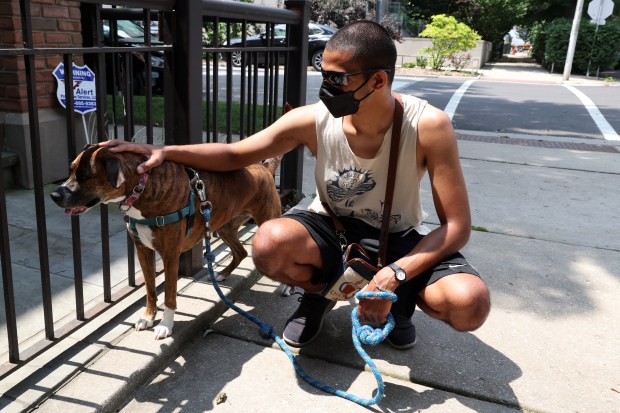
“Raghuram wore a face mask while working due to the wildfire smoke affecting the city.” (Terrence Antonio James/Chicago Tribune)
Dave Bernier, general curator of Lincoln Park Zoo, noted that zoo employees monitored animals closely for signs of distress like labored breathing or reduced activity. He suggested measures similar to those recommended for humans. Despite the air quality issue, no zoo animals were confined exclusively indoors; keeping them indoors was considered potentially more stressful.
One major change involved the animals’ eating habits. Zoo staff simplified feeding routines, usually designed to mimic wild foraging conditions, to reduce activity. More food was scattered indoors for certain animals, like great apes, to encourage them to stay inside.
Bernier stressed that pet owners should pay close attention to their pets’ breathing and activity levels. Even subtle changes might indicate discomfort due to the air quality.
Data from the U.S. Environmental Protection Agency revealed that PM2.5 levels quadrupled the previous record in Cook County on Thursday. AirNow classified conditions as an emergency affecting everyone. Conditions improved on Friday, but the National Weather Service continued the air quality alert into Saturday night.
The environmental challenges also troubled animal caretakers like Jana Kinsman, a Back of the Yards beekeeper. She struggled to maintain her bee colonies, as smoke and heat made outdoor work unhealthy. She voiced concerns over the stress bees might endure due to environmental pressures.
Jessica Helgen, director of the University of Minnesota Bee Squad program, explained that bees could survive smoky conditions but acknowledged limited data on long-term health impacts. She emphasized differentiating honeybees as “managed livestock” from native bees, noting native bees lack the protection afforded honeybee colonies.
Despite the smoke in Minnesota, Helgen observed bees still foraging, continuing their vital role within ecosystems.
 Concerns Over Food Safety and Its Impact on Families
  EPA Dismantles Greenhouse Gas Rules, Causing Concern
  How Battery Innovations Transform Renewable Energy
  Data Centers Stir Controversy in Texas Amid Growth Boom
  Urgent Archaeological Efforts in Quinhagak Stay Ahead of Erosion
  Concerns Rise Over NIPSCO Permit In Jasper County