
Wilber Urbina Garcia had a busy schedule planned the day after his high school graduation. He was eager to get a head start on his future, picking up his diploma, returning a textbook, and registering for college classes at El Camino College. However, these plans were postponed due to an appointment at the Immigration and Customs Enforcement (ICE) office. This check-in was part of a routine process since his family arrived from Nicaragua seeking asylum in late 2022.
The Garcia family, who live in South Los Angeles, left their home before sunrise to attend the appointment at the federal courthouse. That evening, Wilber did not return with them; he was taken into custody by ICE agents. His brother, Winston Garcia, expressed their uncertainty and concern: All he wanted was to learn, but all of his dreams just came crashing down,
Winston said. We don’t know what’s going to happen to him. We don’t know if he’ll get out, or when.
Wilber’s recent graduation from Jordan High School on June 9 was a joyful occasion. He graduated with high honors, and his family celebrated this significant achievement. The family took photos with Wilber, who had shown academic growth in recent years despite his shy nature. Teachers and counselors, upon learning of his detention, wrote letters attesting to his dedication and achievements.
Wilber’s life in the United States included activities like playing vintage video games and learning baseball. He also helped his family by making breakfast on weekends. His commitment to his studies was unwavering.
The family’s asylum case, handled by their lawyer Armineh Ebrahimian, was still in progress. They fled alleged political persecution in Nicaragua under President Daniel Ortega’s government. ICE’s detention of Wilber is part of the broader challenge of navigating the United States’ immigration system. A Department of Homeland Security spokesperson highlighted that anyone entering the country illegally faces potential detention or deportation. The family was granted work permits and allowed to stay while their case proceeded.
Wilber’s mother, Yadira Garcia, found work at a packaging center. This provided stability and financial support not possible in Nicaragua. The family focused on education and dreamed of better opportunities in the U.S. Wilber planned to become a doctor, while his brother Wilson suggested he consider engineering instead.
Their asylum application was divided: one part for Yadira and the two minors, the other for Wilson and his daughter. ICE check-ins escalated from biannual to monthly, but the family remained compliant and punctual.
On the day of Wilber’s detention, he was taken to a separate room during a routine check-in. Yadira wasn’t informed about the reasons. The family’s lawyer argued that his status as a derivative in his mother’s asylum case should have protected him.
Edgardo Quintanilla, another immigration lawyer, agreed that a child should remain linked to the parent’s asylum application, despite reaching adulthood. Discrepancies in policies have left individuals like Wilber vulnerable to detention.
Wilber, now at Adelanto ICE Processing Center, awaits a hearing for bond while his family endures uncertainty and worry. His mother is anxious about the implications of missing work, while both she and Wilson face removal proceedings. The family fears this situation may impact their future in the United States.
Despite these challenges, Wilber’s cap and gown still hang in their living room. His sister helped decorate his cap with the colors of the Nicaraguan flag, illustrating both their roots and his accomplishments. The inscription reads, Gracias Dios por este logro — Thank you, God, for this accomplishment.
 Arizona Sheriff’s Helicopter Crew Rescues Stranded Driver Amid Floodwaters
  Trump’s Executive Order Targets Mosquito and Tick Control
  Efforts to Restrict Voter Registration Funding Trigger Concerns for Nonprofits
  News Outlets Fight White House Ban in Federal Court
  Michigan Senate Candidate Questions Football’s Ethics and Safety
 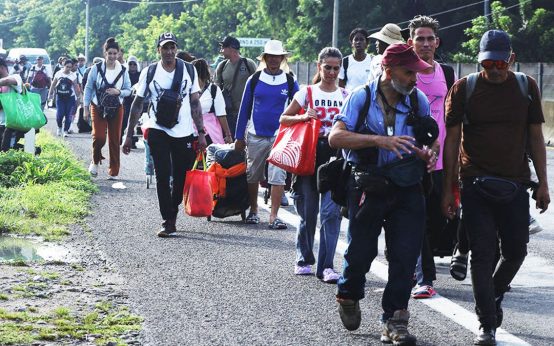 The Department of Homeland Security Urges Migrant Caravan to Avoid U.S. Border