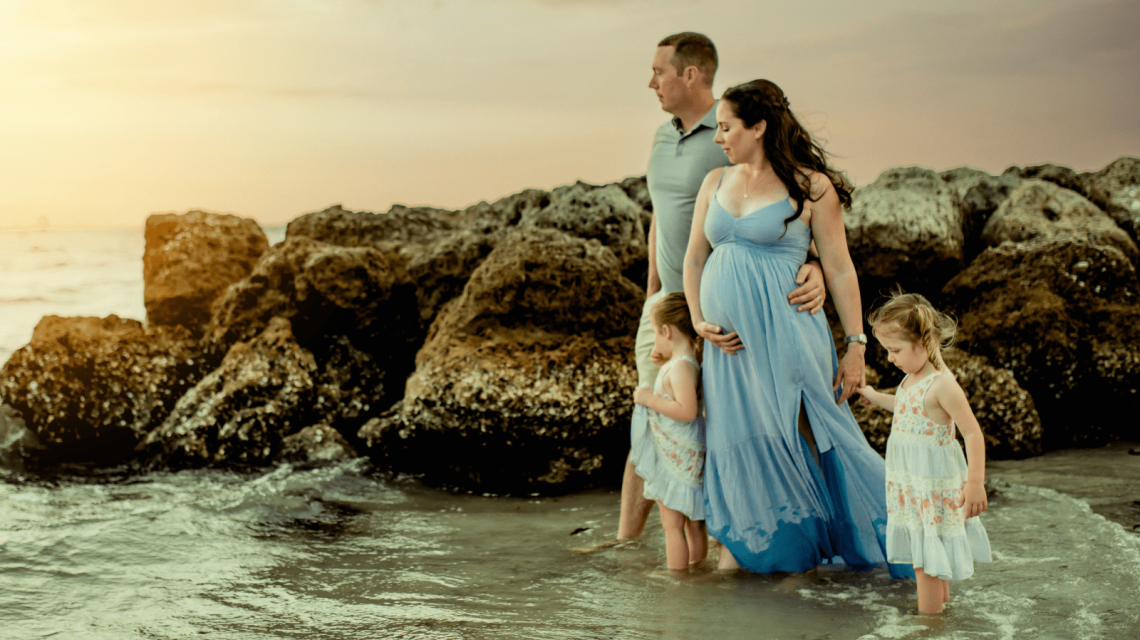
When Ansley Van Epps and her husband discovered they were expecting their first child in 2016, they envisioned the future every parent dreams about. The joy of a gender reveal showed they were expecting a boy, and they began preparations. However, their 20-week anatomy scan brought unexpected news.
Doctors diagnosed their baby with Meckel-Gruber syndrome, a rare and fatal genetic disorder. His organs were severely affected, his kidneys enlarged and dysfunctional, and parts of his skull incompletely developed. They faced the heartbreaking decision to terminate the pregnancy for medical reasons. They also learned they were both carriers of this condition, meaning future pregnancies bore a one-in-four chance of recurrence.
When they opted to try again, doctors recommended IVF with preimplantation genetic testing for monogenic disorders (PGT-M) to screen embryos for specific inherited conditions. Initially, Van Epps found IVF invasive, costly, and overwhelming. After over a year of trying unsuccessfully to conceive naturally, they decided IVF was the best option.
We put our faith in the science.
Through three IVF rounds, 20 embryos were created. Most were affected by Meckel-Gruber syndrome or had other genetic issues, but four embryos were promising. Three were unaffected, and one was a carrier like themselves, not expected to develop the disease. They felt a sense of relief and hope.
In 2019, they transferred an unaffected embryo, resulting in healthy identical twins. Yet challenges persisted. At four months old, one daughter began epileptic seizures. At 16 months, a brain tumor was discovered, but surgery led to recovery and thriving health today.
After several years, they transferred the carrier embryo in 2023. At 17 weeks pregnant, they received a dire diagnosis: their baby boy, Everston, had Meckel-Gruber syndrome. This was unexpected as the embryo had been tested and cleared of this condition by PGT-M.
The loss of Everston devastated them, compounded by the immense effort to prevent this outcome. Trying again with IVF wasn’t simple, especially after spending over $100,000. They transferred their remaining embryos, neither resulting in pregnancy, and completed three more IVF rounds. Despite six rounds, no suitable embryos were produced recently.
Discussing these events with their children proved challenging. Publicly sharing their story was difficult but explaining to their children about not having the expected baby brother was more painful. Van Epps began documenting her experience online, connecting with a community facing similar issues.
Meckel-Gruber syndrome is rare, and many diagnosed families feel isolated. Van Epps received outreach from those newly diagnosed, unaware of where to turn. Her experience is rare, and PGT-M testing typically succeeds. She remains uncertain about the failure’s cause, whether human error, testing error, or another factor. Despite all efforts, another loss occurred.
Today, Van Epps reflects on the embryos never transferred and the once-trusted results. She hopes no other family experiences what they endured.
Ansley Van Epps works as a newborn photographer in Tampa, Florida, residing with her husband David Hoyt, and 6-year-old twin daughters, Savannah and Sydney. She shares family life on social media @ansleysadventures.
 Florida Man Claims ‘Lion Diet’ Transformed Health and Life
  Revival of Organized Labor in 2026
  Concerns Over Food Safety and Its Impact on Families
  A Mother’s Tragic Journey Under Abortion Ban
  Medical Diagnosis Errors: Understanding the Crisis
  Community Relief Efforts at New Orleans Free Store