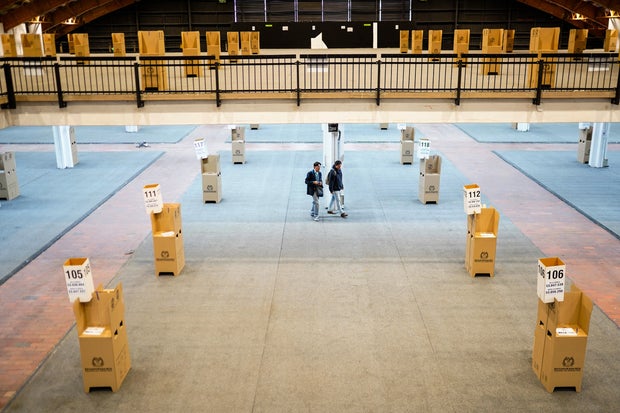
On Sunday, Colombians will head to the polls for a decisive presidential election. The event is expected to lead to a runoff between two very different candidates. None of the candidates is projected to win the required 50% majority in the first round, making a runoff on June 21 likely.
The race, featuring 14 candidates, has narrowed, with Senator Iván Cepeda and Abelardo de la Espriella leading. Cepeda, from the far-left, represents the ruling Pacto Histórico party and seeks to extend President Gustavo Petro’s policies. On the right, de la Espriella, a lawyer whose style mirrors that of President Trump and El Salvador’s Nayib Bukele, presents a hardline stance. Another key player is center-right Paloma Valencia, supported by former President Álvaro Uribe.
In a recent AtlasIntel poll based on 4,531 interviews, Cepeda leads slightly with 38.7%, closely followed by de la Espriella at 37.3%, both ahead of Valencia at 14.3%. Former mayor of Medellin, Sergio Fajardo, lags in the polls. Despite this, surveys suggest that Cepeda might be defeated by his opponents if the election results in a runoff.
High voter concerns center on security and healthcare. The country has faced numerous challenges, including failed peace efforts exacerbating violence. Human rights groups reported over 50 massacres this year. The election campaign has also seen violence, such as the assassination of a candidate and other violent acts.
De la Espriella promises tough approaches, proposing actions like bombing traffickers’ camps and building maximum-security prisons. Cepeda advocates for continued negotiations with guerilla groups, a policy criticized for fostering criminal group expansion. Valencia suggests increasing ground troops and surveillance while resuming aerial fumigation of coca crops.
“We have seen one path lead to military actions like in Venezuela, whereas other paths offer opportunity and security,” said Ohio Senator Bernie Moreno, highlighting the stark choice facing Colombian voters.
Business and voting security also emerge as significant concerns. The country’s minimum wage hike and reports of voter intimidation in rural areas are notable. Powerful drug lords have threatened violence around the election, complicating the process further. Cepeda condemned armed groups’ attempts to influence the vote, stressing the need for electoral fairness.
The outcome will significantly affect U.S. relations. Colombia, traditionally a key ally in counternarcotics, has seen deteriorating relations under Petro. The U.S. administration maintained aggressive operations in the Caribbean and the eastern Pacific, partnering with regional allies. A right-wing victory aligns with U.S. efforts, as suggested by Colombia’s former finance minister, Jose Antonio Ocampo.
Given historical ties and current geopolitical dynamics, the stakes of Colombia’s election extend beyond national borders, impacting broader regional politics and U.S. foreign policy.
 Influence Concerns Surround California Political Donors
  Michigan Senate Race Sees Influences from Soros-Linked Funding
  Trump Seeks Diplomatic Success at the U.N. Amid Challenges
  North Carolina Senate Race Influenced by Abortion Policy Messaging
  Trump Pressures Republicans on Filibuster Threat
  Rep. Golden Endorses Rep. Lawler for Re-election