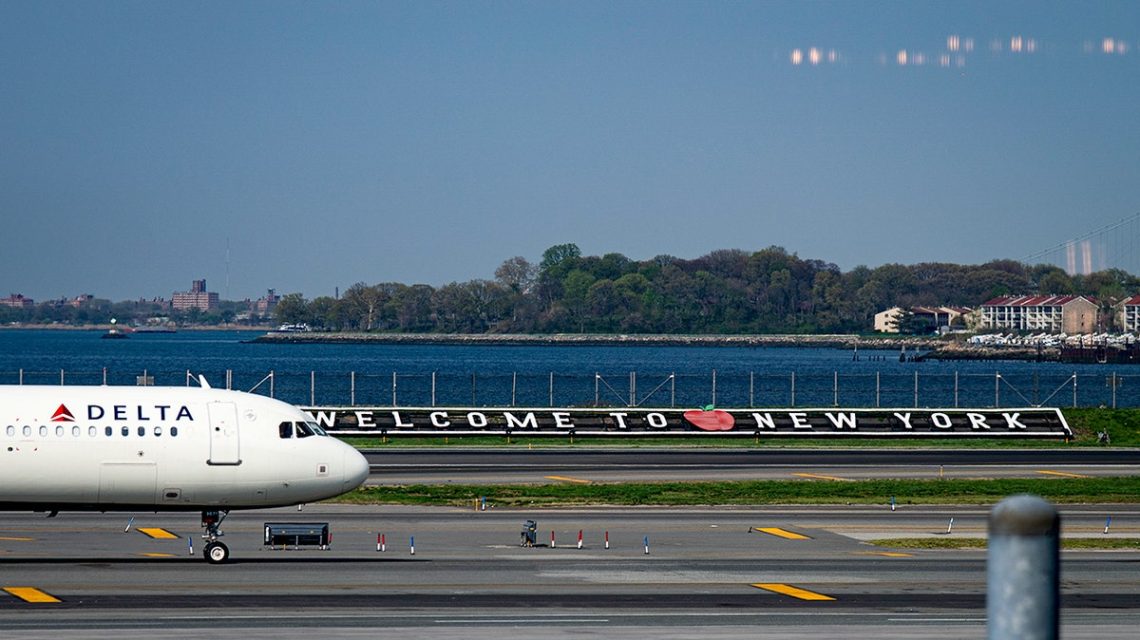
Airports can often be confusing. Rushing to a gate, finding baggage claim, or locating lounges can be stressful. LaGuardia Airport’s Terminal B is addressing this issue with a life-sized AI hologram named Bridget.
Who is Bridget?
Bridget is a hyper-realistic AI hologram located near the Terminal B Food Hall at LaGuardia Airport in New York. Developed through collaboration between Proto and Holomedia’s AI Concierge Wayfinder, Bridget offers an innovative way for travelers to find their way. She can converse naturally, providing answers to questions about gates, shops, and VIP lounges. Additionally, Bridget gives step-by-step directions with real-time terminal maps, easing the search process for travelers.
Functions and Accessibility
Currently, Bridget functions in English and Spanish, with plans to include more languages. The kiosk features on-screen subtitles, high-contrast displays, and a wheelchair-accessible physical interface. Managed by LaGuardia Gateway Partners, further expansion across the concourses is anticipated.
Impact on Traveler Experience
Bridget serves as extra assistance for travelers without replacing human workers. During busier times, she supports the guest experience team. Suzette Noble, CEO of LaGuardia Gateway Partners, explains, “The introduction of the interactive AI hologram aligns perfectly with our vision, allowing us to leverage next-generation technology to meet the evolving needs of our travelers.” The technology ensures a seamless and stress-free journey.
Capabilities
Bridget answers common airport questions, such as directions to gates, lounges, and baggage claim. She provides live mapping and step-by-step guidance. For example, in a company video, Bridget offers turn-by-turn directions and shares a QR code for travelers to carry the information.
Technology Enhancing Human Support
David Nussbaum, founder of Proto Hologram, emphasizes that while communication with humans remains key, Bridget extends the reach of guest experience ambassadors. “Proto Hologram and Holomedia’s digital helpers can guide and advise travelers,” he notes.
Miami International Airport Follows Suit
LaGuardia is not alone in trying AI holograms. Miami International Airport recently introduced its own holographic assistants. Miami’s system supports 40 languages and connects with the airport’s website chatbot and WhatsApp assistant.
Potential Challenges
The success of AI holograms depends on execution. A well-placed hologram that answers questions can smooth travel. Conversely, confusing kiosks may add to traveler frustration. The best iteration assists efficiently and supports existing staff.
Conclusion for Travelers
AI holograms, if effective, offer help and ease the stress of navigating airports. They provide spoken directions and accessible features. Nevertheless, they must deliver accurate results and allow access to human assistance when needed.
Privacy Considerations
Bridget focuses on wayfinding and guest services. However, airports are testing AI connected with biometrics and passenger data. This broader shift requires careful observation.
Technology like Bridget brings simple solutions to airport navigation. It addresses basic yet stressful traveler concerns, such as finding gates or luggage locations. AI tools are also appearing in other airports. The ultimate aim is to make travel more efficient and pleasant.
 Google Fined for Breaching EU Privacy Rules
  AI-Powered Malware Raises Concerns Over Security
  Affordable Halloween Decorations for a Spooky Yard
  Debate Continues Over Virginia’s Data Center Energy Plans
  Trump Suggests Renaming AI to ‘Super Intelligence’
  The Rise of Data Centers and AI Development