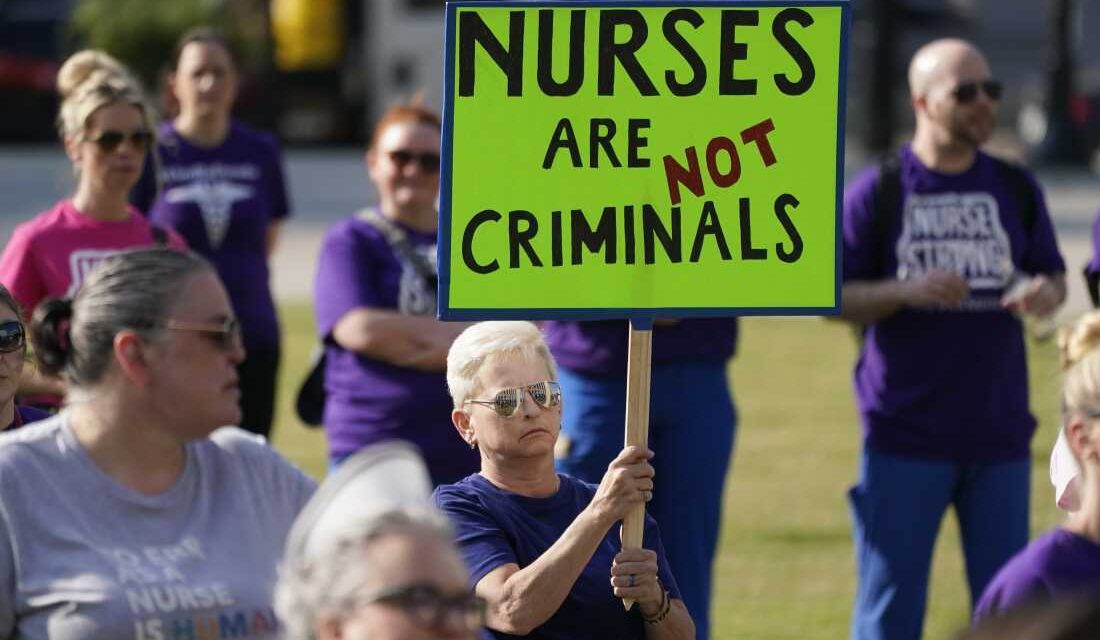
People gathered outside the courthouse during the sentencing hearing for former nurse RaDonda Vaught in May 2022 in Nashville, Tennessee. The attention on this case was significant, drawing both media and public interest.
In 2022, Vaught faced a jury that found her guilty of negligent homicide and neglect of an impaired adult. This resulted from an incident in 2017 where she administered the wrong medication, resulting in a patient’s death at Vanderbilt University Medical Center. The court sentenced her to three years of probation, and she lost her nursing license.
Now residing on a sheep farm in Bethpage, Tennessee, Vaught has transitioned to full-time farming. She and her husband manage a small farm selling eggs and meat to local markets and restaurants.
Approximately a year into her probation, Vaught began receiving invitations to speak about her experience in the healthcare sector.
The trial had captured national interest, and healthcare audiences were eager to learn from her. Vaught accepted these speaking opportunities, aiming to shed light on the sequence of events and factors contributing to the fatal error. Her presentations address the growing reliance on automation and artificial intelligence in healthcare and the risks that accompany them.
Vaught acknowledges concerns over profiting from such tragic circumstances. “The offers came unexpectedly,” she remarked regarding her speaking engagements. She now gives presentations nationwide, earning between $5,000 and $10,000 per event, a new source of income compensating for her nursing career’s abrupt end.
Despite some backlash, many listeners find her story compelling. After speaking on Nashville’s public radio, WPLN News, a retired nurse criticized the narrative as detrimental to the profession. Nevertheless, Vaught draws interested audiences, including Charlene Verga, who described Vaught’s account as a transformative teaching moment at a nursing conference.
Vaught anticipated the interest would wane, but positive feedback and personal ease in public speaking encouraged her to continue. Her first talk in 2023, to a large group of industry professionals, was particularly impactful, with attentive silence from the audience.
Vaught speaks candidly about the patient’s death, acknowledging multiple contributing errors. The initial oversight occurred when a doctor prescribed a sedative, Versed, for the patient Charlene Murphey. Typing “VE” in a medication system, Vaught triggered a bypass, selecting vecuronium, a paralytic. Despite warnings, she administered the wrong drug and left the patient unattended.
In court, other nurses shared that such overrides were common at the time due to system upgrades. Vaught’s defense was primarily that she made an honest mistake amidst faulty systems.
The incident highlighted issues within Vanderbilt’s response. Notably, the hospital failed to report the mistake to regulators and misled the medical examiner. Although Vaught was dismissed from her position, the ensuing criminal trial exposed these issues.
As Vaught speaks publicly, she is free from Vanderbilt’s settlement constraints, able to share her story broadly. Nurses stood by her during legal proceedings, and some even helped fund her defense.
The trial spurred systemic changes, like enhanced safety checks in medication systems across hospitals. In one legislative response, Kentucky enacted laws granting immunity for errors in healthcare, emphasizing broader system responsibility.
Nursing consultant Matthew Garvey, familiar with Vaught’s career, saw this case as pivotal enough to pursue legal studies. He aims to defend nurses facing similar predicaments, balancing personal responsibility and systemic fault.
Garvey, who would also have terminated Vaught’s employment, believes her narrative as a defendant provides therapeutic value and incites critical discussions on accountability and safety in healthcare.
This account draws attention to NPR’s collaboration with Nashville Public Radio and KFF Health News in delivering insight into this complex case.
 Artist Speaks Out on Rare Condition Impacting Her Career
  Mindfulness: Manage Stress by Embracing the Present
  Missouri’s Abortion Policy: Conflicting Amendments and Voter Decisions
  The Impact of Extended Job Searches on Mental Health
  Philanthropic Shift Towards Supporting Women in Midlife
  Measles Exposure in Philadelphia Raises Health Concerns