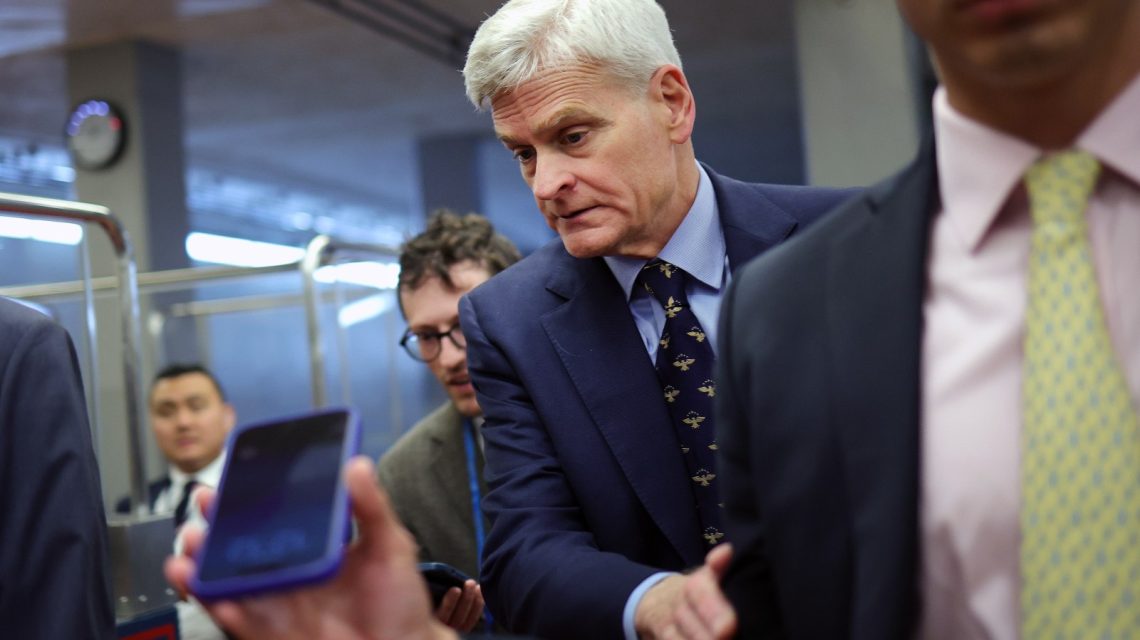
President Donald Trump has been focusing heavily on targeting Republican senators who have opposed him. This endeavor, dubbed by his aides as a “revenge tour,” seeks to support challengers against incumbents who voted against him while promoting candidates aligned with MAGA in key races before the upcoming midterm elections.
Supreme Court Nomination Challenges
Rumors circulate about possible retirements among U.S. Supreme Court Justices Samuel Alito or Clarence Thomas. If either leaves, Trump would need to nominate a replacement. Political analysts indicate Trump lacks sufficient Senate support for any confirmation.
Talk persists of Alito stepping down, spurred by his hospitalization in March for dehydration, scheduled book publication in October, and remarks regarding his judicial legacy. Trump’s election-related endorsements have caused tensions with Republican senators whose votes are vital for any Supreme Court confirmation.
Key Republican Senators
Senators Susan Collins of Maine and Lisa Murkowski of Alaska are critical to court confirmations. Collins faces reelection in a Democratic-leaning state. Murkowski defeated a Trump-backed challenger previously and has expressed hesitations about supporting conservative court nominees before.
Trump’s actions have directly influenced three other Republicans crucial to confirmations. As Jim Kessler of Third Way stated, “Revenge is a two-way street.” Republican senators impacted include John Cornyn, previously chair of the Senate Judiciary Committee, who faced backlash from Trump’s endorsement of Ken Paxton in a Texas primary. Susan Collins criticized Trump’s choice, expressing strong support for Cornyn.
Senator Thom Tillis of North Carolina, who decided not to seek reelection in 2026, has voted against Trump on key issues in the past. Senator Bill Cassidy of Louisiana lost his primary against a Trump-endorsed candidate. His defeat came after voting with Collins and Murkowski on contentious issues.
Senate Dynamics and Republican Strategy
The arithmetic for confirmation is challenging. The Republicans hold 53 Senate seats. Trump requires 50 Republican votes for confirmation, assuming no Democrat support. Losing the votes of Murkowski, Collins, and Tillis, and potentially Cassidy, leaves no room for error.
The political climate has shifted, with Democrats possibly regaining Senate control. Republicans once expected to expand their majority post-2026 midterms. Now, Mike Madrid, a seasoned Republican strategist, suggests it is uncertain, jeopardizing Trump’s entire agenda.
Senators’ Decisions and Political Pressures
A Supreme Court vacancy necessitates GOP unity behind Trump’s nominee. Senators opposing Trump lately may obstruct or influence the confirmation vote. Trump’s approval ratings are low in crucial states like Maine, Michigan, and even Texas, complicating GOP strategies.
Matt Klink of Klink Campaigns acknowledges potential risks for Republicans, noting that Trump’s approval may sway inattentive voters in their race decisions.
Potential Retirements and Future Steps
Publicly, Trump is ready to nominate justices if vacancies occur, having mentioned potential nominees such as Senator Ted Cruz and Judge Aileen Cannon. Alito and Thomas, however, emphasize ongoing commitment to their roles, with Alito hiring clerks for the next term and Thomas expressing ongoing passion for his work.
Speculation about Alito’s retirement continues, driven by his book release timing and past health issues. Political shifts might alter Senate control by 2027, impacting confirmation strategies. Nevertheless, Capitol Hill dynamics suggest substantial challenges for confirming a conservative nominee amid GOP fractures.
 The Role of Defense Secretary Pete Hegseth in the Trump Administration
  Historical Discrepancies and Diplomatic Sensitivities in U.S.-China Relations
  Zohran Mamdani’s Vision for Affordable Child Care in New York City
  Senator Ted Cruz Leads Effort to Reform College Athletics Regulation
  California Governor Signs Bills Challenging Federal Immigration Policies
  Jim Jordan Claims Jack Smith Misled Congress