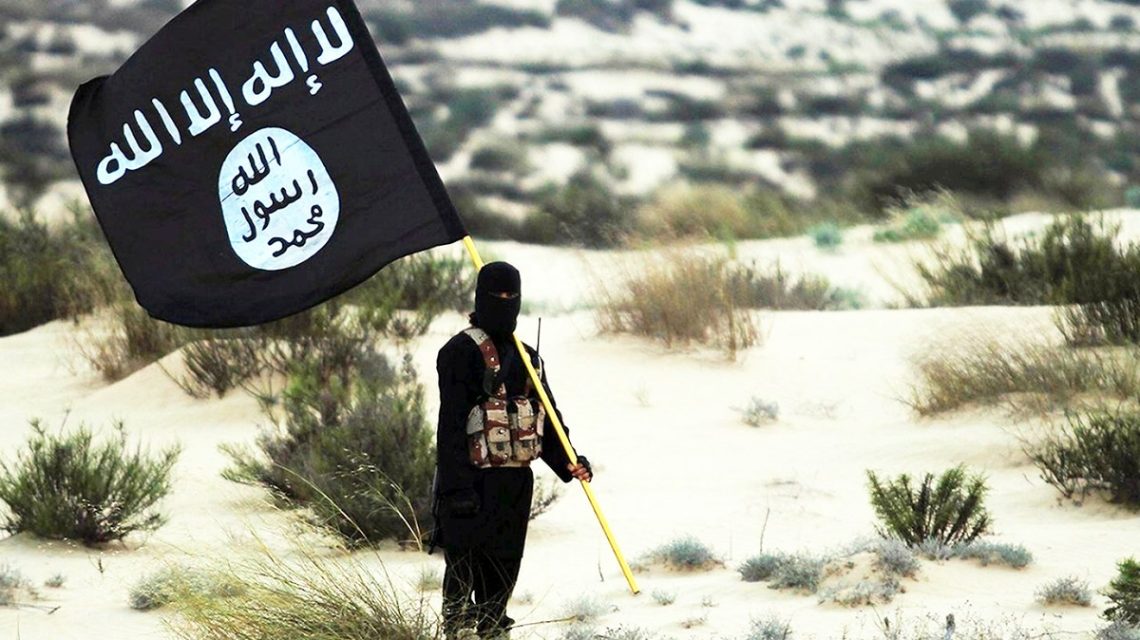
Abu-Bilal al-Minuki, regarded as ISIS’s shadow commander in West Africa, was killed on May 16. His death resulted from one of the hardest-to-detect forms of intelligence, according to extremism analysts. For years, al-Minuki was protected by deep local networks in the region.
The operation represents a significant blow to ISIS’s global network, particularly impacting operations in northeastern Nigeria. Despite this, the group’s top leader, Abu Hafs al-Hashimi al-Qurashi, remains unlocated as Africa increases in importance to ISIS operations.
“There is no single ISIS ‘headquarters’ in Nigeria; ISWAP (Islamic State West Africa Province) operates dozens of small, shifting camps scattered across the Lake Chad islands and the Borno bush,” said Dr. Omar Mohammed, a Senior Research Fellow at the GW Program on Extremism.
Al-Minuki primarily communicated through couriers, avoiding technology like smartphones, relying on constant movement between camps. Analysts suggest his communication method and movement pattern reveal the intricate operational security measures he employed.
President Donald Trump previously referenced sources involved in the intelligence operation, pointing to human intelligence (HUMINT) as a key factor in al-Minuki’s capture. This form of intelligence is notoriously difficult to counter and detect.
Dr. Omar Mohammed explained that al-Minuki’s operational security was rigorous but vulnerabilities arose over time, particularly through persistent human intelligence efforts. He stated that al-Minuki’s marked status was well-known.
Al-Qurashi, the current ISIS caliph, remains elusive, with implications that he might have moved from Syria or Iraq along a route through Yemen to Puntland in Somalia. This semi-autonomous region serves as an important hub for ISIS operations and finances.
According to data from the Armed Conflict Location & Event Data Project, the majority of Islamic State activity is now focused in Africa.
“Africa has transitioned from a peripheral theater to the operational and financial center of global ISIS activity. Funding sources are local, involving taxation, ransom, and smuggling, contributing to the resilience of these networks,” Mohammed explained.
Al-Minuki, noted for his rise through ISWAP, played a vital role across the Lake Chad Basin and the wider Sahel. His elimination is considered the most impactful on ISIS leadership since Abu Bakr al-Baghdadi’s 2019 raid.
The Nigerian army and U.S. Africa Command coordinated a “meticulously planned and highly complex precision air-land operation” against al-Minuki in Metele, Borno State, conducted between midnight and 4 a.m.
 U.N. Secretary-General António Guterres Addresses Final General Assembly
  Suspects in Haitian President’s Assassination Extradited to U.S.
  UN General Assembly: Global Leaders Seek Influence Amid International Conflicts
  US Embassies Warn Americans After Houthi Missile Attack
  Understanding Iran’s Political Landscape Amid Ongoing Conflict
  China’s Surveillance Expansion in Djibouti Sparks Concerns