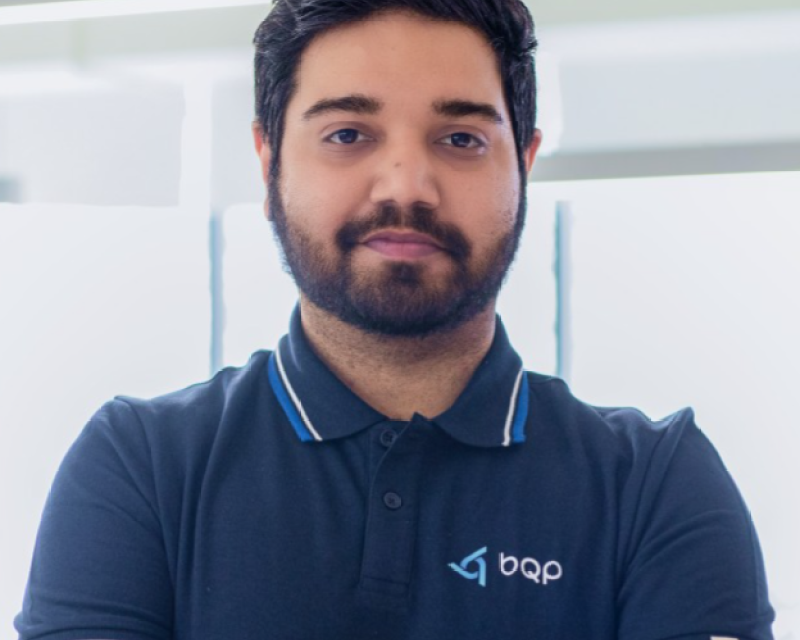
NASA reports that maneuvering a satellite to avoid space debris can cost about $1 million in fuel. Annually, debris cost U.S. satellites approximately $58 million, mainly affecting military and civilian spacecraft funded by taxpayers. BQP, a simulation company from Syracuse, N.Y., aims to solve this issue. Initially started in India in 2020, BQP now collaborates with the Space Force. Earth’s orbit continues to crowd rapidly, outpacing policy decisions on managing the congestion. Abhishek Chopra, BQP’s founder and CEO, describes their software as an “autopilot for satellites,” capable of reducing expenses by enabling automated maneuvers.
Chopra notes, “The ground tests were successful.” Their software will undergo real-space testing aboard the International Space Station.
A Crowded Orbit
Spacecraft often turn into debris, leading to calls for accountability. When NASA’s Skylab space station crashed in Western Australia in 1979, the Shire of Esperance fined NASA $400, a sum never paid. Costs for such incidents have escalated; in 1978, a Soviet satellite caused radioactive debris in Canada. The compensation was settled at 3 million Canadian dollars after Canada billed Moscow 6 million. In 2023, the FCC fined Dish Network $150,000 for misparking a satellite. This was a rare enforcement action against space debris.
In 1956, a mid-air collision over the Grand Canyon led to the establishment of the Federal Aviation Administration. Such regulatory authority is absent in space, says Chopra. The Space Force tracks approximately 60,000 objects, issuing collision alerts at no cost. The Commerce Department’s TraCSS program works on civilian monitoring but faces funding cuts. The White House considers discontinuing it, though the Senate proposed $50 million to sustain it.
Currently, human monitors oversee satellite traffic. “We still rely on paper records,” Chopra highlights. The risk intensifies with more satellite launches. Operators must decide between using limited fuel for potentially unnecessary maneuvers or risking valuable satellites. Chopra points out, “What if a bad actor places undetected objects? They go untracked.” Existing tools require 40 days to simulate all orbiting objects. BQP’s software completes simulations in under 30 minutes, significantly surpassing Orekit, a common open-source tool.
Quantum-Inspired Methods
Chopra utilized his aerospace engineering PhD at Rensselaer Polytechnic Institute to refine simulations. His work uncovered inefficiencies in utilizing modern Nvidia graphics chips. The method was consuming merely 15% of the chip’s potential. BQP’s “quantum-inspired” approach, borrowing quantum computing techniques, optimizes chip usage.
BQP secured its first federal contract with SpaceWERX, the Space Force’s innovation branch. This small-business research award facilitated BQP’s market entry. “A great use of public funds,” Chopra asserts. BQP aims for a second phase to integrate with military operations. In September, BQP raised $8 million, with IBM Ventures contributing, enhancing contract negotiations. Chopra mentions another corporate investor joined, and revenue commitments have increased eightfold since their 2025 seed round.
 Shopify’s Tobi Lütke Criticizes Nvidia Board Over Jensen Huang’s Departure
 Tensions Rise Over AI Chip Exports to China Involving Trump Officials
 Understanding Tax-Advantaged Retirement Accounts and Retirement Distribution Rules
 Assessing Risks in Technology Infrastructure
 Challenges Loom for America’s Power Grid: Analyzing the Equipment Shortfall Crisis
 Handling Identity Theft: Steps for Recovery