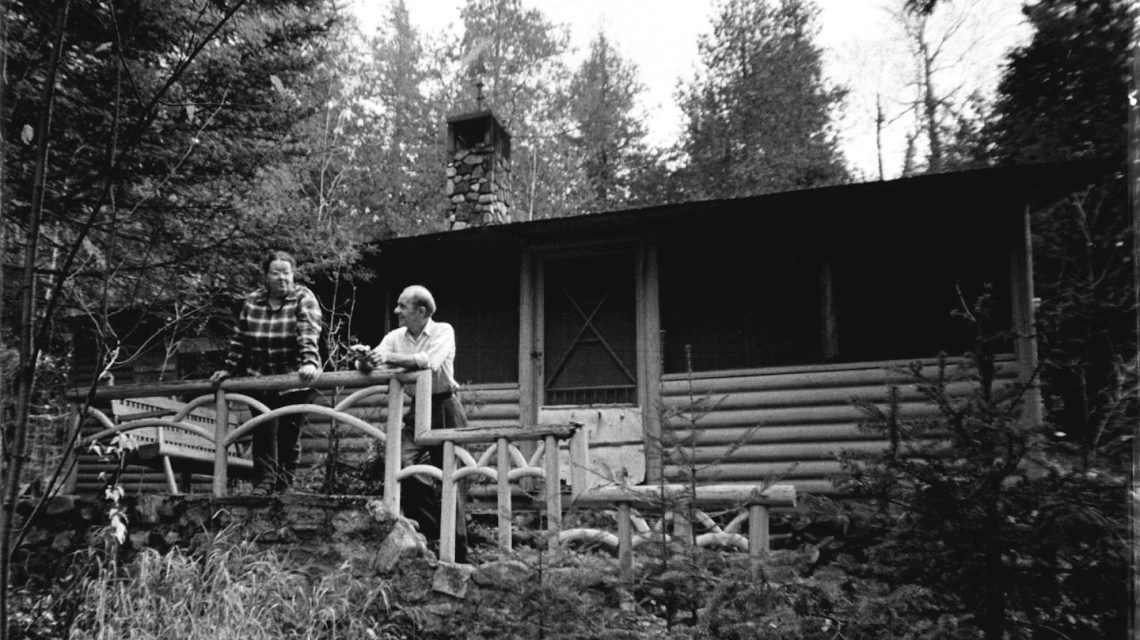
Helen Hoover, a renowned nature writer from the 1950s, has found renewed interest in Minnesota, spurred by a recent biography. Known for her vivid depictions of life in the boreal north, Hoover’s works focus on her experiences at the end of the Gunflint Trail. Her journey and writings have captivated a new generation.
David Hakensen, Hoover’s biographer, has been pivotal in reigniting this interest. His book, ‘Her Place in the Woods’, published last year, seeks to revive her reputation. Hakensen has passionately shared Hoover’s story across Minnesota, hoping to inspire people to revisit her books.
Hakensen has visited nearly 30 libraries and venues throughout Minnesota, from Thief River Falls to St. Charles. Demand for insights into Hoover’s life is evident, with plans for a second printing of the biography, an audiobook, and more events, including one in Fergus Falls on November 30.
Reports indicate that libraries have waiting lists for Hoover’s classics like ‘The Gift of the Deer’ and ‘A Place in the Woods’. The University of Minnesota Press reprinted these books, and sales have surged.
From the City to the Wilderness
Hoover’s journey to becoming a bestselling author began in Chicago. She and her husband, Adrian, purchased a rough cabin on Gunflint Lake in 1948. Over time, they transitioned from city life to the wilderness, moving permanently to northern Minnesota in the early 1950s.
Hoover began contributing articles to various nature magazines, gaining a following for her honest and humorous accounts of adapting to wilderness life. Her works appeared in Reader’s Digest and Humpty Dumpty magazine for young readers.
The University of Minnesota Press attributes Hakensen’s success to his ability to engage audiences familiar with Hoover’s writings but not her personal story. His talks have been particularly popular in Grand Marais, Silver Bay, and Park Rapids, where Hoover’s work is deeply appreciated.
Insights into Hoover’s Background
Hoover’s background in metallurgy influenced her precise and observational writing style. As a woman in a largely male-dominated field, she brought a unique perspective to her work, which appealed to editors seeking stories beyond the typical East Coast nature narratives.
Her contemporaries included notable figures like Sigurd Olson and Calvin Rutstrum. Yet, Hoover followed a different path. She was more focused on the details of her surroundings, often befriending and naming wildlife rather than engaging in traditional hunting and fishing activities.
Author Mark Neuzil, who also writes about Hoover, emphasizes her uniqueness among other nature writers of the time. Neuzil’s upcoming book, ‘Rooted in Nature’, due out this holiday season, will explore Hoover and her peers.
During his research, Hakensen spoke with people who had first-hand and second-hand knowledge of Hoover. He uncovered stories that portrayed her as both quirky and determined, challenging the perceptions of her as a recluse.
One story recounts how Hoover responded to questions about her move to the woods. She insisted they were not running away from anything but were instead moving towards something meaningful.
The renewed interest in Hoover’s life and writings highlights her enduring impact as a nature writer and her unique journey through the wilderness of Minnesota.
 The History of American Profanity
 Notable Chicago Figures and Their Impact
 Martin Luther King Jr.’s Speech Draft Displayed in Atlanta
 Exploring The Sixth Floor Museum at Dealey Plaza
 Holiday Celebrations in Evanston, Glencoe, Skokie, Wilmette, and Winnetka
 Miss Universe Vietnam 2026 Nguyen Quynh Anh Loses Title