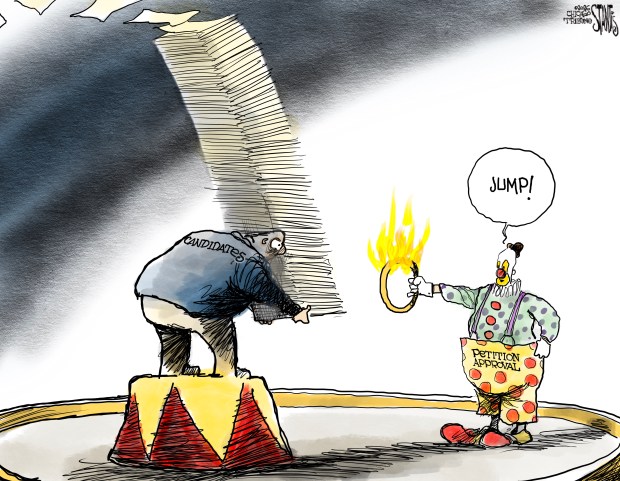
In Illinois, political candidates must obtain thousands of signatures to appear on the ballot. This requirement acts as a measure to ensure candidates are serious, preventing frivolousness and confirming some level of genuine support. When a candidate like Susana Mendoza collects signatures, it prompts voters to assess whether this candidate deserves a place on the ballot, not necessarily their vote. The aim is to avoid unnecessary ballot clutter from candidates who lack sincere support.
This vetting process traditionally allowed voters to support multiple candidates by signing different petitions. However, Illinois law only counts the first signature in cases where multiple pledges are made. This limits voter choice and candidates’ opportunities, as seen in the upcoming election for Chicago mayor. Democracy benefits from a balanced ballot, avoiding overwhelming choices while maintaining low barriers for serious candidates.
Current scrutiny is on whether Chicago Mayor Brandon Johnson will meet the 12,500-signature requirement amid allegations of questionable submissions, such as photocopied signatures and other irregularities. Despite these challenges, Johnson’s campaign remains confident in his candidacy. Validating his candidacy on substantive grounds, rather than technicalities, reflects the will of Chicago’s voters.
The discrepancy in the number of signatures required for independent versus party-affiliated candidates is also problematic. An example is Alderman Byron Sigcho-Lopez, who struggled to retain a position on the congressional ballot due to alleged political tactics.
Nowadays, collecting signatures often involves significant financial resources. While historically volunteers spearheaded these efforts, today’s candidates frequently hire professionals, incurring high costs. Wealthier candidates, possibly backed by affluent supporters, may spend up to $10 per signature to ensure eligibility, disadvantaging less wealthy contenders.
Reforming this process could involve electronic signature collection to replace paper methods, allowing voter participation in multiple petitions, and reducing signature count requirements, particularly for independents. Such changes would maintain ballot integrity, ensuring ample representation for serious candidates while discouraging insincere ones.
 Amy Klobuchar Takes On Governorship with Promises for Minnesota’s Growth
 Debate Rekindled Over Gray Wolves and Livestock Losses
 White House Faces Backlash Over Controversial Video
 Former Press Secretary Critiques Republican Strategies
 Migration, Politics, Peace Talks, Health Alerts, Legal Settlements, and Fire Conviction News
 President Trump Criticizes Sen. Cornyn for Blocking Judicial Nominee