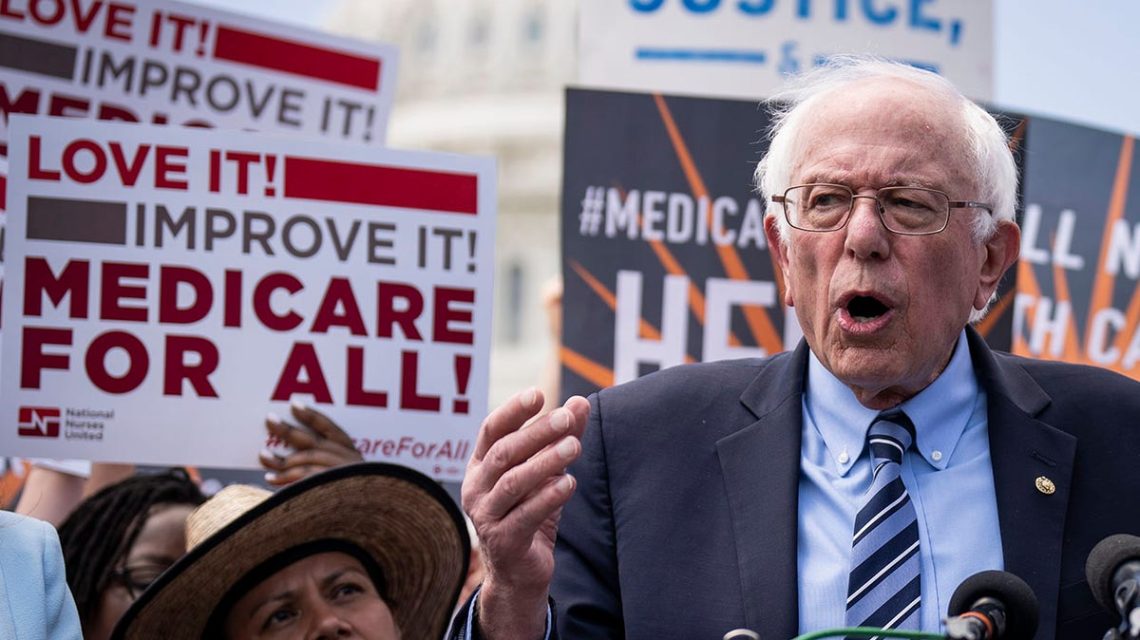
Imagine a scenario where a politician offers the greatest financial benefit in American history: no more health insurance premiums, deductibles, or copayments. Healthcare for everyone, thanks to government funding. Sounds appealing, right?
Senator Bernie Sanders is a notable advocate for Medicare for All. This proposal suggests that while healthcare at the doctor’s office might seem free, the cost appears elsewhere, often in your paycheck.
The $30 Trillion Challenge
The Congressional Budget Office has examined single-payer healthcare systems, predicting federal spending would rise by $1.5 trillion to $3 trillion annually by 2030. Over ten years, this could total $30 trillion. For context, in 2026, the federal government collected around $5.4 trillion in revenue.
The U.S. government already manages over $40 trillion in debt. Increasing this financial responsibility is significant. While supporters highlight savings in private insurance premiums, the underlying costs move to tax-funded expenses.
The Tax Burden
The Committee for a Responsible Federal Budget explored financing the additional $30 trillion, suggesting options like a 32% payroll tax or a 25% income surtax. These models illustrate the potential tax increases needed to support this system.
Different families might experience varied outcomes. Savings on premiums and deductibles for one family may translate into higher taxes, possibly resulting in a financial loss.
Increased Demand, Limited Supply
If more people access healthcare without financial concern, demand could rise. However, this doesn’t mean an immediate increase in available medical professionals. The current shortage may result in longer waiting times for services.
Changes to Current Insurance
Approximately half of Americans will have employer-sponsored health coverage in 2026. A shift to Medicare for All would overhaul existing systems. Some might appreciate this, while others could lose current benefits and networks they value.
The Economic Reality
Politicians often simplify healthcare discussions, ignoring the financial complexities. The real challenge is balancing affordable, high-quality care with economic stability. In 2024, the U.S. spent around $5.3 trillion on healthcare, necessitating a focus on prices, waste, drug costs, and access.
A single-payer system might reduce some costs, but savings aren’t guaranteed, nor is a smooth transition. The main consideration must be whether an expanded system can be sustained without creating new financial issues.
When faced with promises of cost-free services, it’s crucial to question where the hidden costs lie. Always investigate the financial implications before committing to large-scale policy changes.
 Jewish Activist Criticizes Event Cancellation at CUNY School
 Debate on School Choice in Texas Elections
 Amy Klobuchar Takes On Governorship with Promises for Minnesota’s Growth
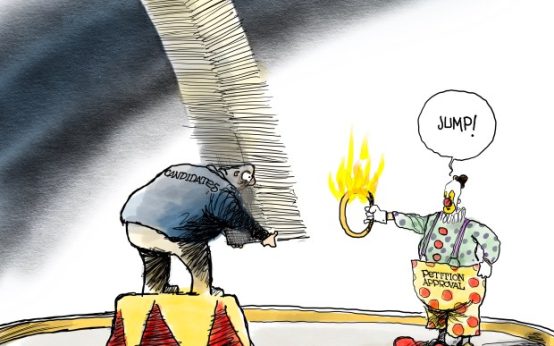 Challenges of Signature Requirements for Political Candidates in Illinois
 Debate Rekindled Over Gray Wolves and Livestock Losses
 Navigating the Holidays with GLP-1 Medications