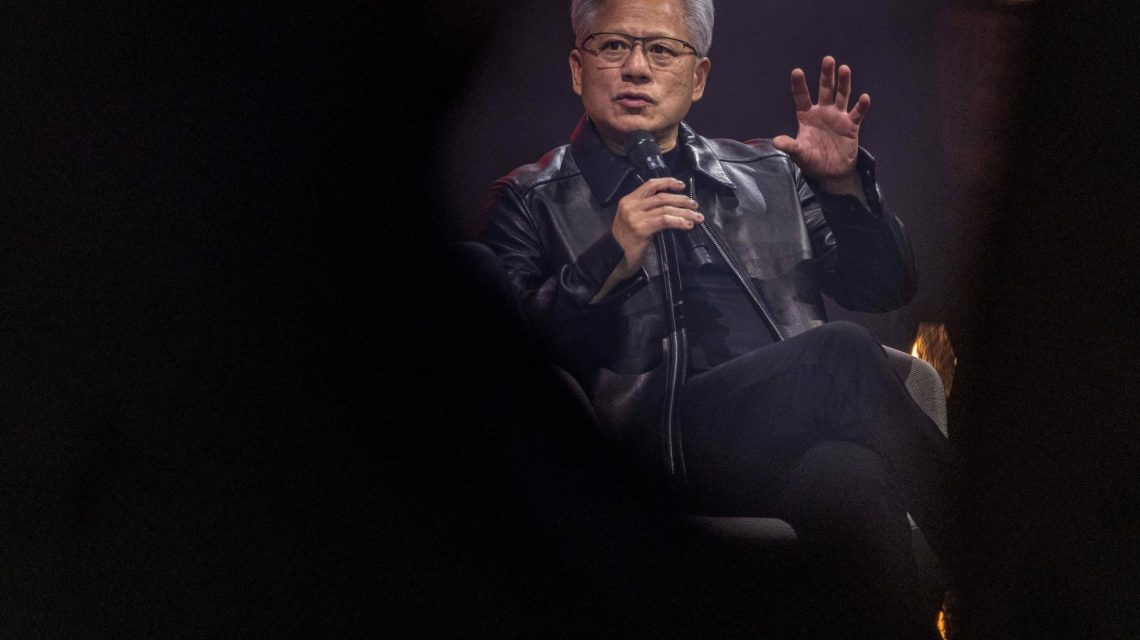
When news emerged that Jensen Huang was removed from his company, it sparked notable concern within the Asian American community. This reaction stemmed from a familiar pattern: when an Asian figure becomes involved in a scandal, it often leads to broader scrutiny of an entire ethnicity. An exhibition titled Hidden in Plain Sight: Asian Americans and the Making of America, held at the Federal Hall National Memorial in New York this October, presents a different narrative. It illustrates how Asian Americans have contributed to the country through labor, law, and science.
Jensen Huang’s actions are his own responsibility, and this fact cannot be ignored. However, using one individual’s failure as a basis to question the loyalty of an entire ethnic group reflects a recurring political bias directed at certain groups.
At the exhibition’s opening, there were reminders of recent inflammatory statements by right-wing podcast hosts about interning Chinese Americans. Such comments are both dangerous and ignorant, rooted in a persistent disregard for the historical contributions of Asian Americans. These contributions often go unnoticed in mainstream narratives.
The exhibition Hidden in Plain Sight intends to rectify this absence in public memory. It presents Asian Americans not as a ‘model minority’ seeking recognition, but as pivotal figures in American state-building. Examples include Lee Shao and other Chinese railroad workers, who risked their lives to lay tracks across the Sierra Nevada, connecting the continent. It highlights Patsy Takemoto Mink, a Japanese American congresswoman instrumental in advancing Title IX, which transformed women’s legal status in education and sports. Also mentioned is Indian American scientist Narinder Singh Kapany, whose work on fiber optics laid the groundwork for global communication. These contributions are foundational and independent of any single person’s reputation.
Nonetheless, public discourse exhibits a troubling imbalance. When a white CEO resigns amidst scandal, questions rarely arise about whether ‘white Americans are fit to lead.’ Yet, when an Asian American is involved, concerns of ‘loyalty’ and ‘belonging’ often surface. Frank Wu’s book Yellow argues that Asian Americans continue to be perceived as ‘perpetual foreigners’ whose American identities are continuously scrutinized, regardless of their accomplishments or birthplace.
Moreover, the role of Asian Americans in corporate America is not as advanced as presumed. They constitute about 13 percent of the professional workforce but only about 6 percent of executive positions; in Silicon Valley, they hold 27 percent of professional roles but only 14 percent of executive positions. The ‘bamboo ceiling’ signifies a systemic discrepancy between leadership expectations and those expected of Asian Americans. Jensen Huang’s rise signifies a breach of this barrier. However, his success alone does not indicate that the ceiling has vanished, nor should his downfall be used to deny its existence.
The venue of the exhibition, Federal Hall, is symbolic. It is the site where Washington took his presidential oath, marking the beginning of America’s founding narrative. By situating Asian American stories here, the message is clear: they are not a mere addition but an integral part of the American story. The contributions to this nation’s physical and legal infrastructure, whether through railroad construction, legislative accomplishments, or technological advancements, remain intact despite any scandals.
The issue at hand is not whether Jensen Huang ‘represents’ Asian Americans—he does not, and no one individual could—but whether we will continue to accept a system where minority groups are collectively judged by an individual’s errors, unlike the majority, who are not held to the same standard. If Huang’s mistakes warrant questioning all Asian Americans’ loyalty, could the same logic apply to a white CEO’s misconduct and its implications for white Americans?
This question does not necessitate an answer. Its importance lies in its proposition.
John Wang is the founder and president of the Asian American Business Development Center, which promotes the recognition of Asian American professionals, entrepreneurs, and business leaders. AABDC bridges cultures, encourages economic opportunities, and facilitates connections between U.S. and Asian businesses.
The viewpoints presented in this article belong to the writer.
 Amy Klobuchar Takes On Governorship with Promises for Minnesota’s Growth
 Understanding ‘I’ Statements in Communication
 The Implications of Democratic Infighting
 Tragic Incident at Cincinnati Zoo Sparks Controversy
 Katt Williams Shares Key to Success: Embracing Rejection
 A Day in the Life: Insights and Commentary from Joe Kinsey