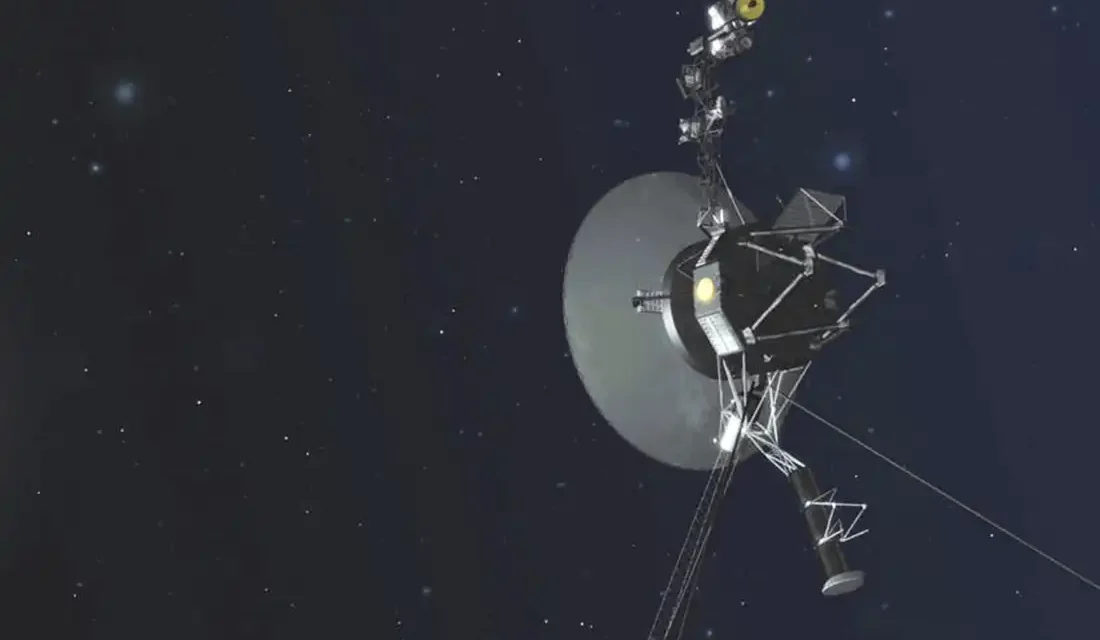
NASA’s Voyager 1 has traveled farther than any other human-made object in space. On Wednesday, it reaches a significant milestone: a distance of one light-day from Earth. To commemorate this, NASA invites the public to participate in the “Shine Bright for Voyager’s Light-Day” celebration. They encourage people to send Voyager’s call sign V-G-R into the sky using morse code, employing flashlights or phone lights.
Participate in the Celebration:
- V: Three quick flashes, one long flash
- G: Two long flashes, one quick flash
- R: One quick flash, one long flash, one quick flash
A light-day represents the distance light covers in 24 hours, surpassing 16 billion miles. Voyager 1 launched on September 5, 1977, and has been exploring space for almost 50 years. Its mission has included flybys of Jupiter and Saturn, where it discovered Jupiter’s faint ring system in 1979. In 1980, it captured detailed images of Saturn’s rings and moons.
Voyager 1 became humanity’s most distant object on February 17, 1998, when it overtook Pioneer 10. Both Voyager 1 and its twin, Voyager 2, are the only spacecraft to operate outside the heliosphere, a protective solar system shield. Voyager 1 crossed into interstellar space in 2012 and continues to study magnetic fields, particles, and plasma waves beyond the heliosphere.
In an effort to conserve power, NASA turned off the Low-energy Charged Particles experiment earlier this year. This decision might extend the probe’s operational lifespan. Two science instruments remain active: one measuring magnetic fields and another detecting plasma waves.
Voyager 1 carries the Golden Record, an “interstellar time capsule” designed to share Earth’s story with alien life. The record includes 115 images, natural sounds like surf and wind, and greetings in 35 languages. It also provides symbolic instructions on playing the record and details about the probe’s origin.
Voyager 1 is expected to achieve “light-day status” at 5:16 a.m. ET on Wednesday. This marks 49 years, two months, and 11 days of its incredible journey through space.
 Silicon Valley’s Pursuit of the ‘Perfect Baby’ and Autism Screening
 Ownership Issues of St. Anthony Falls Cutoff Wall
 Archaeologist Uncovers Roman Fort and Solves Medieval Skeleton Mystery
 NIH’s Foreign Animal Research Funding Criticized for Safety Failures
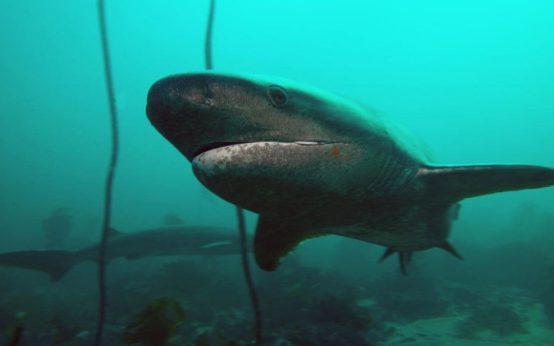 Deep-Water Shark Encounter During Ocean Research
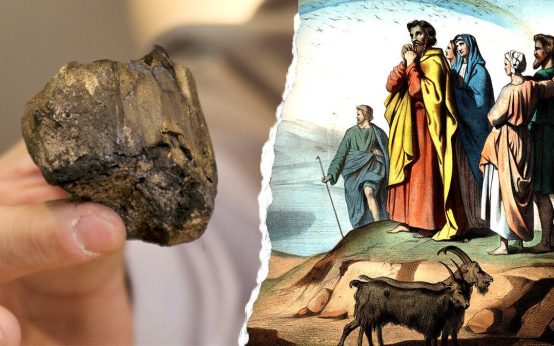 Lab Results Date Noah’s Ark Wood to 4,300 Years Ago