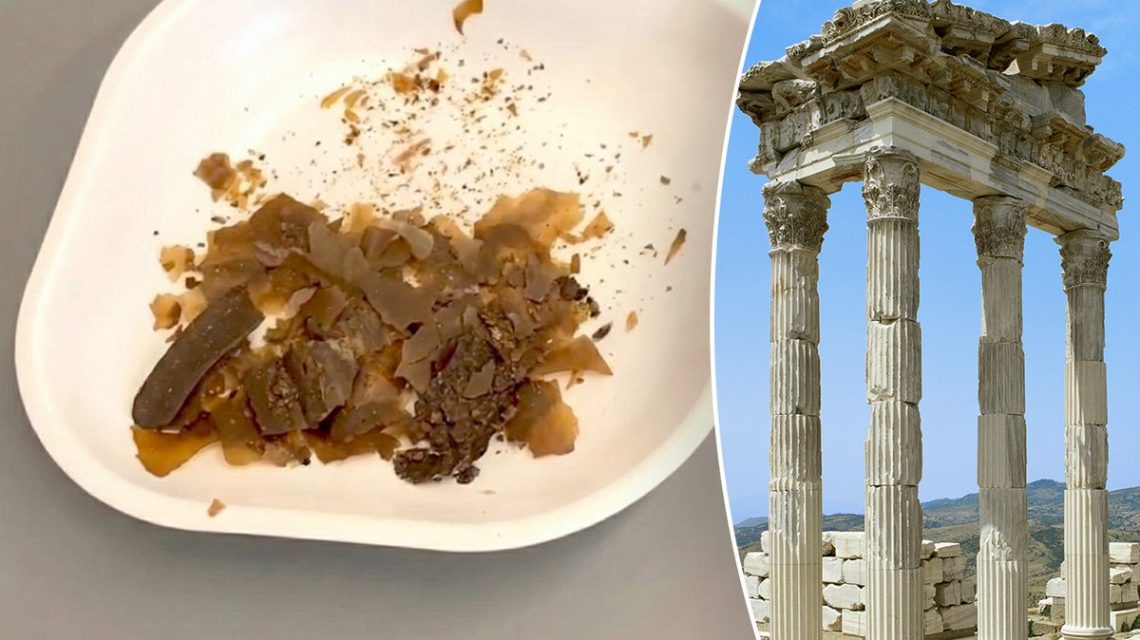
Recent research has brought to light a fascinating and somewhat surprising aspect of Roman medical practices, uncovering evidence that they used an unexpected ingredient in their treatments. The study focuses on a vessel found in Pergamon, a city with a rich history. Originally a Greek settlement, Pergamon became part of the Roman Empire in 133 B.C. Today, it is situated in İzmir Province, western Turkey. While on the surface, the vessel appeared ordinary, detailed examination revealed it had a medical purpose, containing residues described as ‘dark brownish flakes,’ which analysis confirmed to be fecal matter.
The Journal of Archaeological Sciences published a study in April 2026 providing what the researchers call the first ‘direct chemical evidence for the medicinal use of fecal matter in Greco-Roman times.’ Cenker Atila, an archaeology professor at Sivas Cumhuriyet University in Turkey and a study co-author, shared insights with Fox News Digital, highlighting that historical sources had mentioned the use of fecal matter in ancient Roman medical practices. This finding, however, provides concrete evidence that such treatments were indeed practiced.
Atila discovered the vessel among artifacts in the Bergama Museum, Turkey, while researching another project. Upon observing residues in the glass vessels, he and his colleagues collected samples for further examination. ‘This discovery represents the first archaeological evidence of medicine known to be used during the Roman era,’ he stated.
While working on the Pergamon Museum glasswork project, we did not anticipate uncovering an ancient cosmetic or medicinal substance used by the famous physician Galen.
The essence found in the vessel, called an unguentarium commonly used for perfumes, was a mixture of human feces, thyme, and olive oil. Renowned for its medicinal uses, Galen referred to this preparation in ancient texts. A chemical analysis identified the mixture, affirming its historical use as medicine, with thyme serving to disguise odors and harness its antibacterial properties. Despite the vessel’s contents, Atila emphasized there was no smell when the container was opened.
This discovery not only illuminates Roman medical practices but also underscores the significance of meticulously examining every archaeological find, no matter how mundane it may appear. Each object can hold critical insights into ancient life and practices.
 The Unique Challenges of the Pumpkin Toadlet
  Animal Self-Medication Insights
  Carlo Rovelli’s Perspective on Physics and Ultimate Reality
  Department of Defense Legal Waiver Promotes UAP Disclosure
  Ancient Ring Offers New Insight on Pontius Pilate’s Authority
  Lost City Linked to Jesus Discovered Near the Sea of Galilee