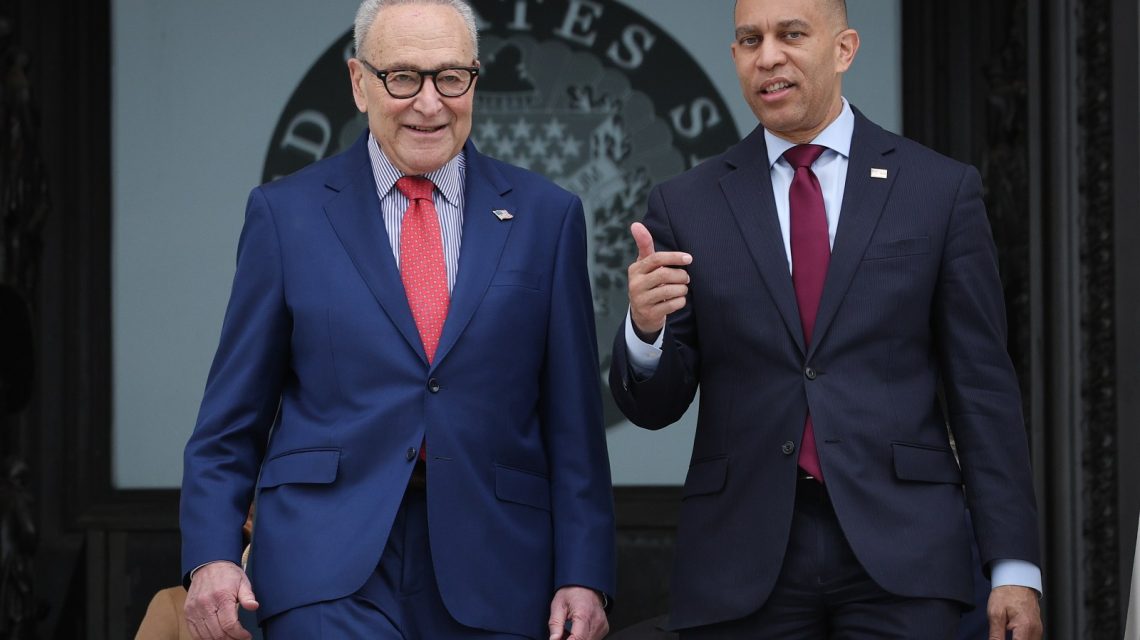
House Minority Leader Hakeem Jeffries is poised to become the House Speaker following the Democratic victory in the midterm elections. However, polling numbers suggest challenges ahead. The final Economist/YouGov poll before Election Day, conducted from October 23-26, indicated that only 26% of registered voters approved of Jeffries’ performance, while 47% disapproved. His Republican counterpart, Speaker Mike Johnson of Louisiana, received a 32% approval rating with 45% disapproval, placing Jeffries 8 points behind on net approval.
The poll surveyed 1,440 registered voters and had a margin of error of approximately 3 percentage points.
Senator Chuck Schumer, another New York Democrat, recorded the worst approval numbers among the four congressional leaders polled, with a 24% approval and 54% disapproval. Meanwhile, Senate Majority Leader John Thune, a Republican from South Dakota, had the lowest approval rating at 21%, yet fewer disapproved of him at 46%.
Calls for New Democratic Leadership
The Democratic win has sparked calls for leadership changes within both chambers of Congress. Petitions demanding new leadership have received significant support. Despite this, no declared challengers have emerged within the Democratic caucus for Jeffries or Schumer. Newsweek sought comments from Jeffries’ and Schumer’s offices but has yet to receive a response.
Public and Internal Pressures
After flipping both chambers in the election, Democrats face low confidence in their leaders. Jeffries trailed Johnson in the final preelection poll. Congress as an institution had an 18% approval rating with 59% disapproval.
“House Democrats: CHOOSE A NEW SPEAKER,” a Change.org petition, garnered 762,343 verified signatures by Thursday night, indicating dissatisfaction with current leadership.
The petition, created by Nicole Whitted, criticizes Jeffries’ corporate ties and past meetings with figures such as Jared Kushner. Incoming Democratic representatives like William Lawrence and Melat Kiros have expressed desires for alternative leadership, though New York City Mayor Zohran Mamdani continues to support Jeffries.
Schumer’s Internal Opposition
Schumer faces dissatisfaction within his party. Two Change.org petitions advocating for a new Senate majority leader achieved over 100,000 signatures. Opponents criticize Schumer for past actions, such as abandoning the Iran deal and supporting Republican legislation during a government shutdown.
Several incoming Democratic senators, including Juliana Stratton and Adam Hamilton, have stated they will oppose Schumer. Discussions for a successor include Maryland Senator Chris Van Hollen, though he expressed no interest in the position before the election.
Leadership Elections Approach
Despite internal challenges, Jeffries and Schumer remain strong candidates for their roles. Jeffries, aiming to become the first Black House Speaker, declared his candidacy in a letter to colleagues. With Democratic gains in the House, a protest bloc opposing him would struggle for leverage.
Senate leadership elections await, with Schumer needing a simple majority to retain his position. He continues to express confidence despite dissent within his caucus.
 Mississippi State Auditor Shad White Announces Gubernatorial Bid
 Trump Dismisses Third Impeachment Prospects
 Custody Dispute Involving Rep. Max Miller Delayed
 Attorney General Addresses Post-Midterm Democratic Threats
 Senator Elizabeth Warren and the Future of Crypto Regulation
 Bipartisan Opportunities in Foreign Policy