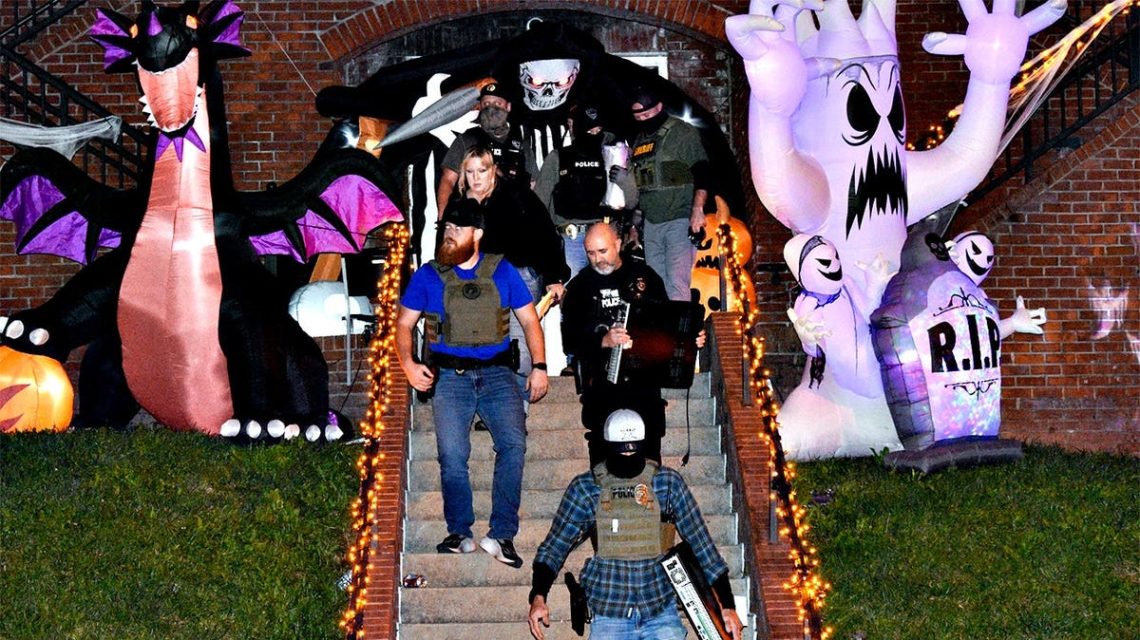
Law enforcement agencies have been scrutinizing evidence seized from the Lambda Chi Alpha fraternity house at West Virginia University as part of ongoing hazing investigations nationwide.
On October 26, a cacophony of loud music and shouts from numerous bystanders filled the air around the multi-story brick fraternity house on the Morgantown campus. Officers from both the campus and local police departments executed a search warrant related to hazing allegations. They carried bags and cases of evidence to police vehicles, maintaining a composed demeanor throughout the operation.
Reports indicate that, earlier this month, the university placed the Lambda Chi Alpha chapter on interim suspension following anonymous hazing allegations. In parallel, search warrants were also conducted at the house of the school’s Pi Kappa Alpha chapter, as reported by WVU Safety and Wellness on social media.
The Pi Kappa Alpha fraternity, also known as PIKE, is under similar scrutiny for hazing allegations. At that time, the university had not suspended the PIKE chapter, but the investigation continued.
Renewed Focus on Hazing
These fraternities are among the latest under investigation amid a surge in Greek life hazing probes across the country. Hazing often involves forcing new recruits in the military or college fraternities to perform challenging, humiliating, or dangerous tasks.
Despite a spike in law enforcement attention, Michael Ayalon, a hazing prevention expert and CEO of Greek University, suggests this doesn’t necessarily indicate more hazing incidents. Rather, increased awareness has stemmed from recent changes in federal laws. The Stop Campus Hazing Act, signed into law in December 2024, mandates more transparency in hazing allegations across the nation, according to Ayalon.
He remarked, “We certainly are seeing increased visibility and scrutiny of hazing on college campuses, particularly as universities face greater expectations for transparency and accountability.” This increase in visibility doesn’t imply more frequent hazing, but rather more reports due to less fear of retaliation.
A Broader Impact
These investigations are impacting public perception of fraternity life, Ayalon stated. “The positive contributions of fraternity members are often overshadowed by allegations involving a few chapters,” he said. “Every hazing incident makes recruiting new members more challenging, complicates alumni support, and strains university relationships with fraternities.”
Despite decades of promoting awareness about the risks of hazing, policy changes, and tragic outcomes, some chapters maintain that hazing remains a necessary initiation step. This belief is flawed, Ayalon argued, as members often justify their experiences by saying, “I had to go through it, so you have to go through it too.”
Hazing is rationalized as a way to build brotherhood and loyalty. Ayalon noted, “There is a profound difference between working through a meaningful challenge as equals and being humiliated or controlled by those in power.”
Historically, hazing practices vary among fraternities and sororities. In traditional white fraternities, or IFC fraternities, forced alcohol consumption is prevalent, contributing to 82% of hazing fatalities. White sororities typically involve psychological abuse, like exclusionary tactics.
For historically black fraternities and sororities within the National Pan-Hellenic Council — the Divine Nine — both physical and mental abuses have been reported, and recent high-profile cases have even involved drugs.
A West Virginia University spokesperson emphasized the institution’s commitment to student safety: “West Virginia University takes seriously the safety and well-being of our students. Due to the nature of the investigations, no other details will be released at this time.”
Efforts to reach out to Lambda Chi Alpha and Pi Kappa Alpha for comments were made, but further details remain forthcoming as the investigations progress.
 Melania Trump’s Support for LSU’s New Scholarship Endowment
 DOJ Sues UCLA for Alleged Discrimination Against Jewish and Israeli Students
 Student-Loan Borrowers Face Increased Oversight
 The Role of Public Schooling in Equalizing Social Conditions
 Understanding Information in Modern Classrooms
 The Ongoing Debate on Public Schooling as the Great Equalizer