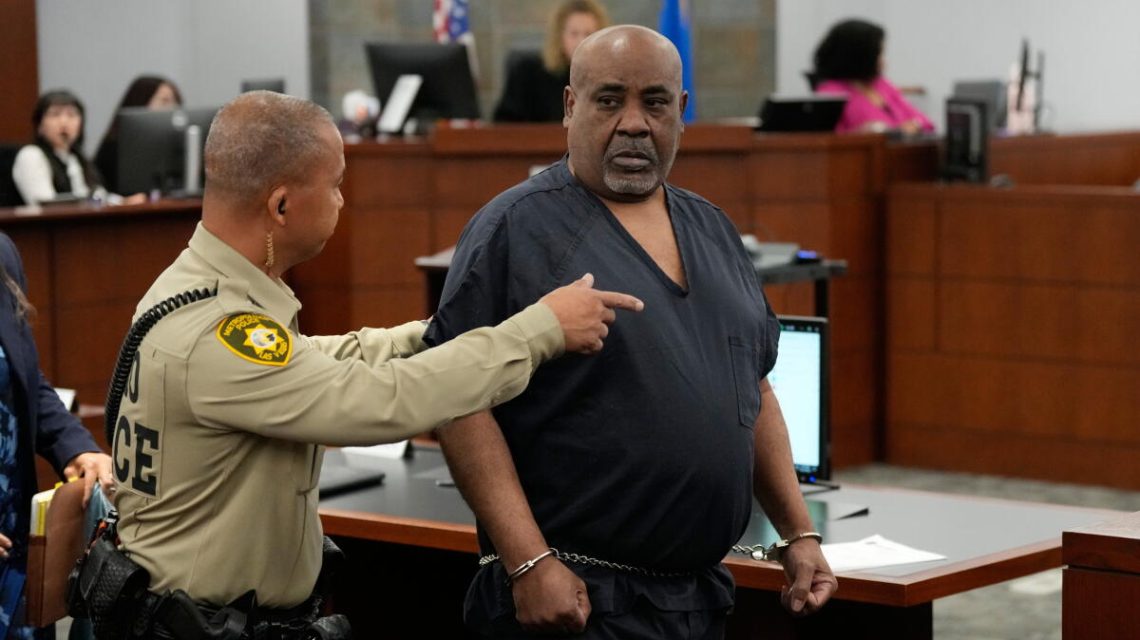
The man responsible for organizing the death of rapper Tupac Shakur, which stoked a major feud involving gang members and executives, has been sentenced to 40 years to life in prison. Clark County District Court Judge Carli Lynn Kierny, during the sentencing of Duane “Keffe D” Davis, remarked, “You don’t get to take a man from his family and just walk away from it, especially Tupac Shakur. The world never forgot about him and his death, and neither did Las Vegas.”
Davis, aged 63, was found guilty of murder and of using a deadly weapon for orchestrating Shakur’s fatal shooting on September 7, 1996. He received consecutive sentences totaling 40 years to life.
Throughout the trial, which spanned two weeks, prosecutors provided evidence indicating Davis, as the leader of his gang, facilitated Shakur’s killing. Davis allegedly handed over a .40-caliber handgun to members of the Southside Crips-Burris Street gang near the Las Vegas Strip. Key evidence was derived from interviews Davis gave to authorities, a documentary, and his 2019 memoir.
Before his sentencing, Davis stated his intention to appeal. He arrived at the sentencing hearing in Las Vegas after his murder conviction for Shakur’s death. Shakur’s murder happened during a tense period in the rap industry, involving a rivalry between Death Row Records, led by Marion “Suge” Knight, and Bad Boy Records, headed by Sean “Diddy” Combs.
Shakur’s killing sparked conspiracy theories and deep reflection within the music industry, also triggering a 10-day gang conflict in Compton.
Sekyiwa Shakur, Tupac’s sister, expressed to the judge how the murder devastated her family. Tupac Shakur supported many relatives and was a significant figure in their lives. His death left her with psychological challenges. She believes the severity of Davis’s actions warrants maximum punishment.
Prosecutor Marc DiGiacomo argued Davis profited from Shakur’s death by selling his memoir. DiGiacomo contended that Davis deserved the harshest sentence possible.
Prosecutors argued that Shakur’s death was a retaliation act; Shakur, Knight, and Mob Piru gang members linked to Death Row Records had previously assaulted Davis’ nephew, Orlando Anderson, after a Tyson fight at the MGM Grand, captured on security footage.
On the murder night, Davis allegedly passed a gun to an assailant who fired upon Shakur and Knight in their car. Shakur died six days later at age 25.
Evidence at the trial included testimonies from police investigators, journalists, and excerpts from Davis’ memoir. Anthony Michael Sanft, representing Davis, contended there was no forensic or eyewitness evidence linking Davis to the crime.
The investigation into the 1997 murder of Christopher “Biggie Smalls” Wallace led to new insights into Shakur’s murder. Former LAPD detective Daryn Dupree, during Davis’s 2008 interview, noted Davis hinted at involvement in Shakur’s murder.
Davis had an agreement to share information with a task force, which included potentially benefitting from providing details. Investigations focused anew on Shakur’s killing due to Davis’s statements.
In court, the prosecution revealed a recording of the interview, where Davis described the car setup on the night of the murder. He mentioned Terrence Brown driving with Anderson and Deandrae “Big Dre” Smith in the back and Davis himself occupying the passenger seat. Davis described how they noticed Knight and Shakur because some women were shouting at the rapper. He believed Knight had been fatally shot during the incident.
Prosecutors addressed jurors, stating that by releasing his memoir, Davis nullified the 2008 proffer agreement, allowing law enforcement interviews to become evidence. Davis’s lawyer argued the memoir’s purpose was merely to enhance book sales, denying any real involvement in Shakur’s murder.