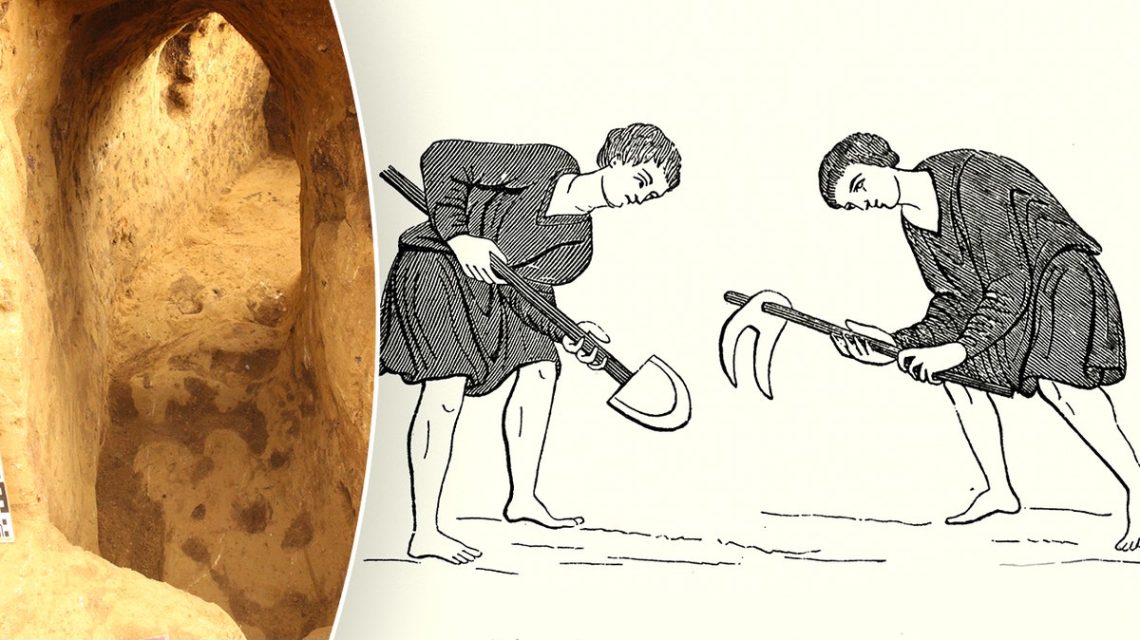
Archaeologists in Germany have recently uncovered a remarkable discovery – a hidden tunnel from the Middle Ages located within an ancient burial site. This fascinating find was announced on January 29 in a press release from the State Office for Heritage Management and Archaeology of Saxony-Anhalt (LDA Saxony-Anhalt).
The tunnel was discovered within a Middle Neolithic burial complex near Reinstedt, Germany. Experts estimate that the burial complex dates back to the 4th millennium B.C. and was used by the Baalberge culture. Officials revealed that the tunnel was unearthed late last year prior to the construction of a wind turbine.
Approximately 5,000 years after the original burial site was established, an underground tunnel system known as an ‘erdstall’ was constructed within the loess soil of the site. Loess refers to a type of compact, wind-deposited silt. The medieval tunnel discovered at the site dates back to the late Middle Ages, although its intended purpose remains a mystery.
“Interpretations of erdstalls range from being hiding places to spaces used for cultic activities,” the official statement noted.
Initially, archaeologists mistook this feature for a grave. The site where the tunnel was found featured a trapezoidal ditch with several ‘poorly preserved’ burials dating to the Late Neolithic period of the 3rd millennium B.C. A stone slab at the northern end of the pit initially misled researchers to think it marked a grave before they recognized its true nature as an underground tunnel.
Upon further investigation, excavators discovered late medieval pottery, numerous stones, and small cavities within the loess fill, confirming the structure as an erdstall.
Officials highlighted that the underground passage also contained a horseshoe and traces of charcoal from a short-lived fire, along with some animal remains.
Interestingly, it appeared that the tunnel was deliberately sealed. “At the narrowest point of the entrance, an accumulation of larger stones stacked on top of one another was observed, which could indicate an intentional sealing of the entrance,” officials stated.
It is speculated that the Neolithic ditch enclosure might have remained visible above ground during the Middle Ages, and the tunnel was potentially constructed in that location because medieval Christians would have avoided a site associated with pagan burials.
This discovery is part of a series of archaeological breakthroughs across Germany. For instance, last summer, a mysterious Roman-era settlement site was unearthed in North Rhine-Westphalia, with structures and artifacts preserved over nearly two millennia. In another archaeological venture, early medieval treasures, including a rare cross, were found along the northern German coastline.
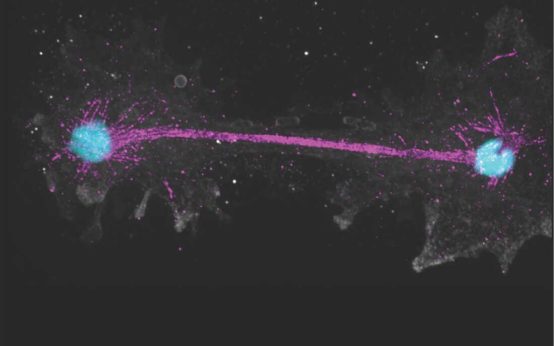 Fire Amoeba Discovery Challenges Limits of Complex Organisms
  Impact of Sleep Types on Disease Risk
 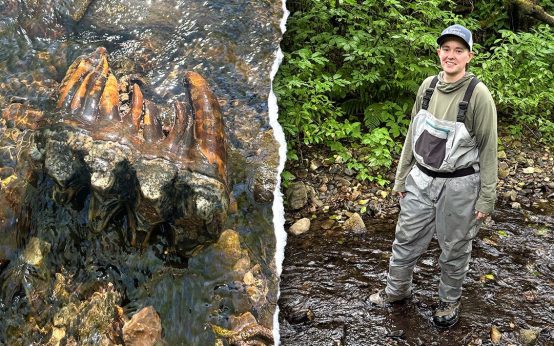 Ice Age Mastodon Tooth Unearthed in California Creek
  The Unique Challenges of the Pumpkin Toadlet
  Lonnie G. Bunch III Reflects on His Legacy at the Smithsonian
  Animal Self-Medication Insights