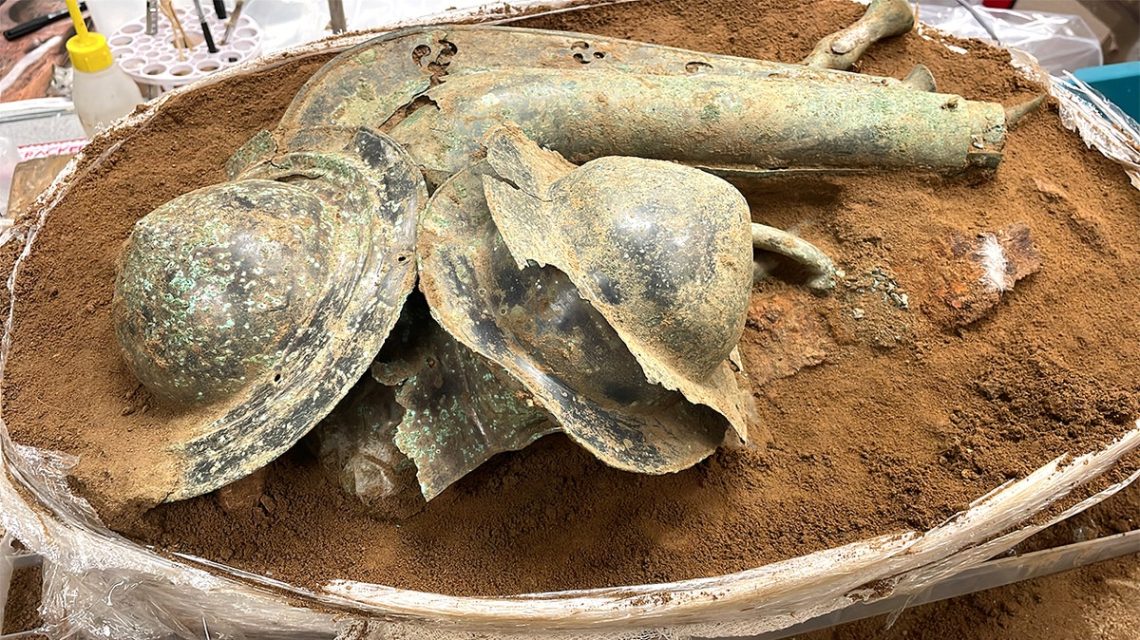
Excavations at an archaeological site in East England have led to the remarkable discovery of an ancient Celtic battle trumpet, known as a carnyx. This rare and well-preserved artifact dates back to the Iron Age and might have connections to the legendary Iceni tribe of Queen Boudica. Historic England, an organization devoted to preserving England’s historic sites, announced these significant findings earlier this year.
The standout from this collection is the near-complete carnyx, which was unearthed by archaeologists of Pre-Construct Archaeology in West Norfolk. Such trumpets were traditionally used by Celtic warriors to create haunting sounds during battles, serving to motivate their fighters and intimidate adversaries. These instruments also captured the interest of the Romans, who often depicted them as prized trophies of war.
“These animal-headed bronze instruments were used by Celtic tribes across Europe to inspire their warriors in battle and fascinated the Romans, who frequently depicted them as war trophies,” according to a statement from Historic England. This particular find is notable as it’s only the third known example of a Celtic carnyx discovered in Britain, with this one being among the most intact discovered across Europe.
The site of this find in Norfolk is significant as it is considered the heartland of the Iceni tribe, whose most famed leader, Queen Boudica, is known for mounting a formidable, albeit unsuccessful, rebellion against Roman rule in the 1st century A.D. Though this artifact cannot be definitively tied to Boudica herself, its proximity to her tribe’s historical territory is undeniable.
Tim Pestell, a senior curator at the Norfolk Museums Service, expressed the importance of this discovery, describing it as “a powerful reminder of Norfolk’s Iron Age past.” He noted that this hoard offers archaeologists an unmatched opportunity to explore and understand several rare items from this era and to unravel their intriguing past.
Besides the carnyx, the excavation also yielded other fascinating items. Excavators found a sheet-bronze boar’s head, a decorative piece, as well as five shield bosses, which are protective domes used in the construction of shields. An unidentified iron object was also uncovered at the site.
Historic England underscored the rarity of these items, highlighting their significance both within a British context and in broader European archaeology. This cache of artifacts is currently undergoing careful examination and conservation at the Norfolk Museums Service, where experts are working to stabilize them for future research.
The legal status of these finds will be determined by a coroner by early 2026, which will guide the future handling and study of these remarkable artifacts.
Mark Hinman, CEO of Pre-Construct Archaeology, praised the team’s diligence, noting their exceptional work in recovering these fragile artifacts. There’s an exciting scope for further discoveries and insights into Iron Age Britain, with recent years seeing various significant finds, including a massive and pivotal dig last year uncovering over 800 objects from the same era.
 Fire Amoeba Discovery Challenges Limits of Complex Organisms
  Impact of Sleep Types on Disease Risk
 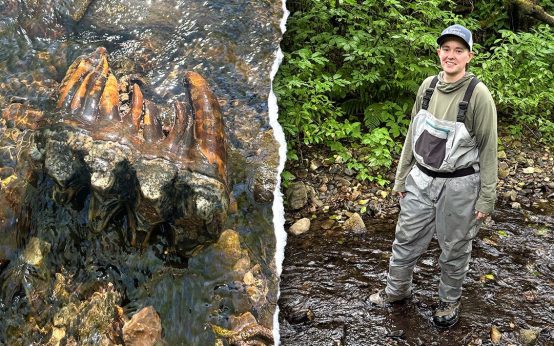 Ice Age Mastodon Tooth Unearthed in California Creek
  The Unique Challenges of the Pumpkin Toadlet
  Animal Self-Medication Insights
  Carlo Rovelli’s Perspective on Physics and Ultimate Reality