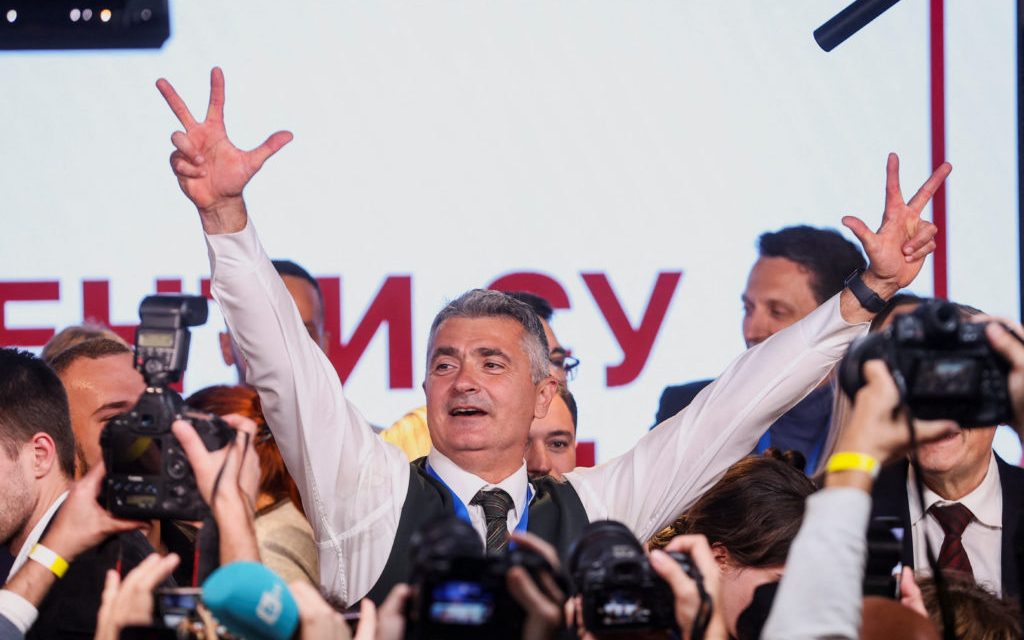
The long-standing leader of Serbia, Aleksandar Vucic, acknowledged his party’s defeat in an election against a diverse opposition led by students. This marks a major political change in the Balkan region. Vucic, who enjoyed support from Russian President Vladimir Putin, had been in power for 14 years. He had accused the student protests as foreign attempts to oust him.
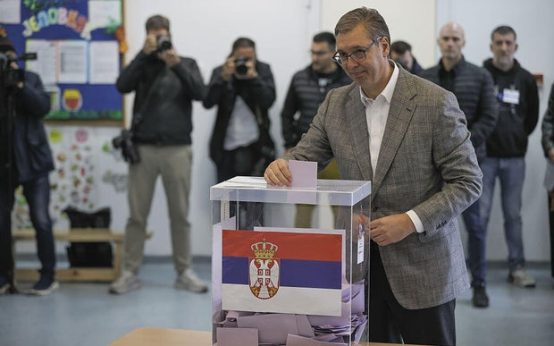
In the capital, Belgrade, and other cities, people celebrated the election result with high turnout and growing tensions marking the event. Vucic’s right-wing Serbian Progressive Party faced off against the student-led movement, which accused the government of corruption and undermining democracy. Voters in Serbia, totaling around 6.4 million, were tasked with choosing lawmakers for the 250-member Parliament.
Announcing the election results, Vucic estimated that the Students’ List would secure between 135 and 140 seats, while his Serbian Progressive Party (SNS) would hold approximately 105 seats. “The Students’ List has won,” he admitted, while blaming independent media in Serbia, unnamed European countries, and an “American deep state” for his defeat.
Belgrade Celebrates
As the results were declared, supporters of the Students’ List filled the streets of Belgrade, honking car horns and chanting “Aleksandar is gone,” a reference to Vucic. Crowds quickly dismantled the pro-Vucic camps in central Belgrade.
Tensions rose throughout the voting day with police and special forces on high alert, especially around the election commission headquarters.
Corruption Protests and Vucic’s Downfall
The election loss came after a series of youth protests that began when 16 people died in 2024 following a station collapse in Novi Sad. Protesters blamed the disaster on corruption and cronyism.
Dijana Hrka, a victim’s mother, celebrated the result with others in Belgrade. She expressed hopes for accountability and justice for her son’s tragic death.
Vucic had strong support among many Serbian voters who viewed him as a stable leader amid global challenges, an image maintained by mainstream media.
Student Movement Challenges Vucic
Vucic had previously overcome fragmented opposition, but the student movement proved resilient. The Students’ List featured a mix of experts, athletes, farmers, and artists instead of traditional politicians, aiming to restore community and solidarity.
The students’ campaign focused on rebuilding the economy and democracy, reaching out to voters in rural areas often loyal to Vucic.
This victory mirrors similar changes in Hungary, where youth participation ended Viktor Orbán’s long rule. It signals a wider trend of youth activism across Europe.
Monitoring and Concerns
The EU watched the election closely, as Serbia is a candidate for membership. Observers estimated record turnout, with long lines at polling stations.
Election monitors noted irregularities, including ballot photographing and vote buying attempts. Concerns about the election environment included media control and cyberattacks against activists.
Recent local elections and previous parliamentary votes were also marred by claims of fraud and violence against journalists.
A free press remains essential for democracy. Supporting trusted journalism and open dialogue is crucial.
 Justice Department Seeks Court Intervention in Alaska Senate Race
 Serbia’s Turning Point: Youth-Led Movement Defeats Longtime Strongman Leader Vucic
 Brazilians Decide in Crucial Presidential Runoff
 Fiery Exchanges and Personal Attacks in November’s Midterms
 Justice Department Challenges Alaska Senate Ballot Certification
 Pope Leo XIV Calls for Peace in Yemen and Condemns Jordan Attack