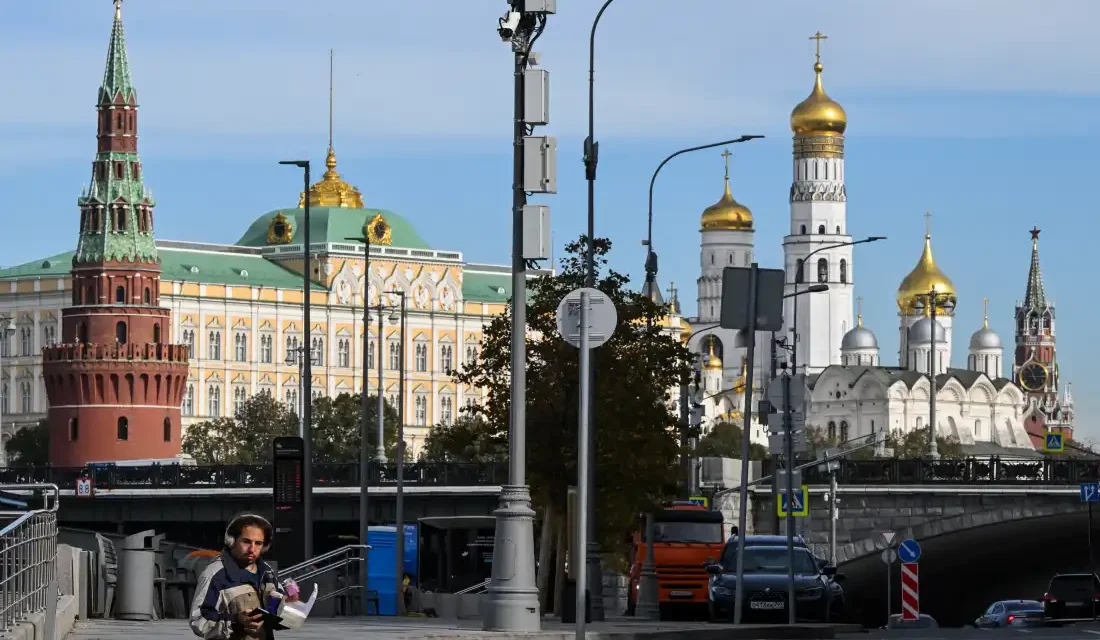
A pedestrian is seen using a smartphone against the backdrop of the Kremlin in central Moscow. Experts who monitor online influence schemes highlight that Kremlin-affiliated groups are renewing strategies aimed at creating distrust during election periods in the U.S. and globally.
Russian operatives have been dispersing fabricated statements about Democratic candidates. They produce AI-altered videos of celebrities and fake posts that mimic legitimate news outlets in an effort to sway American voters as Election Day approaches. According to researchers and informed legislators, Kremlin-backed entities are reusing tried-and-tested methods to instigate distrust and chaos.
“It’s a carnival out there,” stated Rep. Jim Himes of Connecticut, ranking member on the House intelligence committee. “They’re unleashing everything to stir up chaos and anarchy.”
The primary objective is to intensify divisions, weaken confidence in democracy, and shift U.S. support away from Ukraine. Darren Linvill, co-director of Clemson University’s Media Forensics Hub, observes that the Russian approach remains consistent. They plant false narratives on social media or websites that pose as news outlets, spread via state media, automated accounts, or paid influencers, hoping for real engagement.
Linvill compares this to how companies employ influencers for marketing. “In the same way marketing firms pay influencers to promote brands, the Russians spread falsehoods,” he explained. Influencers, familiar with their audiences, craft messages that appeal to them.
Recently, a Russian operation applied these techniques to propagate unfounded accusations against a Democratic U.S. Senate candidate. This effort was linked to a group known as Storm-1516, noted for using staged videos with actors and promoting these through influencer networks.
On Tuesday, fraudulent videos were posted on the X platform by a new account, flagged by the social network as potentially using a proxy to hide its actual location. These videos were likely crafted using artificial intelligence, as reported by research firm Graphika.
A characteristic of Storm-1516’s videos involves employing real actors whose faces are AI-modified to resemble others. These posts were shared by accounts flagged as bots. Within 12 hours, the videos were reposted by larger accounts previously identified as amplifiers of Storm-1516 narratives. One account even sought paid partnerships on X.
Consequently, other accounts reshared these, addressing politicians and journalists. One video garnered approximately 857,000 views in 24 hours, Alethea, a threat intelligence company, reported. Eventually, the originating and one of the large resharing accounts faced suspension, while other amplifying accounts removed their posts.
Earlier, during the run-up to the 2024 presidential election, Storm-1516 had circulated videos with similar false claims against Democratic figures. The strategy capitalizes on existing narratives to reinforce public beliefs, Linvill explained.
This election cycle has seen Russian operations promoting messages like Democrats disengaging from supporting Israel and fabricating corruption accusations against Democratic candidates. “Russia resembles a dark money PAC,” said Alethea founder Lisa Kaplan. “You need to grasp what’s out there to gauge its influence.”
Intelligence officials note Russia’s historical favoritism towards Trump and targeting of Democrats to undermine U.S.-Ukraine relations. A recent classified intelligence report accessed by Himes and Sen. Mark Warner revealed Russia’s opposition to candidates supporting Ukraine.
“There’s no evidence of interference with voting mechanics, only a robust influence environment,” Himes remarked.
Russia’s methods have targeted elections in France, Germany, and elsewhere, employing AI-generated content to impersonate various public figures, Graphika detailed in a report. “They have applied this template across several countries in Europe recently,” Linvill observed. The focus remains on inciting anger or fear, influencing voter turnout.
As elections approach, researchers anticipate the arrival of further false claims and videos, emphasizing voting and ballot processing during the selection period. Lisa Kaplan of Alethea summarized, “It’s about evoking emotion to affect turnout.”
Eric McDaniel of NPR contributed to this report.
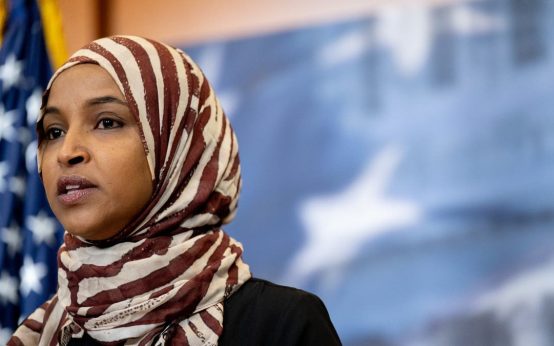 The Investigation into Ilhan Omar: Allegations and Legal Implications
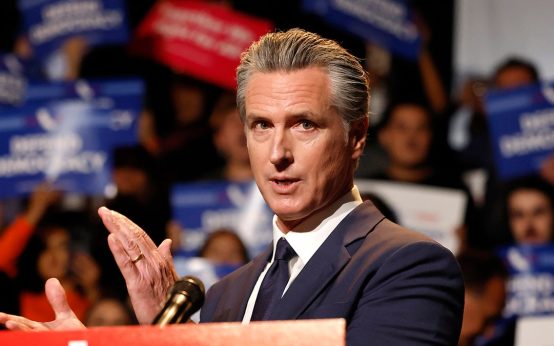 Federal Appeals Court Orders California to Address DOJ Concerns on Mail-In Ballots
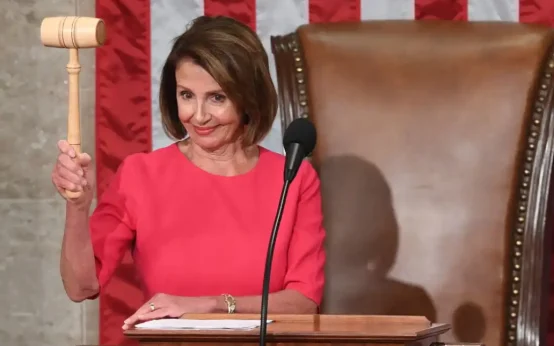 The Function and Impact of Midterm Elections in U.S. Politics
 Virginia Democrats Call for Restraint After Indictment of Senate Leader
 Water Crisis and Humanitarian Struggles in Taiz Amid Houthi Siege
 Fire at Hitler’s Mountain Retreat Leads to Arrest in Germany