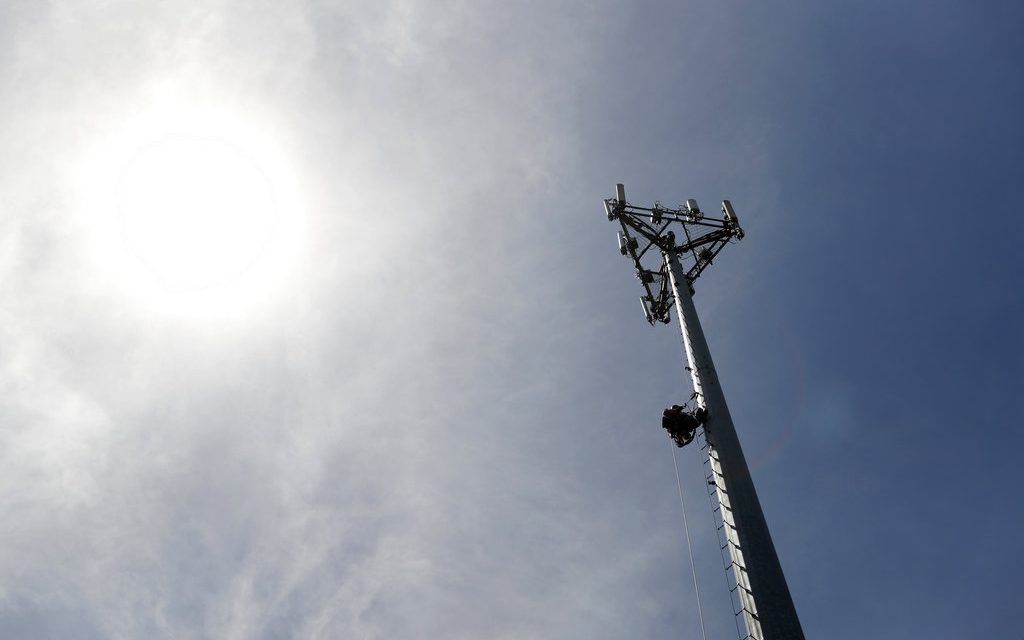
In May 2017, Nick Blase from True North Management Services climbed a cellular tower in High Ridge, Mo., highlighting an ongoing issue in America’s cellular networks. The Federal Communications Commission (FCC) report reveals a striking divide: while 95% of the U.S. population accesses 5G from a carrier, only 69% of road miles and 39% of land area are covered. In rural areas, access drops to 60% of roads and 38% of land. This rural-mobile divide affects those traveling, farming, hiking, or responding to emergencies.
Building additional cell towers might seem like a solution, but expanding terrestrial networks everywhere is not cost-effective. To address this, the FCC plans to invest up to $9 billion to enhance nationwide 5G coverage. Instead of viewing every lack of coverage as a tower deficiency, placing cell towers in orbit via satellite technology offers a viable alternative.
Direct-to-device satellite service enables compatible cell phones to connect directly to satellites when traditional towers are absent. This turns a satellite into a space-based cell tower, requiring no special equipment beyond the phone. T-Mobile offers such a service through Starlink, while AT&T and Verizon are developing their satellite collaborations. In May, these carriers announced a joint venture to enhance direct-to-device coverage, share spectrum, and simplify satellite access for consumers.
Despite limited capacity, satellite services initially focus on messaging, emergency communication, and low-data applications. While voice and extensive data services are under development, basic connectivity can turn dead zones into areas where accidents are reported, or help is summoned.
The advancement of this technology depends on the FCC’s 5G Fund for Rural America. Introduced in the 2010 National Broadband Plan, the fund dedicates up to $9 billion over ten years to aid mobile services in costly areas. Current rules require that recipients provide speeds matching terrestrial 5G, which today’s satellite services do not yet achieve. Instead of committing to traditional infrastructure, the FCC should establish a direct-to-device tier, allowing terrestrial-satellite partnerships to compete for offering essential coverage.
This would involve carriers bidding for the lowest subsidy needed to provide satellite coverage to unserved locations without charging extra. Carriers would only receive support after ensuring clear standards for availability, reliability, emergency communication, and compatibility with common devices. This strategy fulfills the Communications Act’s goal: rural customers should access services comparable to urban ones, at similar rates. While exact prices and services need not match, the FCC must balance comparability, affordability, and the Universal Service Fund’s effective use.
The approach avoids excessive spending on difficult terrains and ensures coverage where traditional towers are viable. Direct costs to consumers in underserved areas should remain reasonable, upholding FCC rules for rural and urban rate comparability. Including subsidized direct-to-device coverage aligns with current universal service guidelines, adapting to advancing technology and economic factors. Satellite deployments now mean the last cell tower for bridging the rural gap might be launched into space, funded by existing provisions to serve challenging locations effectively.
 Debating Data Centers: A Political and Community Issue
 U.S. Navy Expands AI Inspection Contract with Gecko Robotics
 Maintaining Social Connections in Remote Work
 Former OpenAI Engineer Accused of Surveillance with Saudi Connections
 Elon Musk Promises SpaceX Shares to American Children
 Gen Z Turns to Spiritual Practices in Modern Dating