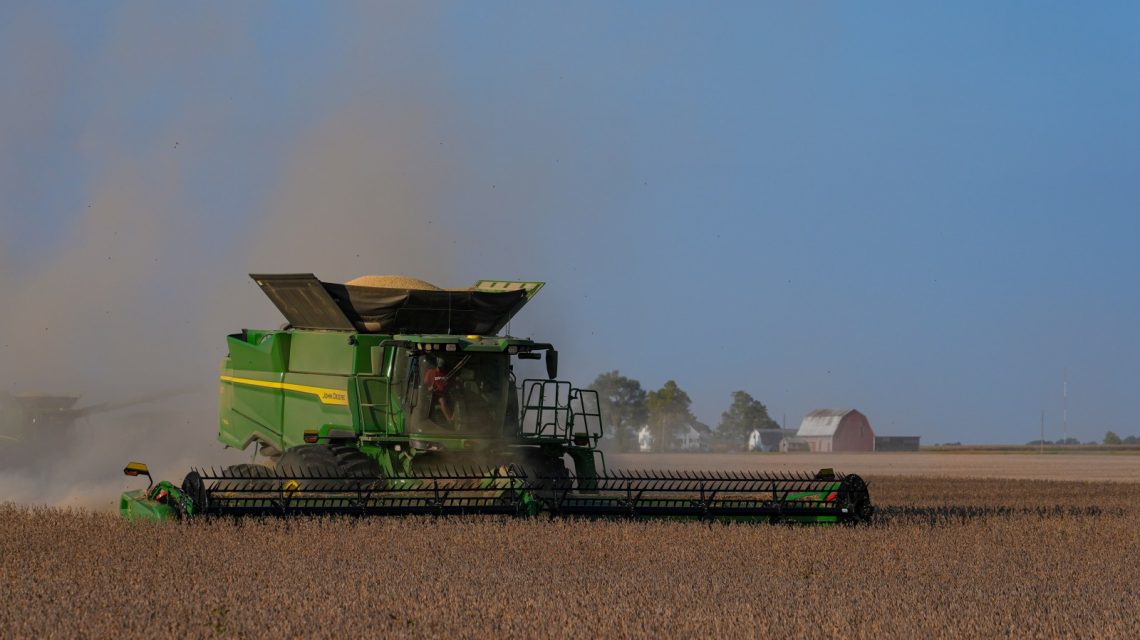
The Trump administration has allocated $8 billion in one-time payments to assist farmers impacted by increased input costs, such as high diesel prices, which averaged over $6 per gallon nationally at the time of the program’s announcement. Aaron Lehman, president of the Iowa Farmers Union, described the aid as a superficial response that fails to address policy issues contributing to farmers’ financial woes. “Farmers never should have been put in this position,” Lehman stated. “A Band-Aid response now, two weeks before the election, doesn’t fix the problem.” The Iowa Farmers Union supports Democratic candidates for the upcoming midterm elections, providing political context for Lehman’s critique.
Amidst these criticisms, the Trump administration is launching its Harvest Fuel Relief program during the fall harvest season before the midterm elections. This program aims to impact control of Congress. The United States Department of Agriculture (USDA) confirms that the program will offer $8 billion in relief to farmers, designed to mitigate temporary market disruptions and increased input costs. The funds are authorized by the Commodity Credit Corporation Charter Act and will be distributed by the Farm Service Agency. Agriculture Secretary Brooke Rollins stated, “Today, I am proud to announce alongside President Trump more targeted relief is coming to our farmers through the Harvest Fuel Relief program. This $8 billion dollar investment will help bring certainty to our farmers during this harvest so they can continue to feed our nation.”
The program will offer assistance through a formula that covers a portion of modeled losses during the 2026 crop year, using acreage reported, production-cost estimates from the Economic Research Service, along with yield and price information from the USDA’s World Agricultural Supply and Demand Estimates. Commodity-specific payment rates for Title I commodities are expected in November, while methodologies for other eligible commodities will follow. As of Tuesday, the application opening date or payment schedule was not announced.
This new initiative follows $12 billion in one-time Farmer Bridge Assistance payments earlier in the year, reaching over 560,000 farmers nationwide. Rising diesel costs, exacerbated by the Iran War since February 28, continue to challenge farmers as national average prices remain above $6 a gallon. Patrick De Haan from GasBuddy estimates that sectors such as farming and trucking have spent an additional ~$55 billion on diesel since March 1.
Farm organizations acknowledge the assistance but stress that one-time payments cannot ensure long-term stability. Lehman emphasizes the need for substantial efforts addressing trade and military conflicts that have burdened farmers. “We need genuine efforts to help farmers now while fixing the real causes of our current situation,” Lehman said. He advocates for energy independence through sustainable domestic alternatives.
Mark Williams of Boston University’s Questrom School of Business argues the program will not resolve international energy disruptions impacting farmers. “The Trump administration’s $8 billion farm subsidy is a mere drop in the bucket,” Williams commented. He highlights the need for stable supply chains and energy policies to address conflict-related costs.
Williams raises concerns over the program’s potential favoritism towards large corporate operations over smaller family farms, predicting implementation challenges that may delay payments. He also notes that financing through tax revenue or government debt could exacerbate inflation.
Rob Larew of the National Farmers Union and Matt Frostic of the National Corn Growers Association reiterate the call for enduring solutions rather than temporary relief. Frostic advocates for measures such as nationwide E15 sales and renewal of trade agreements.
The USDA predicts a rise in total farm-production expenses by $21.2 billion, with diesel prices significantly impacting costs. Trump announced the program alongside support for Republican Senator Roger Marshall’s reelection campaign amidst shifting political conditions due to agricultural concerns. The $8 billion package arrives as Republican leaders face pressure over agricultural cost issues and seek to maintain legislative support.
 Ukraine Grapples with Missile Threat and International Relations
 Leveraging Investment and Technology for Military Modernization
 A New Challenge in the James S. Brady Press Briefing Room
 Heightened Curfews and Arrests Following French Riots
 Private Investment and Intelligence Key to Military Modernization
 Nobel Prize Winners Propose Simplified Economic Models