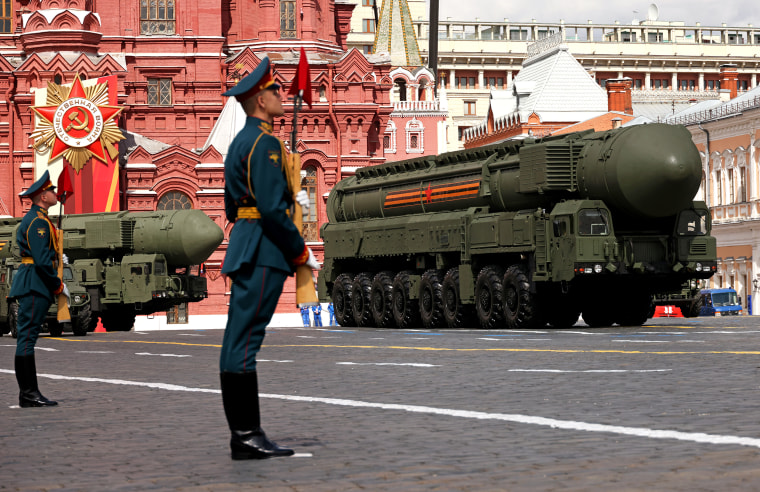
On February 5, 2026, the expiration of the New START treaty eliminated the final major nuclear arms control agreement between Russia and the United States. This marked the beginning of an era without limitations on the nuclear arsenals of the world’s two largest nuclear powers.
The absence of the New START treaty, a critical agreement that capped deployed nuclear warheads at 1,550 for each nation, has left both the U.S. and Russia without constraints or structured dialogue on nuclear arms. This raises concerns over possible misinterpretations of each other’s military capabilities and intentions, potentially leading to an unrestricted nuclear arms race reminiscent of the 1960s.
“For the first time in more than half a century, we face a world without any binding limits on the strategic nuclear arsenals,” stated United Nations Secretary-General António Guterres, describing it as a “grave moment” for global peace and security.
The United States and Russia together possess nearly 90% of the global nuclear weapons stockpile, with over 10,500 warheads, according to the Stockholm International Peace Research Institute’s 2025 report. Meanwhile, China’s nuclear arsenal, although smaller at 600 warheads, is expanding rapidly, increasing by approximately 100 new warheads annually since 2023. The collective destructive power of these nations’ arsenals could, theoretically, annihilate life on Earth repeatedly.
Former U.S. arms control negotiator Mike Albertson highlighted the competitive misjudgments of the Cold War era, where faulty assumptions often led to costly military competitions. Reflecting on decades of cooperation between the U.S. and the Soviet Union, and later Russia, Albertson expressed lament over the treaty’s demise, signifying an end to a process that began in the 1960s aimed at reducing nuclear armaments.
The treaty’s suspension by Russia in early 2023 followed Washington’s support for Ukraine. Although Moscow initially claimed it would adhere to agreed restrictions, the situation changed due to rising tensions, and Russia openly utilized nuclear threats as part of its military strategy. In September, Russian President Vladimir Putin proposed extending the treaty’s limits for an additional year, an offer that lacked an official response from Washington. Former President Donald Trump noted it as a “good idea” but expressed intentions to negotiate a better agreement, one possibly involving China, despite Beijing’s apparent disinterest in arms control talks.
A Shift in Global Dynamics
Nikolai Sokov, a veteran negotiator for the Soviet and Russian sides in nuclear arms control, regards the treaty’s expiration as a personal and historical loss. Sokov, now with the Vienna Center for Disarmament and Non-Proliferation, emphasized the regressive shift back to an early Cold War mindset characterized by high uncertainty and accepted potential for conflict. Recalling the Cuban missile crisis of the early 1960s, Sokov suggests that such friction led to regulation and control talks, which the modern era sorely lacks.
The New START treaty provided safeguards, including warhead limits, data exchange, and compliance mechanisms that facilitated communication to resolve misunderstandings. Before Moscow suspended the treaty, the two countries conducted numerous inspections and exchanged over 25,000 notifications on nuclear activities, according to U.S. State Department data.
Despite available satellite surveillance and intelligence capabilities, arbitrary advancements in nuclear arsenals pose transparency issues, escalating low-trust environments, warned Fabian Rene Hoffmann from the Oslo Nuclear Project.
Global Responses and Future Prospects
In reaction to the expiration, Dmitry Medvedev noted the absence of verification mechanisms between Russia and the U.S., potentially leading to enhanced tensions. Russia remains ostensibly open to dialogue despite a lack of official follow-up from the U.S. to Putin’s offer. Meanwhile, China conveyed “regret” over the treaty’s termination.
Former President Barack Obama reflected on the loss, warning of reignited arms races negating decades of diplomatic effort and eroding global safety margins. The Trump administration suggested continuation in dialogue with both Russia and China, advocating for resolving nuclear threats through new agreements. However, China’s view remains skeptical of expectations to partake in disarmament negotiations, considering its comparatively smaller arsenal.
Sokov underscores the potential for an unregulated arms race developing within five to seven years if agreements are not reestablished. His immediate concern centers on non-nuclear states’ frustration over nuclear powers’ reluctance in pursuing good-faith disarmament discussions. Despite these challenges, he sees hope in renewed negotiations, emphasizing their criticality in averting irreversible arms escalation.
As the world navigates the post-New START era, the emphasis shifts towards proactive dialogue and informed negotiations, aiming to prevent a resurgence of high-stakes nuclear competition.
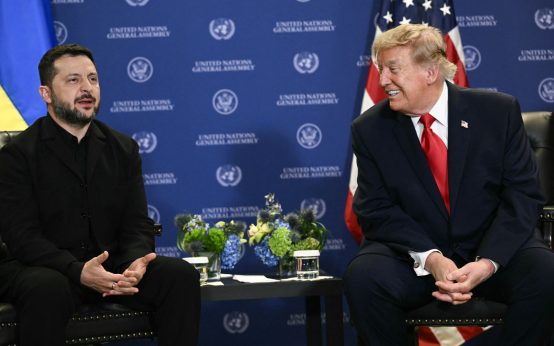 Trump’s Engagements at the UN: Focus on Ukraine and White House Developments
  Trump Administration to Admit 17,500 Afrikaner Refugees from South Africa
 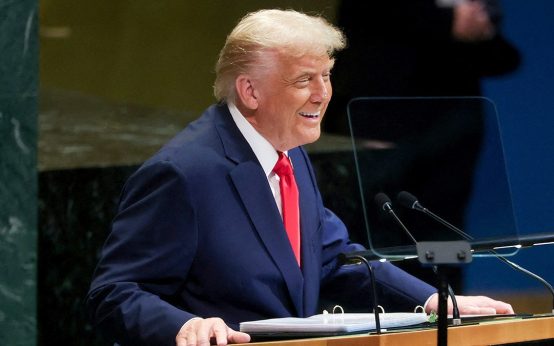 Trump’s Vision for Global Security: Iran, AI, and the Role of the U.S.
  Concerns Raised Over Canadian Assisted-Dying Program
 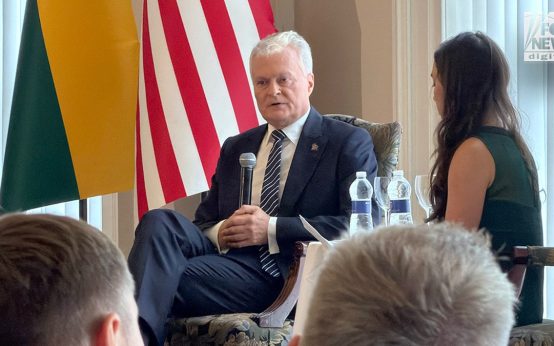 Lithuanian President Urges U.S. to Maintain Military Presence Amid NATO Challenges
  Italian PM Giorgia Meloni Skips UN General Assembly Amid U.S. Tensions