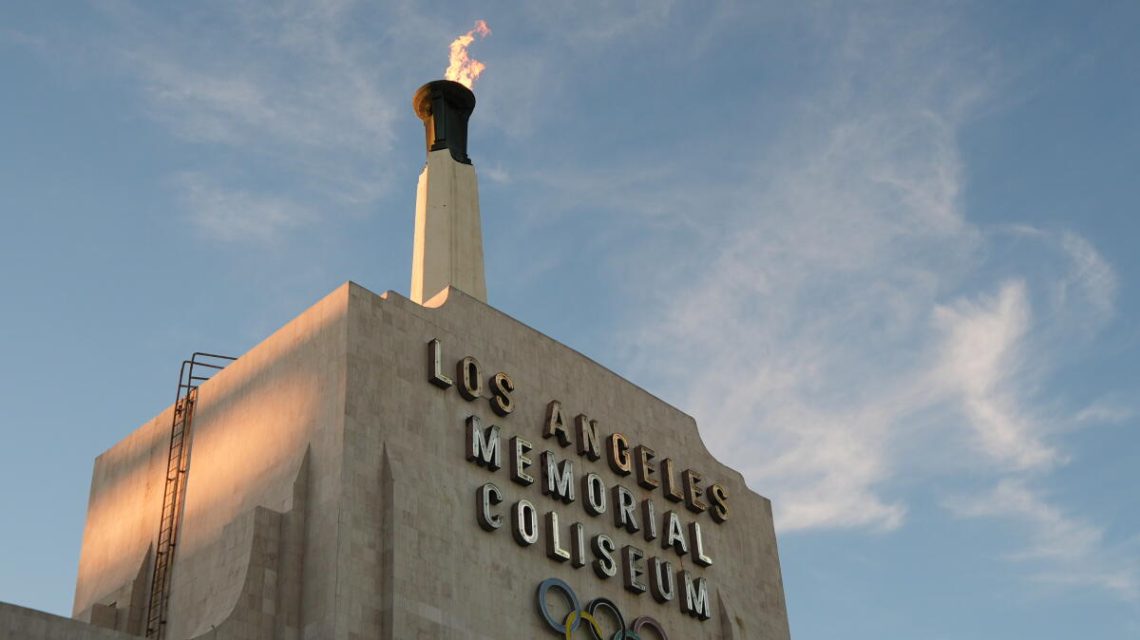
With less than two years until the Los Angeles Olympic and Paralympic Games in 2028, questions about funding and planning for the Cultural Olympiad persist. This arts and culture program reflects a host city’s dedication to the creative sector and can leave a lasting artistic impact on the region.
During the Paris 2024 Olympics, over 2,500 projects were showcased over three years. In Los Angeles, arts organizations and nearby cities are starting to commission work and plan neighborhood celebrations. However, critics argue that a formal and cohesive strategy has yet to be established.
At a legislative hearing at the California Science Center, lawmakers pressed for clarity on financial support for the Cultural Olympiad.
Former Los Angeles County Supervisor Zev Yaroslavsky criticized the slow mobilization of cultural planning. Awarded in 2017, Los Angeles had nearly 11 years to prepare.
“I’m not trying to point a finger here, but it just didn’t happen,” he stated, highlighting the consequences: major artists often book engagements years in advance.
Yaroslavsky pointed to the 1984 Olympic Arts Festival as a catalyst for cultural growth in Los Angeles. “It allowed us to think much bigger,” he added.
Sofia Klatzker, Santa Monica’s cultural affairs manager, stressed the urgent need to inform local communities about what to expect. She presented Santa Monica’s cultural framework, “Land and Water Here and Now,” which includes performances, exhibitions, public art, and international cultural exchanges.
The Senate’s Special Committee on International Sporting Events and the Legislature’s Joint Committee on the Arts heard from various officials and arts advocates. Their presentations showed a mosaic of efforts amid a need for clearer coordination and financial backing.
Sen. Benjamin Allen (D-Santa Monica) led the hearing. A September report by City Administrative Officer Matthew W. Szabo and Chief Legislative Analyst Sharon M. Tso placed the budget for LA28’s Games at $7.263 billion. At the hearing, Dwayne Jones, LA28’s senior vice president for the Cultural Olympiad, did not provide a precise cultural budget.
“We’re aiming to fundraise tens of millions,” Jones said, mentioning ongoing discussions with donors and partners.
Sen. Lola Smallwood-Cuevas (D-Los Angeles) emphasized the need to know how resources would distribute to artists and communities. After the hearing, she acknowledged several unresolved issues.
Updates from LA28 Cultural Olympiad Executive Director Nora Halpern and Jones included plans first presented in May. They described a Cultural Olympiad mark recognizing participating programs and a digital platform for event mapping, with applications opening in early 2027.
Programming announcements covering fashion, film, food, music, and art will occur in 2027. The platform launch is set for January 2028.
Halpern revealed that artists had been selected for 16 official posters — eight Olympic and eight Paralympic — with nominations from regional curators. They will launch in July 2027.
Jones spoke about community film screenings paired with local food and music performances, plus upcoming dance and theater activities. Further announcements are expected in 2027.
Local cultural efforts were detailed by city and county officials. Daniel Tarica, general manager of Los Angeles’ Department of Cultural Affairs, reported a $15 million commitment from an existing budget. They’ve completed 19 initiatives, including World Cup celebrations combining sports with arts.
Kristin Sakoda, Director of Los Angeles County’s Department of Arts and Culture, is developing a 2028 initiative using existing grants and youth programs. Plans include a Year of Creative Youth and an Olympic arts education curriculum in collaboration with the Olympic Museum in Switzerland.
Long Beach Cultural Affairs Officer Griselda Suarez invested $135,000 in pilot projects. Meanwhile, West Hollywood arts manager Rebecca Ehemann shared ongoing creative ventures.
Gustavo Herrera, CEO of Arts for LA, introduced Mosaic LA. This community effort aims to coordinate cultural programming and investment beyond 2028 with proposed pooled funds, technical assistance, and promotion.
Despite some laid-out budgets, Herrera noted “no resources have been allocated yet.”
Federal involvement was discussed, with Congress allocating $1 billion for Olympic-related security and $94.3 million for transportation. Assemblymember Christopher M. Ward (D-San Diego) called for federal financial support amid recent political rhetoric seen as unhelpful.
Dr. Tawny Paul from UCLA underscored the need for local audiences and programming. Her research suggests large visitor numbers don’t guarantee higher museum attendance.
Smallwood-Cuevas emphasized the necessity of a coordinated approach, saying, “At the end of the day, we need a concise, coordinated and clear ask.”
 President Trump Wishes Pope Leo XIV Well After Cancer Diagnosis
  NFL Expands International Games to New Destinations
  Search for Amelia Earhart’s Missing Plane Nears Possible Discovery
  Dramatic Escape: Suspect’s Headfirst Dive Through Window Stuns Deputy
  Concerns Over Drone Threats Prompt U.S. Aircraft Withdrawal from UK
  Chicago Prays for Pope Leo XIV’s Recovery