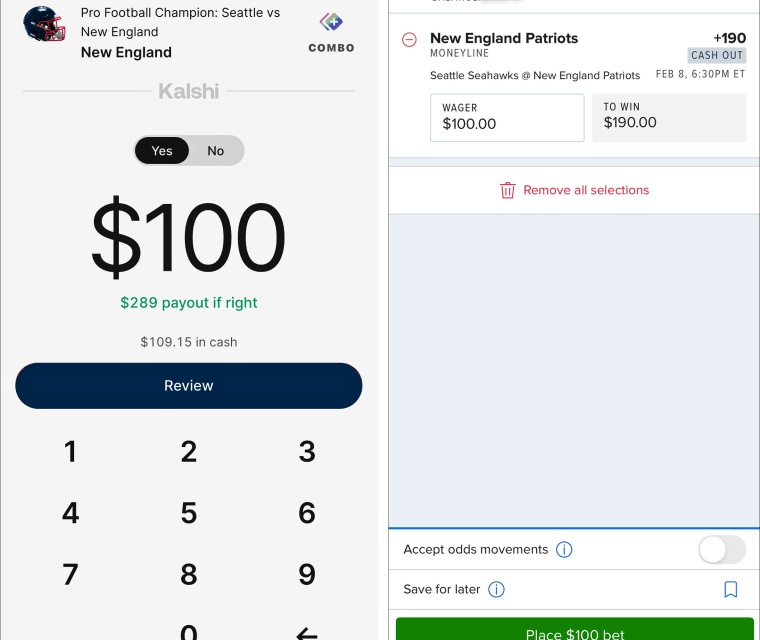
Despite sports betting being illegal in California, new “prediction market” platforms are sidestepping these restrictions by allowing people nationwide to engage in wagering. Leading companies, such as Kalshi and Polymarket, have expanded into states like California by offering “contracts” instead of traditional bets, though critics claim this is simply sports gambling repackaged.
The Rise of Prediction Markets
The expansion of these markets, especially in a state where events like the Super Bowl attract massive attention, brings into focus the ambiguous legal definition of gambling. According to I. Nelson Rose, a specialist in gaming laws, this situation could persist for some time despite California’s laws dating back a century which criminalize sports betting. This year’s Super Bowl has drawn heightened scrutiny to prediction markets, evidenced by Kalshi reporting over $161 million in trades for its Super Bowl market—a significant increase from the previous year.
How Prediction Markets Operate
Platforms like Kalshi and Polymarket differentiate themselves from sportsbooks by creating a space where users trade event contracts on a financial exchange. Profits and losses are determined by the buying and selling of these contracts, with fees applied by the platforms, unlike sportsbooks which profit from losing bets. Former Representative Sean Patrick Maloney argues this model is not conventional gambling since the exchange is federally regulated and bets aren’t made against a ‘house’.
However, the experience of using prediction market apps closely mirrors traditional sports gambling sites, creating similar financial opportunities for users within California, where sportsbooks like FanDuel are prohibited.
“It’s basically a financial market,” remarked Koleman Strumpf, a Wake Forest University economics professor, emphasizing the distinction of betting against peers instead of the bookmaker.
California’s Legal Landscape
Prediction markets are growing even though California remains a sports betting “desert.” While the state’s voters have rejected propositions to legalize sports gambling, prediction markets have gained traction, especially among younger users, who are more open to fintech innovations.
Operating under the jurisdiction of the federal Commodity Futures Trading Commission (CFTC), prediction markets continue to expand. Legal challenges persist, with states like Massachusetts and New York attempting to curb this growing industry through lawsuits and warnings, arguing that they bypass consumer protection laws applicable to traditional gambling.
The Future of Betting in California
Prediction markets might spur a reassessment of sports betting regulations in California, a state with a robust potential betting community. A recent poll suggested a growing openness towards legalized sports betting. With companies like Fanatics and DraftKings launching their prediction market products, the industry is on the brink of change, offering possibilities for regulation and consumer protection.
DraftKings’ General Manager, Jeanine Hightower-Sellitto, emphasizes the compliance of such offerings within a federal framework, noting that participation is voluntary.
 A Look Back at a Memorable Weekend of College Football in Oxford
  Debate Over O.J. Simpson’s Exclusion from Buffalo Bills’ Wall of Fame
  Chad Tracy Appointed Permanent Red Sox Manager
  Lane Kiffin’s Postgame Comments After Ole Miss vs LSU Game
  Deion Sanders Addresses Colorado Loss and Team Conduct
  Steve Lotysz: From Gates to Galleries