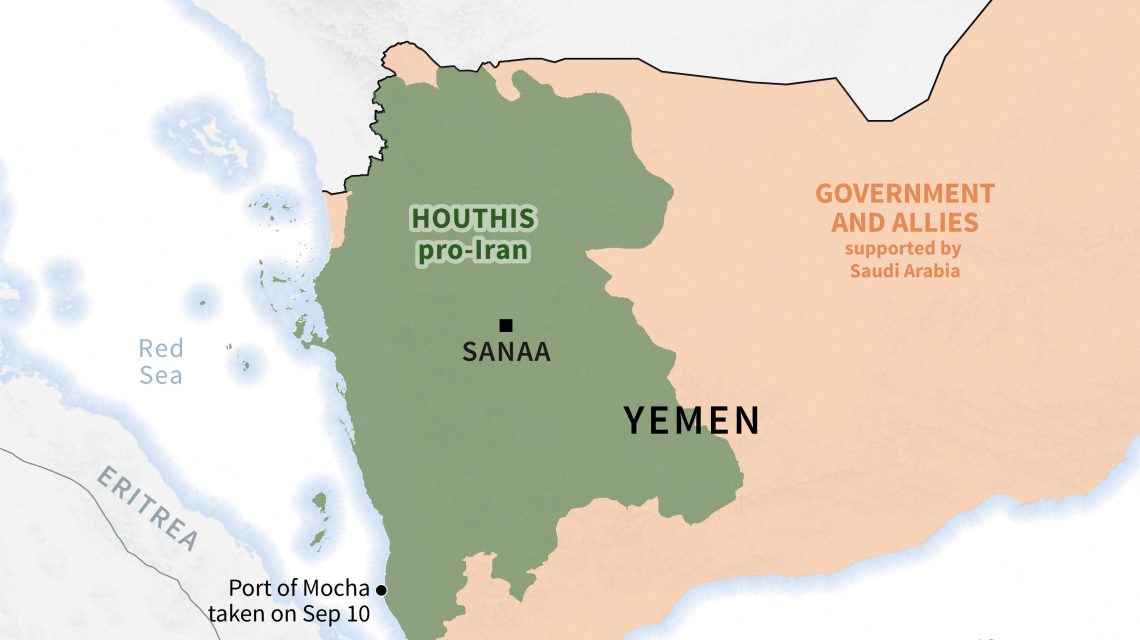
Yemen’s Houthi rebels have transformed significantly over the past decade. From being a relatively unknown group in northwest Yemen, they have become a crucial ally of Iran in the region. Their rise has positioned them as a central adversary to the United States and its allies throughout the Middle East.
The Houthis have become prominent figures in the Middle East, especially as other Iranian proxy forces have weakened. They exemplify how a small, guerrilla-style force with entrenched positions can inflict significant damage using difficult-to-counter aerial attacks.
Houthi Attacks and Global Implications
The Houthis initiated attacks on Israel shortly after the United States allied with Israel in strikes on Iran, igniting ongoing conflicts in the region. Saudi Arabia, despite being a wealthy nation and a major ally of the U.S., has suffered considerable losses due to Houthi attacks. These have resulted in the deaths of at least 20 people at Saudi airports recently.
The group, along with allies, has also targeted Saudi oil facilities. This has contributed to a rise in global energy prices by threatening the Bab el-Mandeb Strait, a critical passage for oil and gas shipments much like the Strait of Hormuz.
Saudi Arabia has requested U.S. military assistance against the Houthis. Although initially declining, President Trump mentioned reconsidering the request over the weekend.
A Potent Proxy for Iran
Iran supports the Houthis both financially and militarily. This has allowed the group to grow in prominence within Iran’s Axis of Resistance, an anti-U.S., anti-Israel coalition that includes Hamas and Hezbollah. However, while Hamas and Hezbollah have suffered severe setbacks from Israeli counteractions following the attack led by Hamas in October 2023, the Houthis have emerged more empowered and armed.
Mohammed Al-Basha, founder of the Basha Report, highlighted that the Houthis have adapted new tactics to penetrate sophisticated air defenses. These strategies involve a combination of drones, cruise missiles, and ballistic missiles targeting Israel, and now Saudi Arabia.
The Strategic Use of Yemen’s Poor Conditions
In the context of asymmetric warfare, the Houthis benefit from Yemen’s economic struggles. Their supporters are ideologically motivated to endure economic hardships if it means inflicting significant damage on Saudi Arabia and the global economy. Yoel Guzansky, a senior research fellow, explained that the Houthis can manufacture relatively simple missiles in local factories to attack strategic locations like Riyadh airport.
Goals and Ambitions
Houthi military spokesman Brig. Gen. Yahya Saree stated that their attacks are a response to Saudi aggression. However, according to Al-Basha, the group seeks control over all of Yemen and aims for recognition and financial support from Saudi Arabia. By merging internal Yemeni campaigns with attacks on Saudi interests, they hope to achieve these objectives.
The Beginnings of the Houthi Movement
The Houthi movement began within the Zaydi Shiite Muslim sect, which has deep roots in northern Yemen. Though a minority in the predominantly Sunni country, Zaydis account for up to a third of Yemen’s population. Initially focused on preserving Zaydi culture, the movement evolved to adopt a more radical ideology.
Analysts estimate that the Houthi’s military force is large, boasting hundreds of thousands of fighters, with claims that they have trained over a million militants. Their rise to power began in earnest in 2012, leveraging unrest after the Arab Spring to gain a stronghold in the north. By 2014, they seized Yemen’s capital, Sanaa, leading to a prolonged civil war.
Survival and International Influence
Throughout a sustained conflict with a Saudi-led military coalition from 2015 to 2022, the Houthis received training and support from Hezbollah and Iran. This assistance has bolstered their capability to produce weapons like drones and missiles. Reports suggest potential use of AI in developing more sophisticated weapons systems.
While still reliant on Iran for advanced technologies, the Houthis have become vital to Iran’s regional strategy. They provide an effective means for Iran to threaten Saudi Arabia, Israel, and global shipping, giving Tehran considerable leverage.
Yemen’s Ongoing Struggle
Yemen’s civil war has devastatingly impacted the country. The United Nations reported about 377,000 deaths, more than half due to indirect causes like starvation and disease. As a result, over 201,210 people have been displaced, with some fleeing to places like Djibouti.
Recent figures from the World Health Organization show increased casualties from the conflict, with Yemen’s Ministry of Health reporting significant death tolls and injuries.
 AI Strategy: U.S. Competition with China in Global Markets
  FBI’s Global Efforts to Dismantle Scam Networks in Africa
  Impact of Ukrainian Strikes on Russian Data Centers
  Pope Leo XIV to Undergo Surgery for Lung Nodule
  Putin Gains Political Advantage Amid Controversial Diesel Deal
  Trump’s Defense of Diesel Deal with Russia Faces Pushback