A new proposal to introduce driverless rideshare vehicles in Washington, D.C. is stirring controversy. Union workers, drivers, and religious leaders worry the technology may eliminate jobs.
Outside the John Wilson Building, protesters gathered as D.C. council members discussed legislation allowing companies like Waymo to operate autonomous vehicles. Protesters urge the council to reject the bill, fearing it will displace rideshare drivers. One protester said, “We feel these robotaxis will put people out of work. People need jobs.”
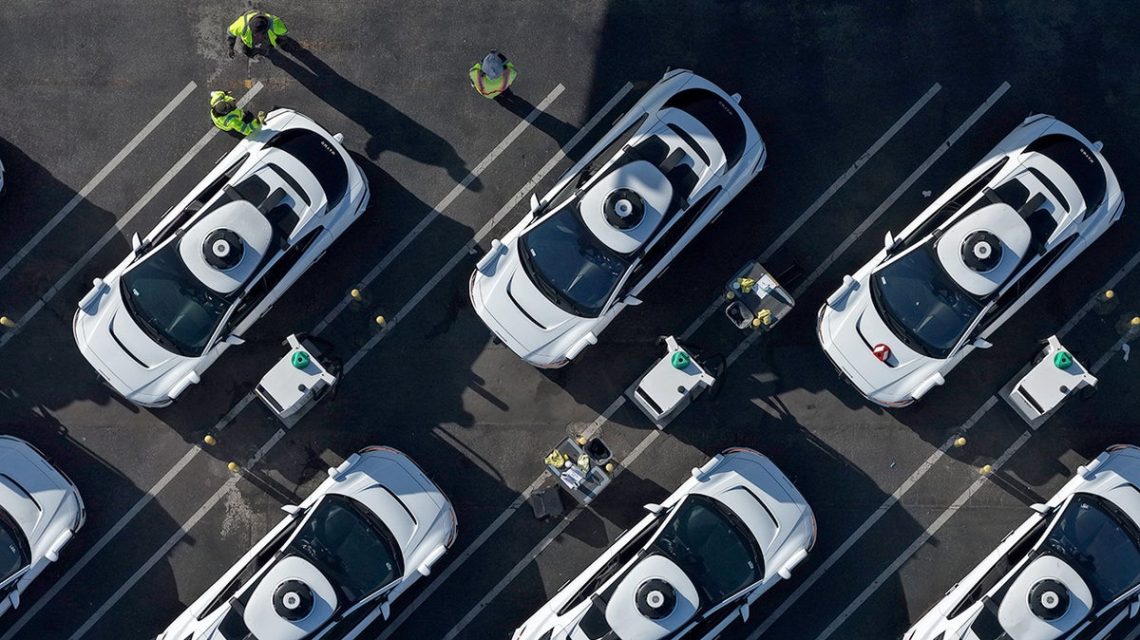
Aerial views show Waymo robotaxis parked in San Francisco.
A protester named Frederick stated that robotaxis harm the community by removing jobs. “People need jobs to support their family,” he added. Sabrina from Washington, D.C. agreed, saying, “Let’s not bring robots taking my neighbor’s jobs.”
Another protester, Michael, acknowledged that autonomous vehicles could reduce driving jobs. He proposed shortening the workweek without cutting pay to create more jobs in public sectors, despite some job losses among taxi drivers.
The Autonomous Vehicle Deployment Authorization Amendment Act of 2026 was introduced by Councilmember Charles Allen in May. This act would establish a program for commercial autonomous vehicles in D.C., managed by the District Department of Transportation.
Waymo claims its safety data shows 82% fewer injury-causing crashes and 95% fewer serious crashes compared to human drivers. Supporters see potential for lower fares, but current prices are not consistently cheaper than services like Uber. Protesters argued that initial low prices could eventually increase. Sabrina expressed skepticism, saying, “It might be cheap for trial periods, then suddenly $50.” Another participant, Helen from Maryland, noted minimal price differences.
The proposed regulations could see robotaxis in the city by 2028. Initially, operators would be limited to 200 vehicles, requiring at least 180 days and 250,000 miles of testing in the District. They must also submit plans to reduce service disparities across the city’s wards. The public heard the bill in July, but no vote is scheduled. A full council approval is needed before self-driving cars hit the streets.
A worker should be at the table,” said Samuel Epps, Metropolitan Washington Council, AFL-CIO President.
Eddie voiced concern, “If my children get in a car, I prefer a human driver.” The debate continues as stakeholders weigh the risks and benefits.
 Alani Bankhead Denies Being a Republican Plant Amid Senate Campaign
  Democrats Turn to Content Creators to Rebuild Latino Support
  Efforts to Close Loopholes in Cash Welfare Spending
  Former State Trooper Criticizes Handling of Gang Violence in Twin Cities
  Controversy Surrounds Jack Smith’s Actions and Public Appearances
  Trump and AI: Balancing Economic Potential and Regulation