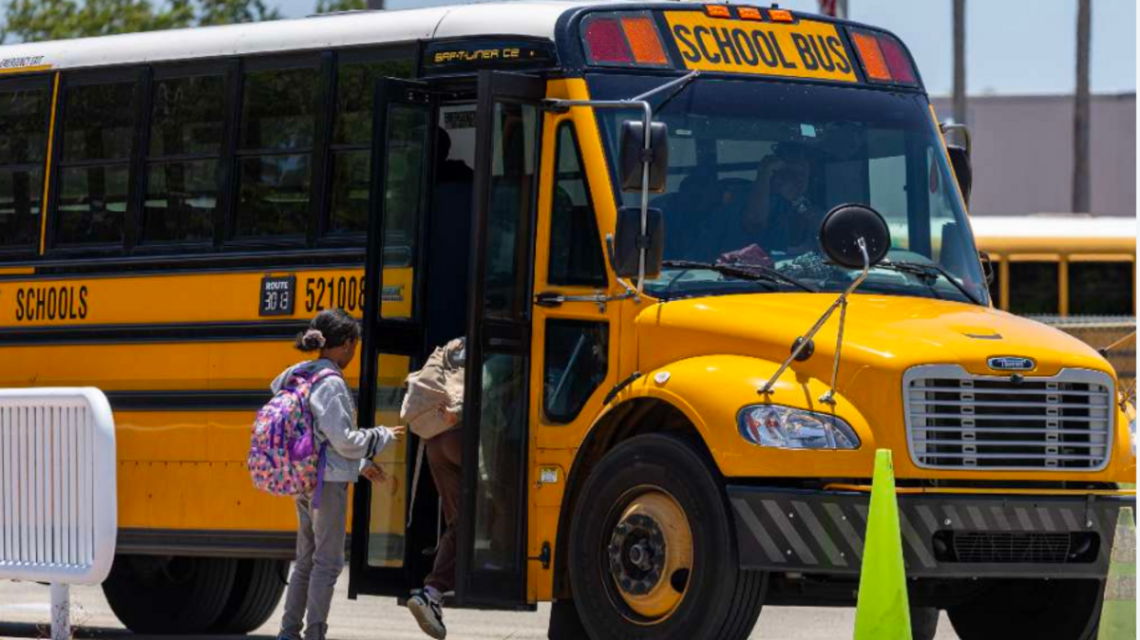
In Florida, a growing number of students attend schools outside their designated attendance zones. This trend is influenced by education choice scholarships, providing opportunities for families and educators alike.
Moreland’s Alternative Educational Academy: A Success Story
At Moreland’s Alternative Educational Academy in Pompano Beach, kindergarteners display a strong sense of confidence. Karen Moreland-Alford, the founder, expanded the school from a few students to nearly 200. Many children transitioned from unsafe and underperforming schools are now thriving, with some considering college for the first time.
Moreland-Alford credits Florida’s choice scholarships for the existence and success of her school. These programs offer families options and grant educators the freedom to build new schools. To support this growth, opening public buildings to new schools, providing start-up assistance, and reducing bureaucratic hurdles is crucial. Students deserve the innovative schools educators are ready to establish.
Teacher-Led Schools on the Rise
Over two decades, numerous public school teachers and principals have established their own schools, often in low-income and rural areas. Some focus on faith-based education or cater to specific disabilities, while others seek ownership in their educational approach.
This is possible because funding follows the student. Educators can start schools in low-income neighborhoods with the assurance that state scholarships provide $9,000 per student, with additional support for those with disabilities. Previously, only families with financial means had options, limiting educators’ opportunities to innovate.
Challenges and Solutions
Despite the progress, many founders struggle with finding suitable educational spaces. Without access to taxpayer-funded facilities, they often begin with small classes in church halls or strip malls. Critics argue these spaces indicate low quality, ignoring the parents’ trust in effective educators over flashy facilities. Allowing these schools to utilize vacant public buildings offers a quick path to expanding successful models.
The Urban Institute studied low-income students using Florida’s tax credit scholarships, finding they enrolled in college at higher rates than peers who stayed in their district schools. Parents have the option to leave underperforming schools, a flexibility district schools do not experience.
An Example of Successful Collaboration
Competition within education can lead to positive outcomes. For instance, Polk County educators created Wonderhere, a Montessori-based micro-school that expanded to three locations due to high demand. The local school district even partnered with Wonderhere to integrate this model into a Title I school. Such collaborations exemplify how competition can lead to collective improvement.
Choice as a Component of Public Education
According to the James Madison Institute, over half of Florida’s K-12 students attend schools outside their zoned districts. School choice does not undermine public education; instead, it reshapes how education is delivered in Florida.
Erika Donalds, a former school board member and education entrepreneur, emphasizes the importance of upholding and expanding these programs despite opposition. Florida has shown that trusting parents and empowering educators help children excel. Retreating from this progress would limit opportunities for families and educators aiming to enhance educational experiences.
As demonstrated by the kindergarteners at Moreland’s, the benefits of school choice are evident even to the youngest students in Pompano Beach.
 Cornell Faces Scrutiny Over Handling of Rape Allegations
  University of Arizona Suspends Six Fraternities Amid Investigations
  Student Protests Demand Education Reform in France
  Marmion Academy Welcomes Female Students, Embracing Change
  Vandalism at Cornell University Highlights Anger Over Rape Allegations
  ProPublica’s Experiment on Opening Private Schools