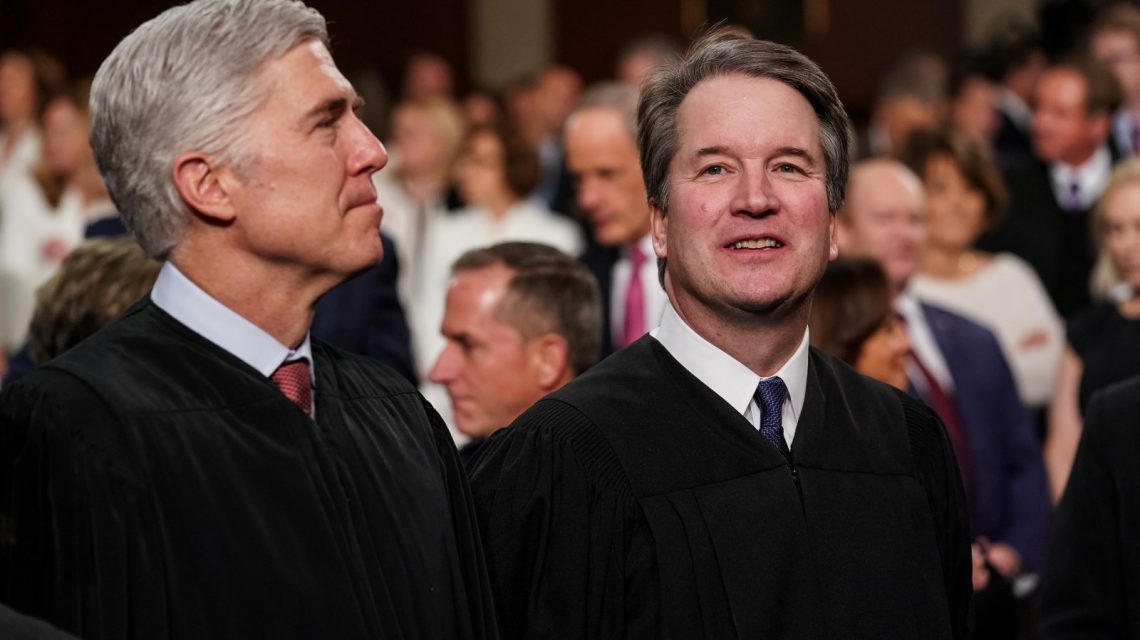
The Supreme Court’s new term began with Judge Brett Kavanaugh diverging from his fellow conservative peers in a critical case involving Sunoco, a leading gasoline and oil firm in the U.S. Sunoco faced a court order to compensate over $100 million in a class action suit due to purported late oil production payments without adding interest, a requirement under Oklahoma law.
Sunoco requested a Supreme Court review, questioning whether the group included individuals who weren’t genuinely affected and asserting that damages should only be awarded after identifying who qualifies. The court dismissed the petition for writ of certiorari, effectively declining to hear the case. Surprisingly, Judge Kavanaugh expressed his willingness to accept the petition in the order.
Justice Samuel Alito abstained from the decision. Although Alito didn’t provide reasons for his recusal, speculation suggests his financial interest in Sunoco’s rival companies might be a factor. Alito doesn’t own shares in Sunoco, yet his financial filings from recent years indicate holdings in Phillips 66, a firm managing refineries and petroleum-related activities. Alito also has investments in ConocoPhillips, which operates in the oil and gas realm but doesn’t directly compete with Sunoco in fuel distribution.
Alito’s oil and gas investments may have led to his recusal in the term’s initial oral arguments. On Monday, justices deliberated in the case Suncor Energy Inc. v County Commissioners of Boulder County concerning climate change. Amid mounting pressure and grievances, Alito opted to step away from the case, withholding an explanation for his decision.
In the Sunoco v. Perry Cline proceedings, Perry Cline represented royalty owners claiming Sunoco breached Oklahoma law by neglecting interest on overdue royalty payments, demanding payment only when prompted by owners, culminating in a $103 million court-ordered settlement. Sunoco’s Supreme Court plea didn’t dispute the settlement sum but sought clarity on the criteria for determining the class of recipients.
Sunoco argued against certifying a class or awarding damages without identifying the actual class members. The company contended some class members were unlocatable, with assets languishing in unclaimed property funds. Cline countered, noting the inadequacy of the case as a medium for examining broader class action lawsuit matters, as proposed by Sunoco. He argued that Sunoco’s business records provided a means to identify everyone impacted.
Sunoco maintained that without Supreme Court intervention, precedent would allow courts to certify damages without practical identification of rightful recipients. They argued this precedent forces defendants into settlements under economic duress despite the absence of concrete proof of harm.