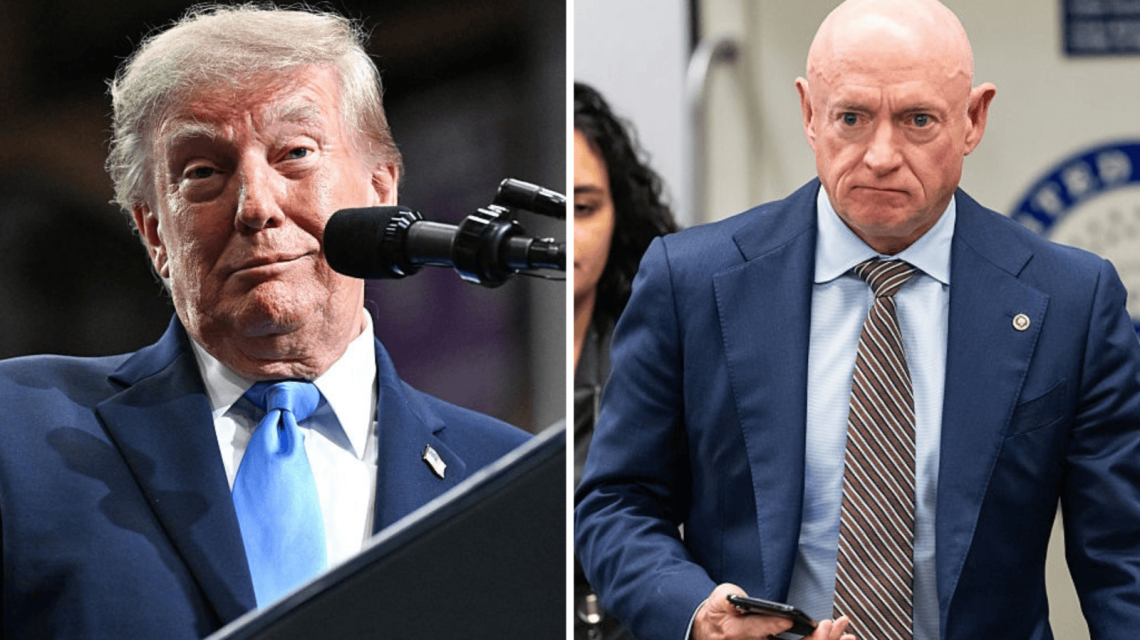
Senator Mark Kelly, an Arizona Democrat, criticized President Donald Trump for his proposal to offer $5,000 checks to every adult American. Kelly accused Trump of attempting to “buy votes” if Republicans retain control of Congress after the 2026 midterm elections. This accusation was made during Kelly’s appearance on CBS News’ Face the Nation.
Trump’s financial initiatives include several cash-payment schemes, such as one-time $90 payments for Medicare Part B beneficiaries and $500 Affordable Care Act refunds to certain marketplace enrollees. While Kelly acknowledges the importance of assisting seniors and working-class Americans, he urges voters to question the $5,000 proposal.
Trump’s $5,000 Check Proposal
The $5,000 payment, termed “Trump Dividend,” was first introduced during the Republican Party’s midterm convention in September. Trump recently reiterated the pledge in a video message. He declared that every adult U.S. citizen would receive the check if Republicans control both the House and Senate.
The plan has caught attention due to its estimated cost, potentially exceeding $1 trillion based on the adult population. Congressional approval would be needed for any such plan, but Trump has not provided detailed funding information or outlined the necessary legislative process for implementation.
This proposal is part of the administration’s direct-payment programs, including nearly 21 million Medicare Part B beneficiaries receiving $90 payments and about 950,000 HealthCare.gov customers obtaining $500 ACA refund checks. Critics claim these payments are used to boost support ahead of midterm elections. Trump and his allies defend these measures as targeted relief for Americans feeling economic pressures.
Criticism from Kelly
During his interview, Kelly criticized the timing and conditions attached to the $5,000 proposal. He pointed out Trump’s previous actions, such as providing tax cuts to wealthy individuals and reducing Medicaid benefits, arguing these efforts favor his close circle.
He stated, “This is just a payoff, and he’s trying to buy votes.” His comments reflect Democratic efforts to view the payment proposal as a campaign tactic rather than an economic plan. Other Democrats have similarly condemned the proposal.
Democratic Alternative Agenda
Margaret Brennan questioned Kelly on what Democrats offer voters besides opposition to Trump. Kelly mentioned a proposal with Democratic Senator Chris Van Hollen to raise taxes on individuals earning over $1 million while reducing taxes for middle-income households. He highlighted tariffs and conflict with Iran as contributing to higher costs, suggesting Democrats focus on tax policy and healthcare affordability as more sustainable approaches.
Public Opinion on Payments
Two recent polls illustrate a challenging political scenario for Trump. While some Americans favor receiving $5,000, fewer believe the promise will materialize or influence their voting decisions.
An Economist/YouGov poll revealed likely voters opposed the proposed checks by 45 percent to 43 percent. Meanwhile, 61 percent believed Trump would not deliver the payments even if Republicans retained Congress, compared to 22 percent who expected him to follow through.
Verasight survey assessed electoral effects, noting 33 percent felt less likely to vote Republican due to the pledge, while 15 percent felt more likely and 52 percent had no change. Young adults and independents showed resistance to the proposal.
Other Trump’s Promised Payments
Trump has proposed various “dividends.” Last week, while speaking to reporters, he suggested a dividend for residents near data centers due to potential benefits from development.
In December 2025, eligible service members received a $1,776 “warrior dividend,” claimed by Trump as evidence of his delivery capability.
The DOGE Dividend was proposed in February 2025, backed by Azoria CEO James Fishback, intending to return savings from the Department of Government Efficiency. The initiative, supported by Trump and Elon Musk, remains unimplemented. A tariff-related dividend initially evolved into the current $5,000 campaign commitment ahead of midterms.
 The Erosion of Congressional Oversight
  Assessing the Impact of American Military Actions in the Strait of Hormuz
 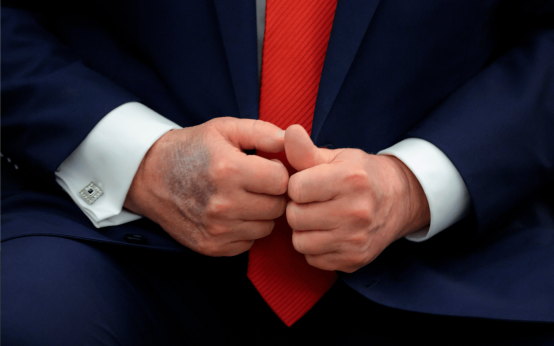 Trump’s Aspirin Habit: Insights and Expert Opinions
 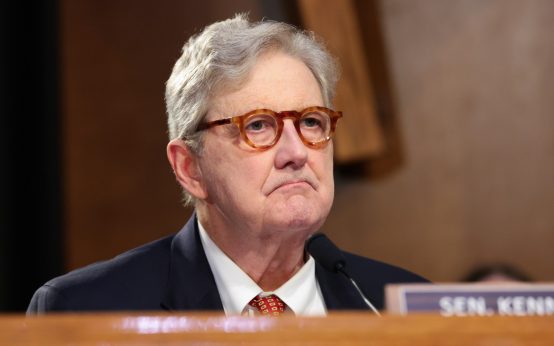 Senator John Kennedy Warns GOP on Voter Economic Concerns
 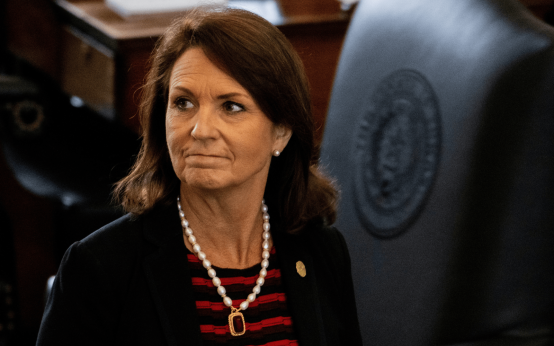 Angela Paxton’s Campaign Efforts Amid Texas Senate Race
  Phil Collins Reflects on Trump and Unwritten Song