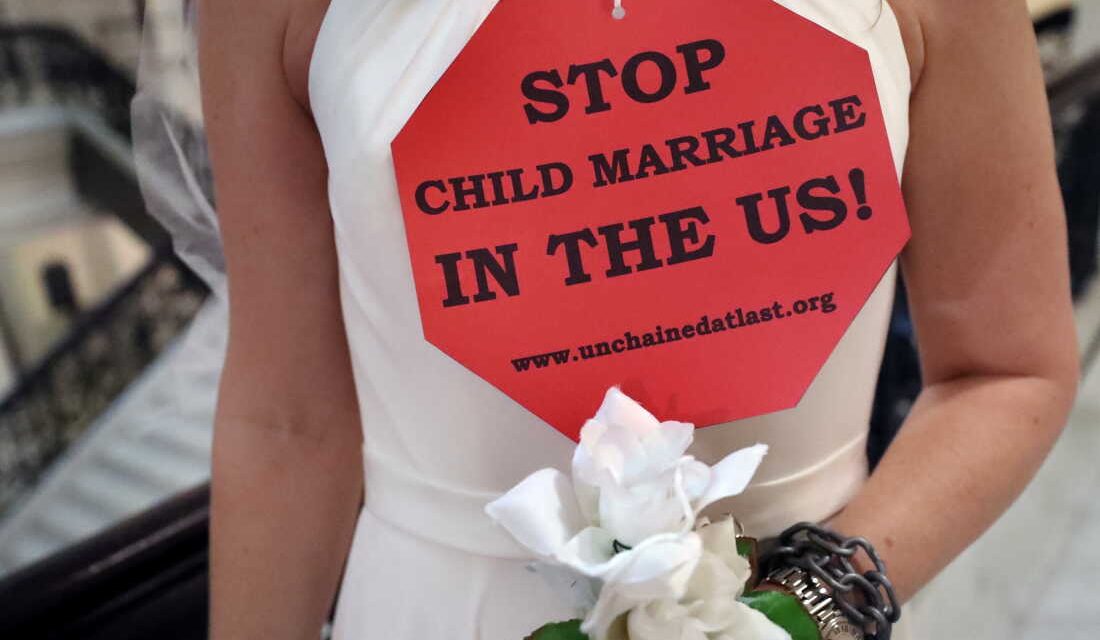
In Massachusetts, a demonstrator wearing a bridal gown partook in a protest aimed at urging lawmakers to end child marriage. This event highlights a landmark year for U.S. activists fighting against child marriage bans. On September 30, California Governor Gavin Newsom signed Bill AB 1267, setting the minimum marriage age at 18 without exceptions, thus repealing provisions that allowed minors to marry with parental consent and judicial approval. California is now the 18th state to prohibit child marriage without exception. This step culminates a decade-long campaign by survivors and advocacy groups to outlaw marriage before 18.
Voices of Survivors
The signing of Bill AB 1267 spotlighted survivor voices. Courtney Stodden, who married at 16, exemplifies this outreach. Assemblymember Gail Pellerin emphasized the significance, saying survivors have shared their experiences of being unable to freely choose their marriage. Such laws also address minors’ challenges in seeking legal assistance or leaving home.
Child Marriage: A Global Issue
Globally, child marriage—where one party is under 18—remains a concern. The United Nations labels it a “human rights violation,” highlighting risks such as early pregnancy, social isolation, school interruption, limited career opportunities, and exposure to domestic violence. Every year, 12 million girls globally become child brides. The U.N. aims to eliminate child marriage by 2030. Legislation efforts in places like Sierra Leone, England, Philippines, and the Dominican Republic combat child marriage.
The U.S. National Efforts
On July 16, U.S. lawmakers proposed the Child Marriage Prevention Act to establish a nationwide minimum marriage age of 18. Data shows over 314,000 minors married in the U.S. between 2000 and 2021, with alarming instances of child marriage involving older men. Organizations such as Unchained At Last and the Tahirih Justice Center support the legislation aimed at a nationwide solution.
Challenges and Controversies
The proposed federal bill has faced scrutiny. Critics argue it allows financial incentives for studying child marriages rather than outright banning the practice, which could lead to unintended consequences. Some states, such as Missouri, have opposed restrictions, arguing they infringe on personal liberties.
Comparing International Efforts
Globally, countries like Sierra Leone and Colombia have set 18 as the minimum marriage age without exceptions. Laws in other nations face challenges and require proper enforcement to overcome cultural acceptance. In India, despite laws banning child marriage, the practice persists due to ingrained cultural factors. Solutions require community disapproval and recognition of child marriage’s harm.
United States and Cultural Challenges
The U.S. struggles with entrenched gender roles and societal norms that perpetuate child marriage. Legislative reforms must be coupled with community-level changes to attitudes surrounding marriage and gender roles.
“The U.S. also has major issues with ingrained gender roles and patriarchy,” notes Casey Carter Swegman. “This requires belief and behavior change through community conversations.”
International Advocacy Perspectives
The U.N. resolution on child marriage emphasizes enforcing laws to protect children, advocating for global efforts to end child marriage by 2030.
Kamala Thiagarajan, who reports on global health and development, contributes insights into these efforts.
 British Police Arrest Man in Suspected Terror Plot Involving U.S. Air Base
  Marine Veteran Sues Oregon School District Over Reimbursement for Religious Curriculum
  German Soccer Fan’s Adventurous Journey in the US
  Drone Incursions Highlight Moldova’s Security Gaps
  Lisdoonvarna Matchmaking Festival: A Traditional Search for Love
  Bolivia Faces Security Challenge Amid Shield of the Americas Test