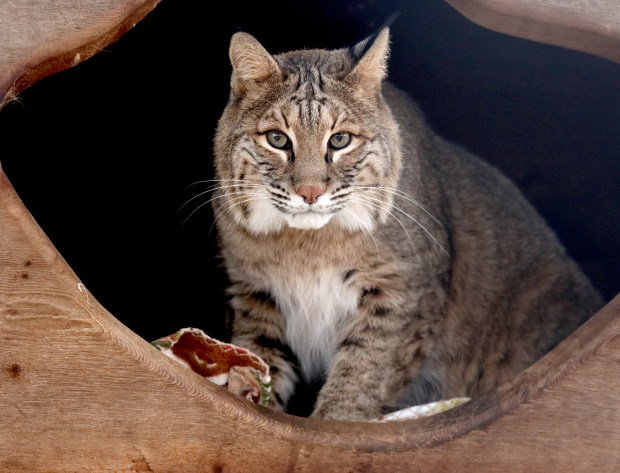
The Forest Preserve District of Will County successfully captured images of two bobcats on a trail camera in southern Will County. One of the bobcats, seen limping, pleased naturalists as this indicates the animal’s recovery and survival in the wild. Becky Blankenship, a wildlife ecologist with the district, confirmed that the same limping bobcat was also captured on camera back in 2022. Bobcats, known scientifically as Lynx rufus, are native to Illinois and their numbers have increased over the last ten years. Although they are commonly caught on camera, seeing them in person remains rare. According to Blankenship, bobcats frequently appear on trail cameras in southern Will County, and they are known inhabitants of the area.
Many people report having seen bobcats years ago or occasionally in their yards. Encountering a bobcat in person is rare, depending on your location. “Not a lot of people get to see these critters,” said Blankenship, emphasizing the special moment it provides. Bobcats are widespread throughout Illinois, often residing in forested areas, wooded bluffs, or bottomland forests. As carnivores, they hunt animals like cottontail rabbits and squirrels.
Guillaume Bastille-Rousseau, an associate professor at Southern Illinois University, mentioned that Illinois’ bobcat population has resurged after a period of decline. A decline in bobcats began in the 1970s, resulting in their classification as a threatened population. In response, Illinois ended legal hunting of bobcats in 1977. By then, southern Illinois held the majority of the state’s population. In 2001, the bobcat numbers began to grow again, reoccupying areas across the state. Removal from the threatened species list came in 1999, according to the Illinois Bobcat Foundation. The bobcat hunting season was reinstated in Illinois in 2016 after a 44-year prohibition. The hunting and trapping season occurs from Nov. 10 to Feb. 15. Hunters must possess a permit, and about 2,000 are issued each season. Each permit holder is limited to harvesting one bobcat.
Blankenship stated that bobcats cannot be legally hunted or trapped in Will County; these activities are restricted to southern and western Illinois. Hunting or trapping in forest preserves is prohibited. To ensure ethical practice, hunters need comprehensive education, prioritizing sustainability and science-based harvest levels, Blankenship added.
Bastille-Rousseau assured that bobcats are not dangerous to humans. Despite their size, ranging from 15 to 30 pounds, they tend to avoid humans and pose no threat. Blankenship highlighted that bobcats are primarily active at dawn and dusk, but daytime sightings are possible. She advises keeping a distance if you encounter a bobcat, promoting appreciation of these creatures from afar.
 Elk Incident Captured on Viral Video in Colorado
  El Niño 2026 Expected to Surpass Historical Intensity
  U.S. Records Warmest September on Record Since 1895
  States Lead in Energy Policy Amid Federal Setbacks
  The Impact of Modern Windows on Home Temperature Regulation
  Swiss Glaciers Continue Rapid Ice Loss Due to Global Warming