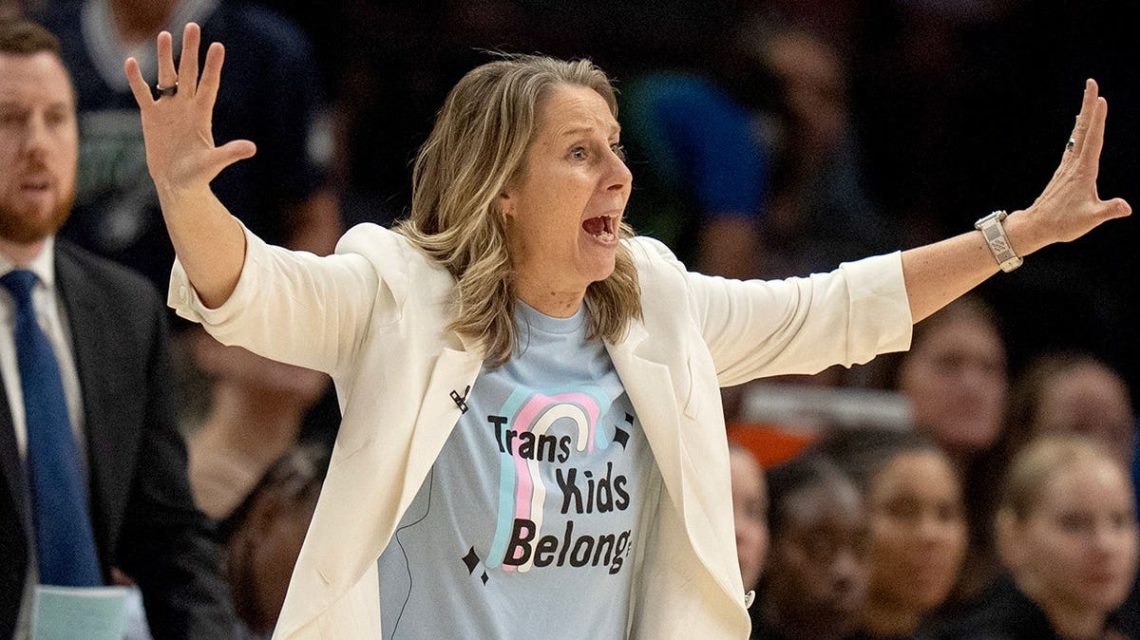
Cheryl Reeve, coach of the Minnesota Lynx, has won the WNBA Coach of the Year award for the fifth time. She was chosen by a panel of sportswriters and broadcasters, securing 40 out of 74 votes. Her team had the best record in the WNBA with 33 wins and 11 losses, a significant factor in her selection.
Reeve has been an outspoken advocate for including males in women’s sports, which aligns with the views of many in the women’s basketball media. This media is known for its progressive activism and often dismisses opposing views.
Coach of the Year Criteria
The notion that the best record guarantees the Coach of the Year award is not always accurate. In 2025, the Lynx had a superior record but Reeve received only two votes. Her latest win comes after her team finished just one game ahead of Golden State, demonstrating her legitimate qualifications, including managing the team without star player Napheesa Collier for a time.
A rookie standout, Olivia Miles, also positively impacted the Lynx’s performance, contributing to their successful season. Reeve acknowledges that acquiring Miles was advantageous for her team.
Political Views and Media Favor
Reeve’s progressive political stance isn’t unusual in the WNBA community. This is evidenced by the media’s favorable reception. Natalie Nakase of Golden State, another coach with similar views, received 20 votes. Nakase supports inclusivity, advocating that all women, including trans women, deserve opportunities in sports.
The debate surrounding the inclusion of male athletes in female sports categories emphasizes the need for protected categories. The controversy often becomes charged with accusations that misrepresent opponents’ arguments.
Reeve’s Advocacy and Critics
At the season’s end, Reeve defended her advocacy and the backlash from wearing a “Trans Kids Belong” shirt. She attributed the criticism to a larger intolerance toward transgender individuals. This accusation misconstrues the primary issue centered on sports category integrity and access to female-specific spaces.
Reeve suggests her advocacy has life-and-death implications for transgender children. She has received personal gratitude from parents, yet this is anecdotal and not comprehensive evidence for her claims.
Scientific Evidence on Gender Affirming Care
Recent studies question the efficacy of gender-affirming care. A 2025 review of puberty blockers found little evidence for their psychological benefits. Another study found higher rates of mental health issues among those who underwent surgery. Research from Finland also indicated ongoing psychiatric needs, suggesting these interventions may not meet long-term mental health goals.
Reeve’s arguments often appeal to emotion rather than scientific findings. Her rhetoric can be seen as a method to avoid engaging with the substance of differing viewpoints.
Accusations of Hate
Reeve’s suggestion that opposition stems from hate misrepresents the intentions of those advocating for female spaces and privacy. This portrayal may discourage open dialogue on the topic. Critics argue that promoting compassion without addressing the legitimate concerns of others polarizes the discussion further.
Cheryl Reeve’s win highlights the intersection of sports achievement and personal advocacy. Despite the recognition, her stance on trans inclusion prompts ongoing debates about fairness and safety in women’s sports.
 Matt Russo’s Key Role at Naperville Central
  Bears Triumph Over Eagles with 27-7 Victory
  Tribute to AEW Star Pac: Remembering Benjamin Satterley
  Warren High Quarterback Xavier Vinson’s Journey and Impact
  Pete Crow-Armstrong’s MVP Journey and Playoff Anticipations
  Chicago Blackhawks: Key Questions for the 2026-27 Season