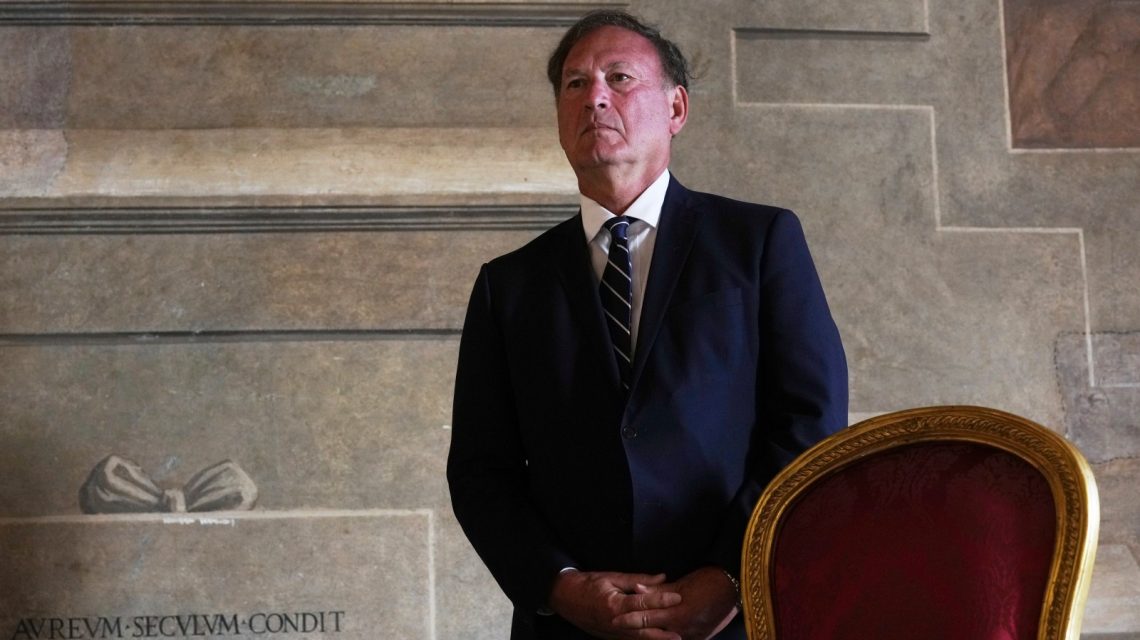
Alito’s Recusal from Climate Case
U.S. Supreme Court Justice Samuel Alito has stepped back from a significant climate-change case scheduled for argument next week. This marks a reversal from the court’s previous stance that there was no reason for Alito’s recusal. The case, Suncor Energy v. County Commissioners of Boulder County, has been closely monitored as it might impact numerous lawsuits holding oil and gas companies accountable for climate-related damages.
NBC highlighted this move as a ‘major U-turn,’ revealing that the court initially saw no need for Alito to recuse himself despite an earlier recusal in similar proceedings. Newsweek contacted the Supreme Court for comments regarding this development.
Significance of the Case
The case involves whether state and local governments can file climate-damage lawsuits against fossil fuel companies in state courts. Over two dozen states, cities, and local governments, as reported by Reuters, have filed such lawsuits to cover climate change-related costs. Oil companies argue these claims are preempted by federal law and shouldn’t proceed under state legal theories.
Ethical Concerns and Implications
The case has sparked debate regarding Supreme Court ethics. Environmental groups have questioned Alito’s involvement due to financial interests and connections within the energy sector. With Alito’s recusal, the case will be decided by eight justices, which might lead to a 4-4 split, maintaining the lower court’s decision.
Lawsuit Details
Suncor Energy v. County Commissioners of Boulder County originated from a lawsuit by Boulder County, the City of Boulder, and San Miguel County, Colorado against major energy firms like ExxonMobil and Suncor Energy. Boulder County seeks compensation for climate-related damages such as those from floods, droughts, and wildfires.
The plaintiffs allege that fossil fuel companies were aware of climate risks but misled the public. Boulder County insists that the case centers on state-law claims for local damages, not emission regulation or national energy policy.
Reuters noted that oil companies believe climate change falls under federal jurisdiction, not state tort law. They argue that federal authority over emissions and energy policy preempts the state’s claims.
SCOTUSblog pointed out that the Supreme Court will evaluate whether federal law supersedes state-law claims by the plaintiffs. This judgment could influence the trajectory of numerous climate-related lawsuits across the country.
Alito’s Reasons for Recusal
Justice Alito’s recusal follows months of criticism from ethics watchdogs and climate advocacy groups. Reuters reported that Alito stepped aside from prior litigation stages due to stock ownership in one of the involved companies, ConocoPhillips.
Initially, when the Supreme Court agreed to hear the appeal, Alito was deemed free of financial interests concerning any parties, allowing participation. However, renewed calls from The Center for Climate Integrity, backed by Consumer Watchdog, highlighted potential conflicts due to Alito’s past stock investments.
Environmental advocates publicly questioned Alito’s intentions to participate after his earlier recusal. The Center for Climate Integrity and Consumer Watchdog underscored Alito’s stock holdings in companies like ConocoPhillips, arguing potential conflicts due to possible impacts of climate-liability litigation.
These groups contended that the stock holdings paired with his prior recusal warranted Alito’s withdrawal to preserve public trust in the court’s fairness.
 Trump Administration Reduces Car Fuel Efficiency Standards
  Debate Delays Homer Glen Substation Modernization Project
  Volunteers Plant Marram Grass at Indiana Dunes State Park
  Trump Administrations New Fuel Efficiency Rules: Impact and Reactions
  Winter 2026-2027 Weather Forecasts: A Closer Look
  Analyzing Oregon’s Wildfire Crisis and Its Implications