
A prosecutor in New York has reopened an inquiry into allegations of gang rape at a Cornell University fraternity. This action follows a lawsuit by a woman who claims she was sexually assaulted by seven students in 2024 after being given alcohol and drugs. Tompkins County District Attorney Matthew Van Houten announced plans to present evidence to a grand jury. This decision comes amidst public concerns over the absence of criminal charges in the case.
The woman, known by a pseudonym in the lawsuit, alleges the assault occurred at the Chi Phi fraternity house on the Ivy League campus. According to her, she was coerced into consuming drugs and alcohol, leading to incapacitation during the assault. Social media has seen widespread commentary on the lawsuit, with criticism directed at both the university and the district attorney’s office. Some have even shared photos of the fraternity members involved. The accuser is suing various entities, including the university, the fraternity, and an Ithaca bar, seeking damages.
“Seeking justice sometimes requires us to reconsider or reopen cases when we are provided with additional evidence,” Van Houten stated. “I have begun this process by discussing the matter with Jane Doe and her attorneys.”
Initially, the accuser did not mention gang rape or drugging in her statement to campus police, according to Van Houten. He also noted that neither the woman nor her attorney contacted him about revisiting the decision not to prosecute. Nevertheless, he has now reached out to her legal team to begin a renewed investigation.
Cornell University’s Response
Cornell University expressed its support for the reopened investigation. In its statement, the university detailed its own investigation, which led to expelling some students and indefinitely closing the Chi Phi chapter on campus. The sanctions were part of the university’s response to the incident, though further details were not disclosed due to privacy laws.
Cornell denied allegations that consequences were inadequate, emphasizing that the dismissal and suspension of students were substantial actions. The university maintains that a trained panel undertook a thorough disciplinary investigation.
Legal and Social Ramifications
The lawsuit accuses the university of failing to prevent the alleged assaults and of mishandling sexual violence cases. It includes a photo purportedly showing a group chat among fraternity members about the night in question. The woman went to campus police roughly three weeks after the incident, and the fraternity received a temporary suspension immediately.
The school rebuffed claims that the students involved were merely tasked with writing essays, noting more severe repercussions like expulsion.
Ongoing Dialogue on Campus Culture
Recent comments from public figures have highlighted the issue of rape culture at elite institutions. Congresswoman Alexandria Ocasio-Cortez criticized this culture, noting the normalized behavior revealed in the fraternity’s group chat.
“When I read what happened at Cornell, those men posted in a group chat. That means it was normal to them,” she said, calling for a change to prevent protection of such spaces.
In response to the incident, Cornell has formed a task force addressing sexual assault. Its report from a 2025 survey indicated significant levels of sexual assault among students, spurring the university to implement several recommendations.
Community reactions have been strong, with many contacting the DA’s office for answers or expressing outrage. Eeshaan Chaudhuri, Cornell’s student government president, calls for re-evaluation of the initial investigation and scrutiny of the fraternity culture. He noted the broader implications, stressing the need for broader cultural changes.
The case continues to spark debates about handling sexual assaults at prestigious universities, emphasizing the need for systemic changes to protect students.
 Impact of College Rankings on Visibility for Lesser-Known Institutions
  New Analysis on AI’s Impact on Entry-Level Jobs
  Education Department Reverts to Trump-Era Title IX Rules
 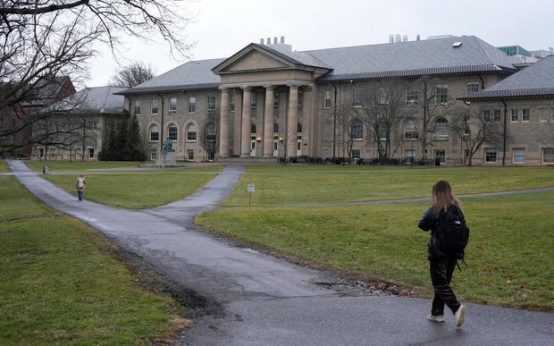 Cornell University Fraternity Case Reopened Amid Allegations
  The Complexities of Accountability in Education
  The Impact of College Rankings on Less Prestigious Institutions