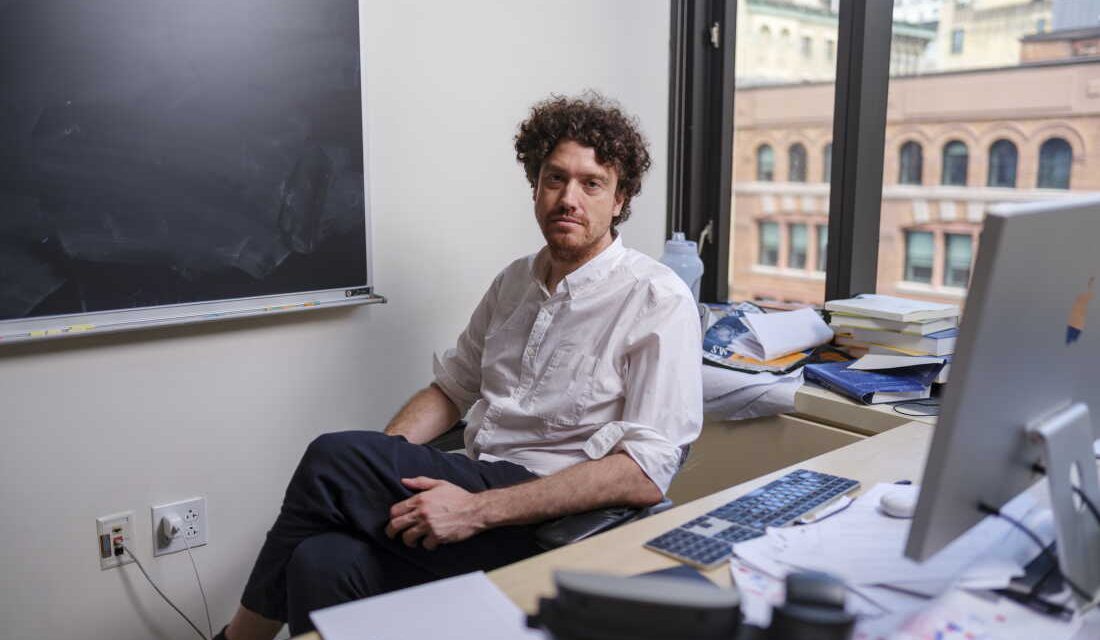
Tristan Buckmaster, a mathematician at New York University, posed in his Manhattan office on September 11, 2026. Buckmaster and collaborator Levent Alpöge have been working on solving the Navier-Stokes equations. These efforts have encountered challenges from OpenAI, which claims to have cracked these complex equations.
When OpenAI announced the breakthrough earlier this month, the company expressed excitement about advancing research for the benefit of humanity. However, many mathematicians assert that the supposed solution has not yet enhanced human understanding significantly. Although technically correct, the AI-produced 166-page proof is dense and difficult for human comprehension.
James Maynard, a mathematician from the University of Oxford, stated that extracting human understanding from this new AI proof has been extremely challenging. The paper lacks the clarity needed for humans, according to Javier Gómez-Serrano, a mathematician at Brown University. He believes it could advance the field following substantial rewrites, but it currently offers little educational insight.
AI’s Rapid Entry into Mathematics
Over the past six months, AI has made significant strides in mathematics. Large language models are starting to deliver real results, potentially leading to mathematical breakthroughs. Yet, OpenAI’s announcement highlights a divide between AI and human mathematicians as they neared a solution.
Maynard commented on a missed opportunity for demonstrating collaboration between AI and humans. His views were echoed in a statement signed by him and 25 Fields Medal recipients, criticizing the misalignment between AI firms and mathematicians.
The Navier-Stokes Challenge
OpenAI claims to have solved the Navier-Stokes problem, considered one of mathematics’ elusive unanswered questions. The equations describe fluid dynamics and are vital across physics and engineering. Deeper insights could improve models for turbulence and lift in aircraft.
Researchers had been examining scenarios where these equations fail to work as expected. Such scenarios are part of the Millennium Prize Problems, established by the Clay Mathematics Institute. Before OpenAI’s intervention, Buckmaster and Alpöge were progressing towards a solution using AI tools, including OpenAI’s chatbot.
Upon hearing rumors about potential solutions, OpenAI deployed 10,000 AI agents to tackle the Navier-Stokes problem. These agents worked for 88 hours, generating extensive computational output. OpenAI’s efforts cost approximately $6-$10 million, with the total effort across problems reaching $15-$20 million.
Controversy and Response
Following OpenAI’s announcement, Buckmaster released a public statement describing OpenAI’s attempt to involve him in their work by sidelining his collaborator Alpöge. Buckmaster claimed that OpenAI seemed to know more about their strategy than expected, though OpenAI denies using Buckmaster and Alpöge’s work.
The published results faced criticism for being unclear. Mathematicians, including Gómez-Serrano, noted difficulty in discerning important sections from routine ones. Despite the rush, Buckmaster had to publish his AI-influenced preliminary findings, admitting they were not up to his standards.
Verification Through Code
While OpenAI’s proof is still under scrutiny, few doubt its correctness. OpenAI also released a Lean formalization, a computer code used to check proofs’ accuracy. The Lean code compiled as expected, giving the mathematical community confidence in its correctness.
Mathematicians like Gómez-Serrano and Buckmaster see potential for AI within the field, with computers already handling extensive calculations. Yet, Maynard emphasized mathematics is about more than solutions; it’s about the human understanding that derives from solving these problems.
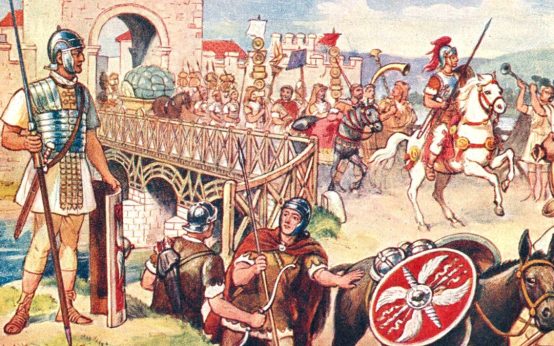 Reassessing the Central Role of Rome in the Roman Empire’s Road Network
 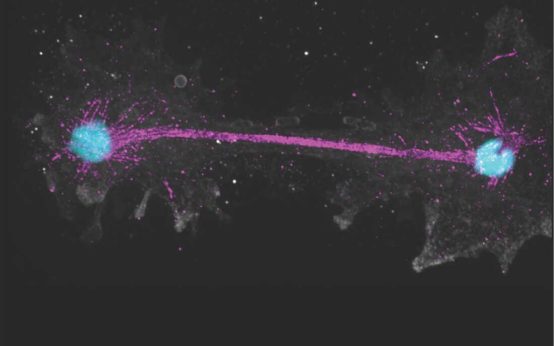 Fire Amoeba Discovery Challenges Limits of Complex Organisms
  Impact of Sleep Types on Disease Risk
 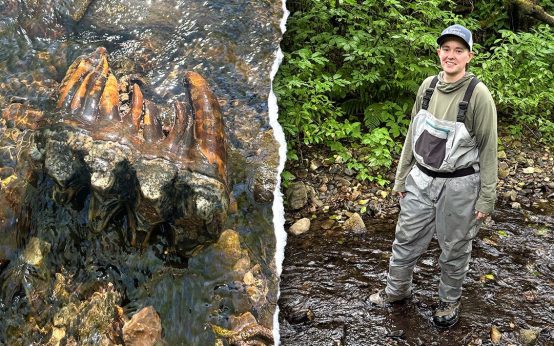 Ice Age Mastodon Tooth Unearthed in California Creek
  The Unique Challenges of the Pumpkin Toadlet
  Animal Self-Medication Insights