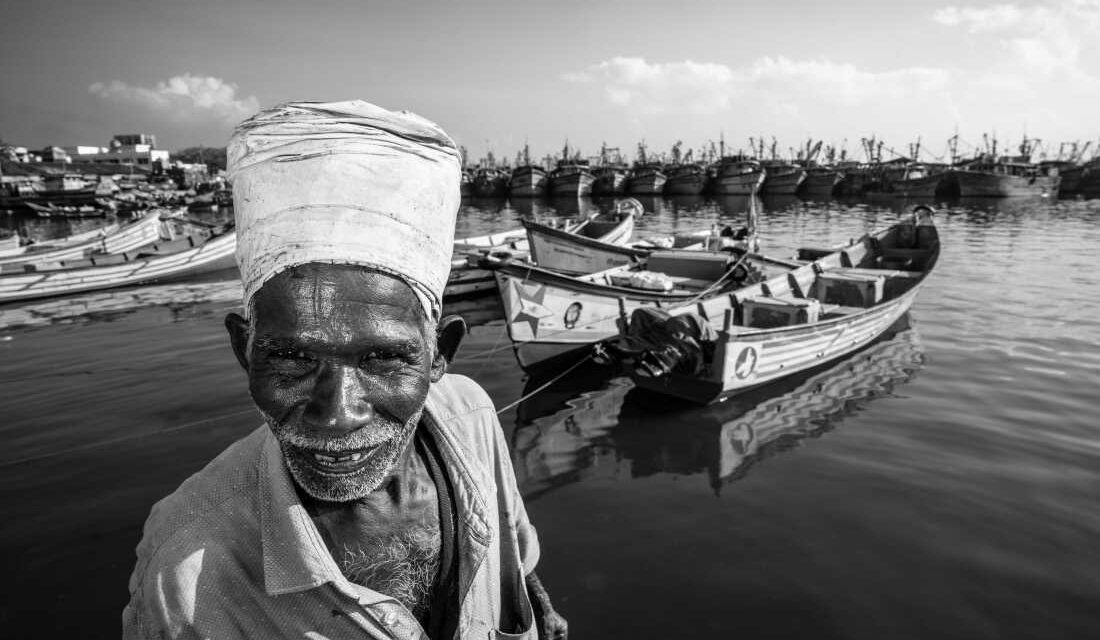
Pavadairayan, a 60-year-old migrant laborer known as a ‘basket man,’ is a familiar figure at Kasimedu Fishing Harbour in Chennai, India. Every day, from 2 a.m. to 7 a.m., he carries fish in a basket on his head from boats to the auction house. The journey, covered in pitch darkness, involves navigating narrow, slippery paths littered with fish scales and damp from seawater. Each basket weighs about 35 pounds, and Pavadairayan makes this third-of-a-mile trip 40 or 50 times during each shift.
Pavadairayan is just one of hundreds of workers performing this tough job. They earn about $5 daily, under constant scrutiny from supervisors who may dock pay or impose fines if fish go missing. Despite the challenges, Pavadairayan values his work, enjoying the freedom it provides him for the rest of the day. He chooses not to take up additional jobs like many do, instead relishing the simplicity of life by the sea.
The bustling Kasimedu harbor, with around 30,000 people including fishermen, auctioneers, transport workers, and ice suppliers, is vibrant and dynamic. Overcrowded and originally built for fewer than 600 boats, it now serves over 1,000 vessels. These workers have diverse and compelling stories, illustrating their struggle and deep connection to the sea.
From Fisherman to Vendor
Nandu Kumar, 65, reflects on his past at the harbor. Once a fisherman and smuggler of imported goods during India’s economic restrictions in the ’80s, Kumar eventually returned to fishing following reforms in 1991. His life took a tragic turn in 2010 when his daughter’s husband drowned, leading his daughter to take her own life. Now caring for his grandchildren, Kumar needed stability, turning to selling fish at the harbor. Supported by his sons, his business later flourished.
This fishing life — it’s harshest on the body. Your shoulders ache all the time. Sometimes, alcohol is the only way you can cope and forget the pain.
The Risks and Rewards
Fishing in Kasimedu is precarious. Many depend on unstable incomes without government support. Bhagat Singh, a researcher and social worker, explains the risky nature of the trade. Born to a fisherman himself, Singh highlights the lack of safety nets in this industry. While older generations remain tied to the sea, younger individuals pursue more reliable jobs.
Nevertheless, a need for independence can pull them back to the harbor. Nizamuddin, 25, is one of the few young workers there today. Wearing a wetsuit, he assists with boat maintenance and fish handling, finding fulfillment in providing for his family. Despite his brothers finding opportunities elsewhere, he remains true to his choice.
The Irresistible Call of the Sea
For many, the sea holds an irresistible allure. Kumar likens the sea to a mother’s embrace, providing warmth and comfort. Despite the hardships, the unpredictability of life at sea brings an excitement that he misses. Observing the morning routine at the harbor, he experiences nostalgia for his days at sea.
The harbor is a testament to resilience and connection to the sea. Working here is demanding, but the simple joys and independence it offers resonate deeply with those who make their lives on the water’s edge.
Kamala Thiagarajan is a journalist in Madurai, India, reporting on global health and development. Her work appears in The New York Times, BBC, and more. Follow her on X @kamal_t. Subscribe to NPR’s Global Health newsletter for more stories like this.
 Nikole Hannah-Jones Reflects on Educational Choices for Her Daughter
  Chicago Bears Eye Potential Move to Indiana: A Look at the Developments
  Amazon Offers Discounts to Employees at Whole Foods
  Inside the American Airman Rescue Mission in Iran
  Trump Comments on China’s Surveillance Amid Reports of Aid to Iran
  Amazon Suspends Partnership with 21 Air Following Miami Cargo Plane Accident