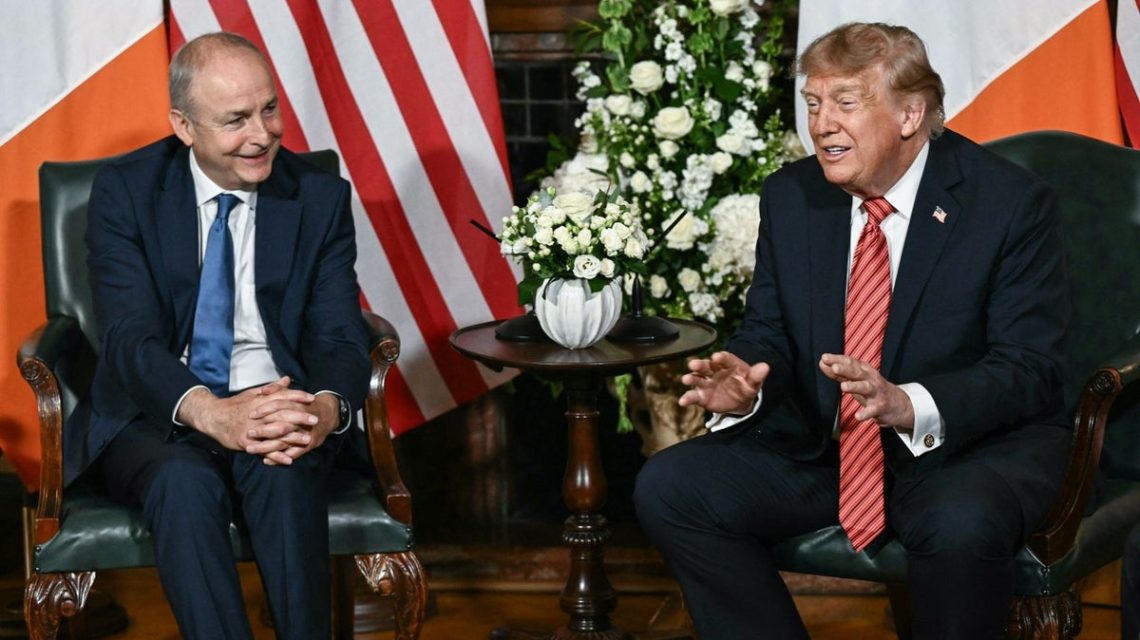
During his recent visit to Ireland, President Donald Trump expressed his desire for the unification of Ireland. Speaking in Dublin alongside Ireland’s Prime Minister Micheál Martin, Trump shared his hopes for a unified country, remarking, “I don’t want to cause any problems, but I will tell you, I’d love to see it unified. I have friends on both sides, great people. They’re Irish people.”
He continued, “I’d like to see a unified country. I think it would be a great feather in everybody’s cap if that happened. It’s going to happen eventually.” While acknowledging the U.K.’s likely influence in the matter, he reiterated that unification would be beneficial for all involved.
On September 12, 2026, Trump met Ireland’s Prime Minister Micheál Martin at Farmleigh House in Dublin. Trump further addressed the subject later at the Deerfield Residence, the official residence of the U.S. ambassador to Ireland. Here, he was introduced by U.S. Ambassador Edward S. Walsh amidst the patriotic tones of Lee Greenwood’s “God Bless the USA.”
During his speech, Trump revisited a question from a reporter concerning Irish reunification, admitting its complexity by saying, “That’s one of those questions where no matter what you say, no matter how well you say it, there’s no good answer, right?” However, he maintained that reunification would be “cool.”
“It would be a great thing if Ireland became one country,” Trump remarked.
The discussion surrounding a potential united Ireland remains a historically contentious issue. The debate has persisted for decades, often becoming more than an exchange of viewpoints. The conflict known as “the Troubles,” lasting from the late 1960s to the late 1990s, involved significant violence. Irish nationalists and republicans, mainly from Northern Ireland’s Catholic minority, sought to unite Ireland under a single Irish state. Conversely, unionists and loyalists, primarily from the Protestant majority, aimed to keep Northern Ireland as part of the U.K.
Throughout these decades, the conflict resulted in over 3,500 deaths, involving paramilitary groups from both sides alongside British security forces.
This historical backdrop gives context to the current conversation around Irish reunification sparked by Trump’s comments and demonstrates the longstanding complexities tied to this issue.
If you have story tips, contact James Cirrone at [email protected].
 The Cost of Challenging Beijing
 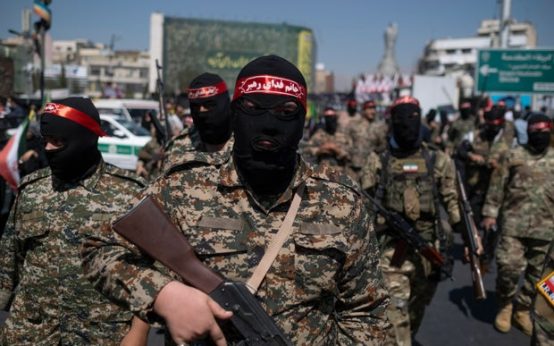 Tensions Escalate in Iran Conflict as Global Leaders Weigh Options
 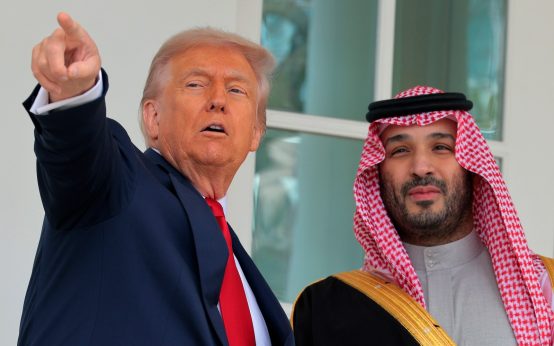 White House Approves F-35 Sales to Saudi Arabia Amidst Regional Tensions
  Inside the Secret Deals Powering the President’s Push to Deport Migrants to Countries Not Their Own
  Navigating the Challenges of Third-Country Deportations
 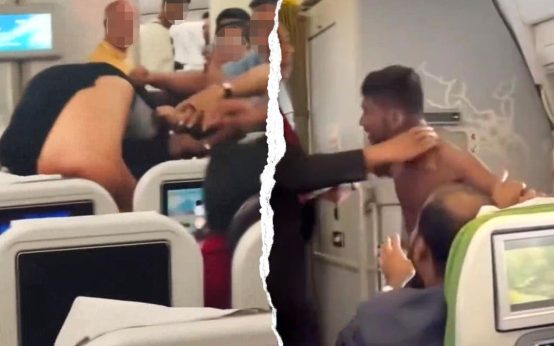 Midair Altercation on Bangladesh to London Flight