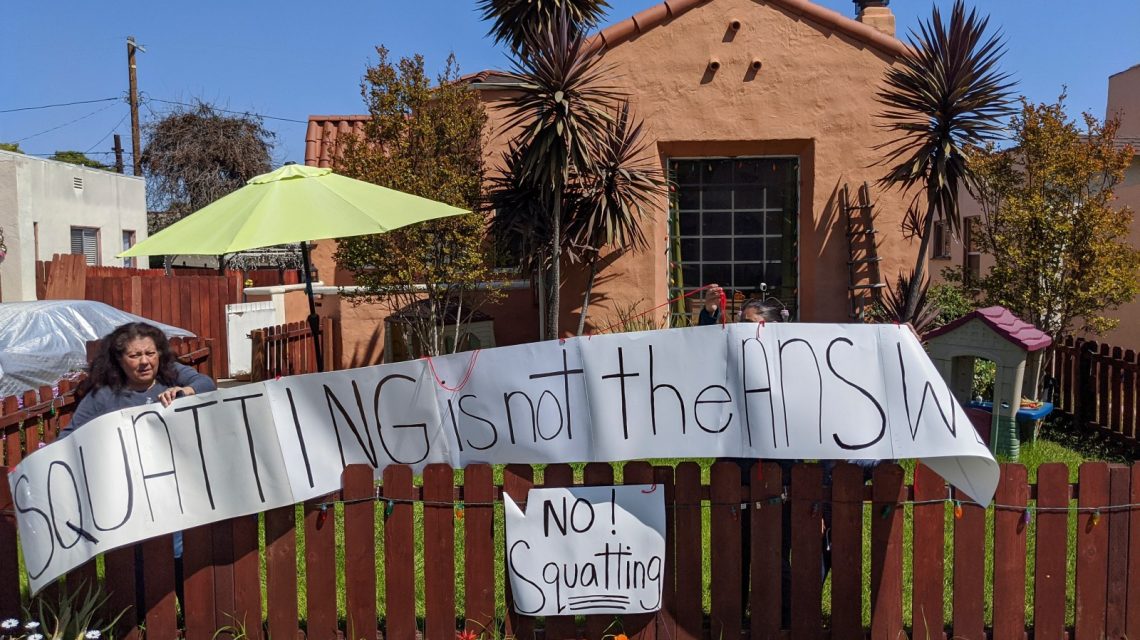
A Republican lawmaker in Maryland is advocating for the creation of a state registry to track repeat squatters. This stems from the need for law enforcement and property owners to identify individuals who continually occupy homes without permission. State Delegate Ryan Nawrocki from Baltimore County suggests this database might resemble a sex offender registry.
Sex offender registries are government-mandated databases that track individuals convicted of particular sex crimes, requiring them to keep their details updated with law enforcement. These registries are often made publicly accessible, letting residents search for offenders by name or location.
Nawrocki mentioned that this proposed squatter registry would not apply to isolated incidents. It would focus on repeated offenders to ensure law enforcement is aware of potential issues when responding to properties.
“Law enforcement knows who they are dealing with when they come to a property.” – Ryan Nawrocki
Recent events underscore the importance of such a database. Baltimore County police recently dealt with a case involving 45-year-old Germarcco Dante Trayham, who allegedly squatted in a newly renovated home. He presented police with a dubious lease and had a similar incident reported earlier at another property. Discrepancies in the lease’s details, such as the address, phone number, and landlord information, questioned its authenticity.
Maryland court records reveal Trayham’s criminal history, including armed robbery, assault, theft, and firearm-related offenses. Though Newsweek reached out to Baltimore County Police and Nawrocki for comments, further statements were pending.
Legislative Action on Squatting
Lawmakers have recently passed bipartisan legislation to address fraudulent leases. This law, effective from October, penalizes forging residential leases intended for fraud with felony charges that can lead to a decade in prison. As of now, Maryland lacks a squatter registry.
Nawrocki introduced HB202 in January 2025 to criminalize organized squatting. However, the bill did not pass. Nawrocki believes the initiative is crucial, emphasizing that families should not struggle in civil courts for months to reclaim their properties from unauthorized occupants.
Though detailed national data on squatting is unavailable, there is a rising concern among housing groups and legislators. A 2024 survey by the National Rental Home Council identified more than 1,800 homes occupied by squatters in three major urban areas. As squatting becomes increasingly concerning, states like Florida, Georgia, and Tennessee have enacted laws to hasten the eviction process and bolster property owner rights.
The mix of escalating housing costs, unoccupied properties, and protracted eviction timelines have heightened focus on squatting issues.
 Universities Should Reject Political Influence on Research Funding
  Trump’s Approach to China: Trade Dynamics and Challenges
  Media Outlets Sue After White House Ban
  American Public Opinion on Press Freedom
  Media Lawsuit Against Trump Administration for White House Ban
  The Cost of Challenging Beijing