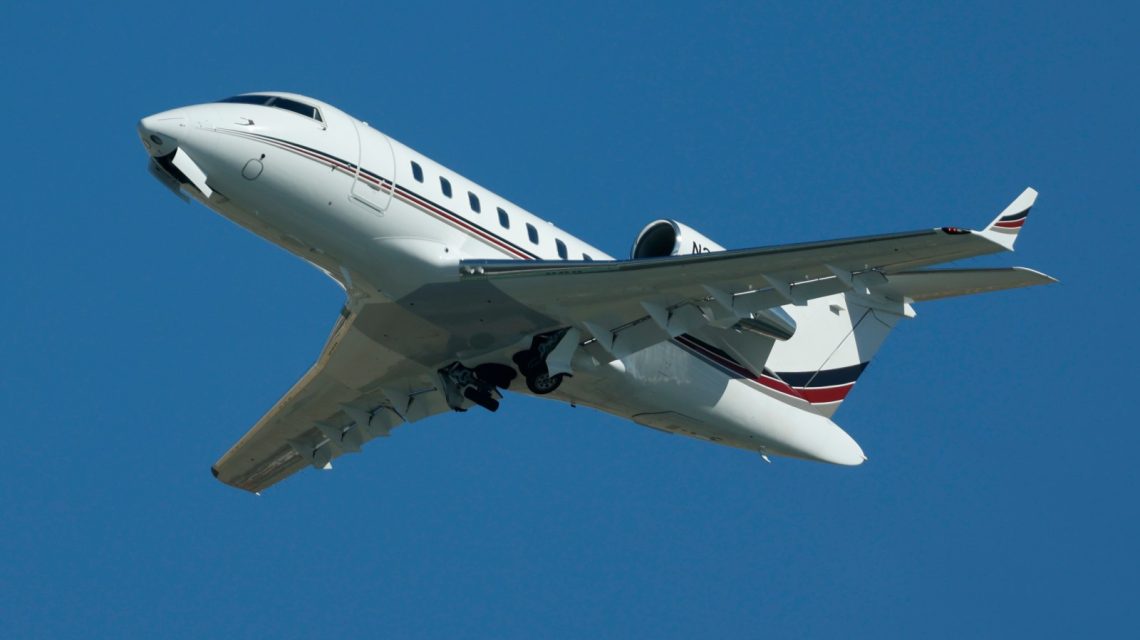
President Donald Trump has demanded that Canadian Bombardier halt airplane sales in the U.S. unless production shifts to American soil. Trump asserts that over half of Bombardier’s revenue originates in the U.S., while Canada restricts firms like Gulfstream Aerospace from operating there. Newsweek attempted to get feedback from Bombardier and the White House, but Trump’s Truth Social post was the only reference provided. Bombardier did not respond before publication.
Starting Tuesday, Canada’s retaliatory tariffs on over 700 American goods, some mirroring the U.S.’s tariffs, come into play. These Canadian measures match tariffs on diverse goods like hockey sticks and tongue depressors.
Bombardier’s aircraft enjoy popularity among influential figures such as Oprah Winfrey, Jay-Z with his Bombardier Global 7500, and Kylie Jenner’s Global 7500, famously nicknamed ‘Kylie Air’. Mark Cuban, owner of the Dallas Mavericks, also uses a Bombardier Global Express.
Trump’s Consistent Stance on Bombardier
In January, Trump made a similar threat that did not materialize. He talked about decertifying Bombardier Global Express jets and imposing a 50 percent import tariff on Canadian aircraft until Canada’s regulator certified Gulfstream models. Canada eventually certified several Gulfstream jets, easing tensions until the current flare-up.
Trump criticizes Ottawa for considering the U.S. market a ‘piggybank’, demanding local production and vowing to ‘buy American, fly American’.
Bombardier’s Market Reach and Ownership
With half of its 5,100 aircraft serving in the U.S., Bombardier is a major player. The company also has defense operations in Wichita, Kansas. Prominent owners range from celebrities to corporate executives. Bombardier competes with Gulfstream, Dassault, and Embraer in the business-jet domain.
The company risks losing a significant portion of $5 billion in U.S. sales if blocked from the American market. Its revenue saw a six percent increase year-over-year in the second quarter, with service revenues hitting new peaks. Following Trump’s remarks, Bombardier shares dropped between five and nine percent.
Overview of the US-Canada Trade Conflict
Trade discussions between the U.S. and Canada stopped on August 21 after failed negotiations. Canada rejected final U.S. demands and halted talks. The next day, the U.S. imposed 50 percent tariffs on roughly $20 billion in Canadian products.
Discrepant narratives arise from each side: Canada offered to remove tariffs on certain American products, while the U.S. demanded broader concessions. In retaliation, Canada will soon apply new tariffs on numerous American goods, impacting sectors like steel, electronics, and agriculture.
Canada also announced a $7.5 billion support package for affected industries and workers.
The stakes are high due to significant economic ties, with hundreds of billions traded annually between the nations. The conflict unfolds as the U.S. reviews the United States-Mexico-Canada Agreement, aiming to make amendments with Mexico before Canada.
Who Faces the Trade War’s Brunt?
The U.S. receives about 72 percent of Canada’s exports, whereas only 15 percent of U.S. exports head to Canada. The trade dispute’s impact clusters in border states like Maine and Michigan, which are also crucial midterm election battlegrounds. Political figures have differing opinions on the tariffs, sparking debate on their effectiveness.
 Ireland Faces Calls to Boycott Matches Against Israel
  Social Media Influencer Faces Serious Charges
  U.S. Military Expansion in Greenland
  The Autocratic Age: A Closer Look
  Venezuelan Migrant Arrest in Texas Sparks Outrage
  Senator Calls for Halt in Diesel Exports Amid Rising Fuel Costs