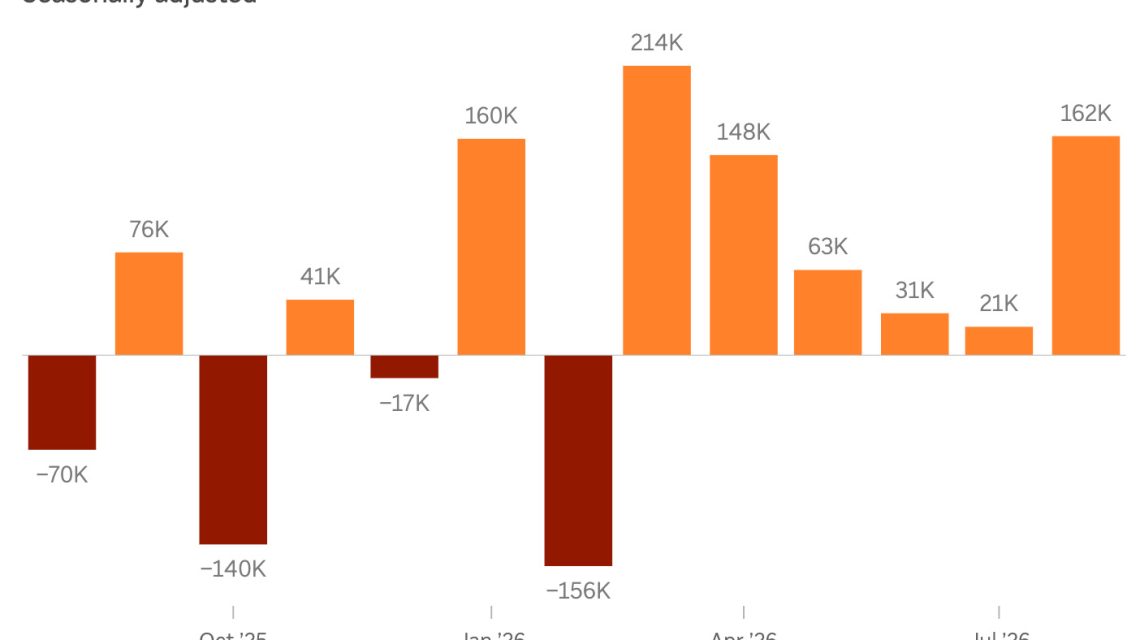
President Donald Trump has frequently assured Americans of an impending economic surge. Yet, despite a positive jobs report on Friday, Trump expressed dissatisfaction. The August job numbers showed a promising uptick after a period of sluggish hiring and mounting concerns about inflation affecting Trump and his party. With Election Day two months away, the figures might have been a relief. However, Trump, speaking from the Oval Office, voiced grievances about inflation and interest rates.
Frustration was directed at financial markets, the Federal Reserve, and U.S. trade partners. Trump challenged the economic notion that a job gain of 162,000 in August could lead to inflationary pressures. “Success does not cause inflation. Stupidity does,” he exclaimed. Trump declared it “crazy” that stock markets dropped due to inflation concerns.
Throughout his term, Trump has faced challenges from decreased hiring and rising prices, hindering his promises of rapid growth. “When I win the election, we will immediately begin a brand new Trump economic boom,” he asserted at a North Carolina rally. Nevertheless, the economy has grown at an annual rate of about 2%, slower than during the Biden years.
Trump attributes his difficulties in achieving stronger growth to higher interest rates on U.S. government debt. On social media, he suggested America retaliate by ceasing trade with foreign countries. Rates have surged due to inflation caused by Trump’s tariffs and oil shortages from the Iran conflict. The national debt now surpasses $40 trillion, with the 10-year U.S. Treasury note reaching 4.79%.
Public confidence in Trump’s economic leadership has diminished as promised growth remains unachieved. His policies have partly contributed to the inflation and high interest rates he critiques. Joe Brusuelas, RSM US’s chief economist, noted, “The administration’s credibility on growth, inflation, rates, debt, and deficit dynamics have suffered.” Trump’s desire for the Fed to cut benchmark rates might exacerbate inflation.
Despite foundational monetary policy concepts, Trump dismissed risks, suggesting GDP could grow between “12, 13, 14, 15%” with lower rates. “We could have a GDP that would break every single record,” he claimed.
The president’s approval rating on economic matters stood at a low 32% in mid-summer, according to The Associated Press-NORC Center for Public Affairs Research. Back in 2018, under Trump, his rating was 50%. Trump’s comments on foreign trade threaten growth and might lower his ratings further.
Recent tariffs against Canada have impacted Republican prospects in Maine and Michigan Senate races. In contrast, Trump aides foresee a positive future fueled by AI, tariffs, and tax cuts. They assert that AI developments will enhance productivity and bolster growth. Last year’s tariffs are thought to bring factory jobs to the U.S., while tax cuts promote investment, and fraud identification saves taxpayer money.
Christopher Phelan, chair of the White House Council of Economic Advisers, commented, “I expect higher growth. We’re doing stuff to make good things happen.” He noted job gains surpass necessary figures to match population growth. Productivity advances are a hopeful prospect for growth.
However, Phelan acknowledged growth alone may not resolve all financial challenges. Increasing costs of Social Security and Medicare outpace revenue, making growth insufficient to reduce deficits. Ernie Tedeschi, head of economic insights and research at Stripe, analyzed that only if growth exceeded 3% annually for a decade could it stabilize the U.S. debt load.
Tedeschi expressed enthusiasm about AI potentially delivering substantial growth but regarded historical expectations linked to computing as “wildly optimistic.” “We should absolutely not be planning for the optimistic scenario,” he cautioned.
Before Trump’s remarks on interest rates, his administration aimed to boost economic confidence. Treasury Secretary Scott Bessent highlighted strengthened growth benefits at the G20 finance summit. Commerce Secretary Howard Lutnick shared similar messages at G20 innovation talks.
Bessent explained ongoing efforts with White House budget director Russ Vought to manage debt and deficits. There’s political risk in reducing a budget deficit projected to reach $3 trillion over the next decade. Adjusting deficits could ameliorate interest rates, demanding spending cuts and tax hikes.
Brusuelas emphasized that Trump must make concessions to address debt and reassure markets effectively. “We need a period of slower growth in government spending — that includes outright reduction in spending in addition to tax increases that all would reduce deficits and interest rates,” he stated.
A free press is a cornerstone of a healthy democracy. Support trusted journalism and civil dialogue.
 A Mother’s Tragic Journey Under Abortion Ban
  U.S. Strategic Goals Remain Unmet Amid Prolonged Conflict
  The Impact of Arts and Closure on Democracy
 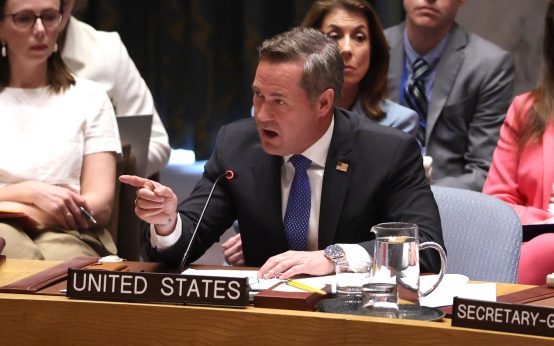 U.S. Ambassador Comments on Iran War Duration Amid Political Concerns
 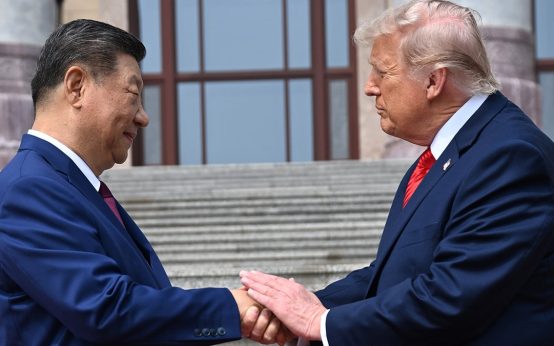 US-China Relations Under Scrutiny: Expert Warns of Escalating Tensions
  No Timeline for End of Iran Conflict