Introduction
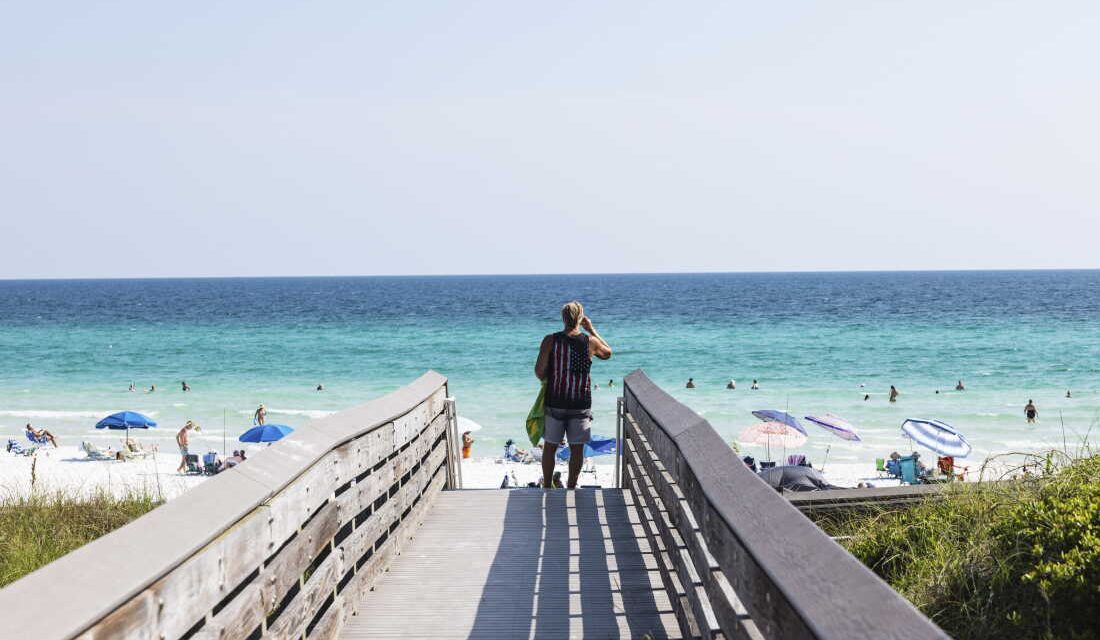
Santa Rosa Beach in Walton County, Florida, is a picturesque stretch of the Gulf Coast known for its emerald waters and fine white sand. Yet, it has become a focal point in the ongoing conflict between private property rights and public beach access. This issue has sparked debates and legal battles that continue to evolve.
The Conflict
Walton County’s scenic 30A highway passes through towns like Seaside, WaterColor, and Alys Beach, attracting tourists and new residents. With 26 miles of shoreline, the area has become embroiled in disputes over where private property ends and public access begins.
“Our beaches should be public,” says Dave Rauschkolb, a founder of Florida Beaches for All. Rauschkolb’s nonprofit advocates for shared beach access as tradition.
Residents like Rauschkolb oppose signs and security guards that border public beaches and restrict access to sands between multimillion-dollar homes.
The Property Owners’ Perspective
Eric Wilhelm, a property owner in Walton County, sees the situation differently. He argues that encroaching on private land undermines constitutionally protected property rights.
“It’s the foundational rule of the way that we live in this freedom-loving country of ours. Once that breaks down, then we have anarchy and chaos.”
The explosive growth in the area has led to increased instances of trespassing, with Wilhelm recounting experiences where beachgoers parked in his driveway and set up parties under his house.
Legal Battles and Legislation
Walton County’s customary-use ordinance allowed public access to traditionally recreational beaches. However, objections from homeowners led to the Florida Legislature requiring the county to sue property owners to prove customary use.
Attorney Kent Safriet, representing landowners, argues that customary use contradicts constitutional principles regarding property rights:
“The Fifth Amendment says no private property can be used for public purposes without just compensation.”
The legal battles continue, with public pressure leading to the repeal of legislation, but ambiguity remains.
The Sheriff’s Dilemma
Walton County Sheriff Michael Adkinson Jr. admits his team is caught in the middle. They handle disputes but avoid arrests, aiming to de-escalate tensions:
“There’s a lot to ascertain, so they mostly just try to lower the temperature when there’s a standoff.”
Grassroots Efforts and Technological Solutions
Sara Day, an activist, designed the Shoreline Defender app to help beachgoers identify the mean high-tide line, ensuring legal public access:
“It is not telling you to trespass; it is giving you a bandwidth of how much sand you might have at any given time.”
The app responds to situations where private security enforcement restricts access.
Potential Solutions and Future Outlook
Proposals like tax-break incentives for beach sharing and beach renourishment projects are under consideration. Advocates like Rauschkolb call for a Florida constitutional amendment guaranteeing public beach access, similar to models in Oregon, Texas, and Hawaii.
“If there ever was a state in our nation that should have public beaches everywhere, it should be Florida.”
The fight for beach access in Walton County remains a complex issue with national implications for coastal communities.
 EPA Dismantles Greenhouse Gas Rules, Causing Concern
  How Battery Innovations Transform Renewable Energy
  Data Centers Stir Controversy in Texas Amid Growth Boom
  Converse Apologizes and Withdraws Controversial Ad Amid Criticism
  Lucas Museum of Narrative Art Unveils in Los Angeles
  Lonnie G. Bunch III Reflects on His Legacy at the Smithsonian