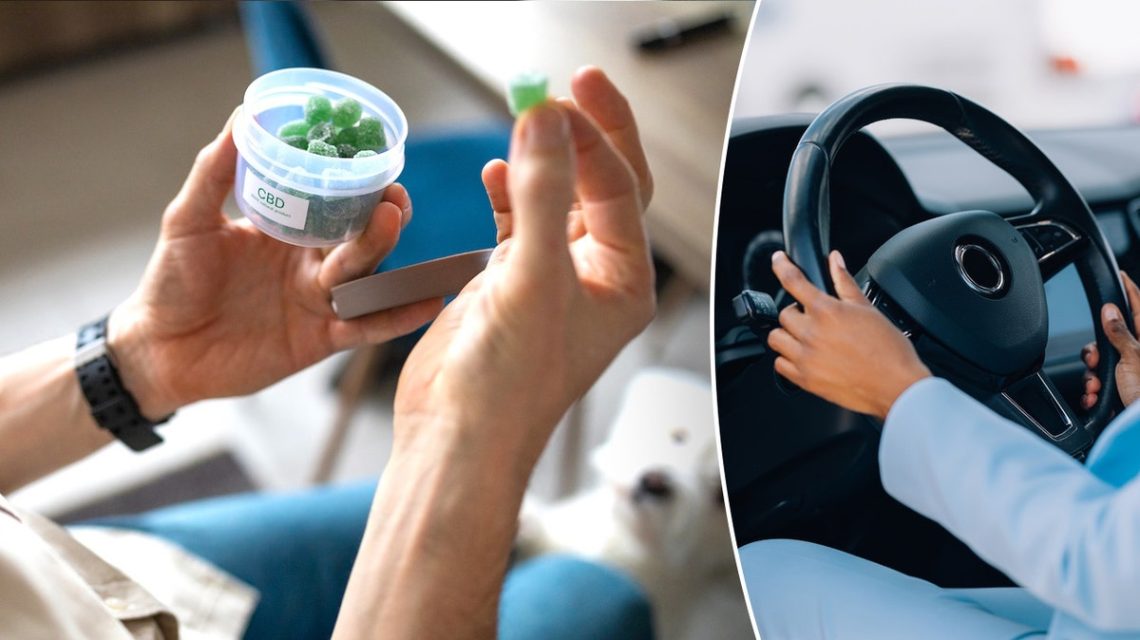
A recent study reveals that consuming cannabis edibles can greatly affect driving abilities, even when THC levels in the blood are well below the legal limit. Published in JAMA Network Open, this study underscores potential difficulties in enforcing impaired-driving laws in regions like Canada and parts of the U.S.
Most existing research on cannabis and driving involves smoked cannabis, which quickly elevates blood THC (tetrahydrocannabinol) levels. In contrast, edibles are absorbed gradually, leading to impaired driving even with lower blood THC concentrations.
Research Findings
The study identified that drivers ingesting higher doses of THC from edibles struggled with lane control, experienced delays in reaction times, and showed inconsistent speed management. Despite these impairments, blood THC levels often remained below the legal thresholds typically used at roadside checks.
Researchers at Toronto’s Centre for Addiction and Mental Health conducted trials with 40 regular cannabis-using adult volunteers. Each participant attended sessions where they consumed soft-chew gummies with 0, 2, 10, or 20 milligrams of THC.
Driving performance was tested using a simulator at intervals of two, five, and 24 hours post-consumption. These assessments measured lane discipline, reaction times, and speed consistency. Blood samples and self-reported intoxication levels were also collected.
Key Results
The data indicated driving impairment at two and five hours after consuming 10- and 20-milligram doses. Compared to a placebo, these doses resulted in more erratic lane positioning. At 20 milligrams, reaction times slowed and speed control was less steady.
Participants acknowledged their limitations by reporting reduced willingness to drive and lower confidence in their driving skills post-consumption. The average blood THC concentrations recorded were 1.6 ng/mL after a 10-milligram dose and 3.4 ng/mL after a 20-milligram dose, below the common 5-ng/mL impairment threshold.
Study Limitations and Comparisons
The study exclusively used driving simulators, limiting real-world application. Only regular cannabis users participated, leaving uncertainties about occasional users’ potential reactions. Past studies on smoked cannabis showed similar impairment with higher blood THC levels, averaging 30.3 ng/mL.
Residual drug effects were minimal after 24 hours, with participants maintaining slightly higher speeds, although they reported no remaining intoxication sensations.
Challenges for Law Enforcement
“Delayed absorption and prolonged duration of effects of edible cannabis complicate the interpretation of biological measures,” stated Dr. José Ignacio Nazif-Munoz.
The commentary highlights the complexities edibles introduce to law enforcement efforts. Edibles, absorbed through the digestive system, challenge standard blood test effectiveness and call for improved roadside testing methods.
 Lymphatic Drainage and Ice Sculpting: Emerging Wellness Trends
  The Rising Trend of GLP-1 Medications Among College Students
  The Challenges and Opportunities of Testosterone Therapy for Menopausal Women
  Concerns Rise Over NIPSCO Permit In Jasper County
  Long-Term Health Impacts of 9/11 and the Continuing Response
  Mental Health Challenges for Women with Type 2 Diabetes