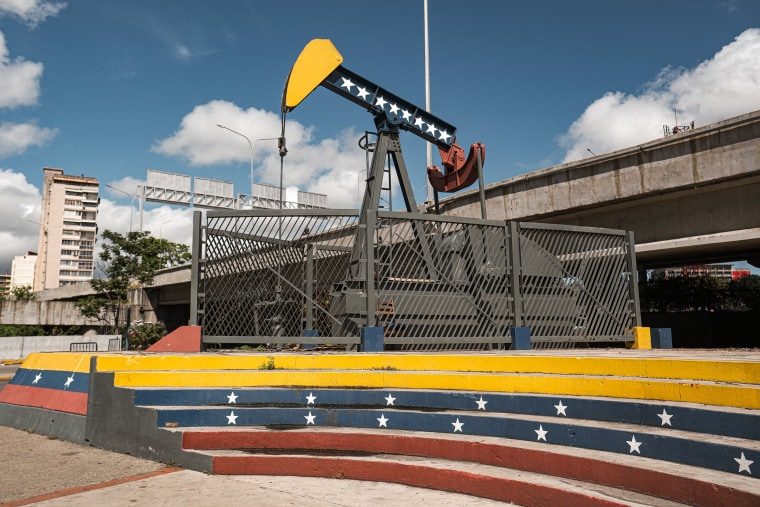
Chevron has confirmed it will broaden its activities in Venezuela following President Donald Trump’s recent announcement of a deal to develop the country’s oil reserves and give the Pentagon a share in the profits. As the sole major U.S. oil company with significant operations in Venezuela, Chevron revealed it has been allocated more land in the Orinoco Belt where it is already active. Over the next five years, the company plans to invest over $7 billion, aiming to more than double its production to approximately 600,000 barrels per day.
Mike Wirth, CEO of Chevron, stated, “Chevron’s history in Venezuela spans more than a century, and our expanded position reflects our confidence in the country’s deep resource potential.”
Venezuela is home to the world’s largest proven oil reserves, with over 303 billion barrels, according to OPEC’s 2025 Annual Statistical Bulletin. In comparison, Saudi Arabia holds 267 billion barrels.
Despite holding immense reserves, Venezuela’s daily oil production is just over 1 million barrels due to its decaying energy infrastructure and international sanctions. This contrasts starkly with Saudi Arabia’s 10 to 11 million barrels per day and the U.S. production of nearly 14 million barrels per day.
Chevron’s expansion comes on the heels of a U.S. deal with Venezuela, part of a broader partnership that involves North American Blue Energy Partners, NABEP. U.S. Energy Secretary Chris Wright attended a ceremony in Venezuela where agreements with companies like Chevron and Eni were signed.
Wright remarked, “President Trump’s mission in Venezuela is straightforward. The mission is to bring peace, freedom, opportunity, and prosperity to the people of Venezuela.”
While the White House has expressed enthusiasm for these developments, energy experts voice skepticism. Restoring Venezuela’s oil industry will likely require years and significant investment due to its current state.
The deal has also raised legal concerns, particularly regarding whether acting Venezuelan president Delcy Rodríguez has the authority to grant NABEP control over several oil fields for a century, totaling reserves of 65 billion barrels. Future governments, in both Venezuela and the U.S., might overturn this agreement.
Critics argue the deal is illegitimate because it was made with a government seen as dictatorial. According to Ian Vásquez from the Cato Institute, the agreement was reached under pressure from the U.S., without the approval of Venezuela’s National Assembly as required by the country’s constitution.
Amidst these controversies, Chris Wright defends the arrangement, describing it as a “massive win.” He asserts it will bring resources to the surface, enhancing life for Venezuelans and supporting American energy needs.
Historically, U.S. oil companies have navigated challenging relationships in Venezuela. The country’s oil industry was nationalized in 1976, creating Petróleos de Venezuela S.A., and again in 2007 under President Hugo Chávez, when foreign companies were pushed into state-controlled joint ventures. Chevron complied, but others like Exxon and ConocoPhillips saw their assets seized after refusing to cooperate.
The agreement supposedly aims to lower U.S. gasoline prices, yet analysts caution significant efforts are needed to address Venezuela’s rundown infrastructure. Recovery could take years and require billions in investments. As of now, the national average for regular gasoline stands at $4.12 per gallon, a notable increase from the previous year.
 The Cost of Challenging Beijing
 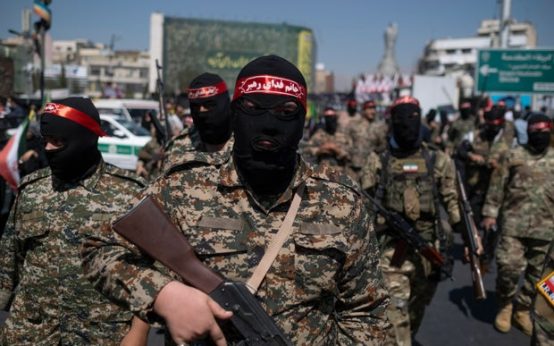 Tensions Escalate in Iran Conflict as Global Leaders Weigh Options
 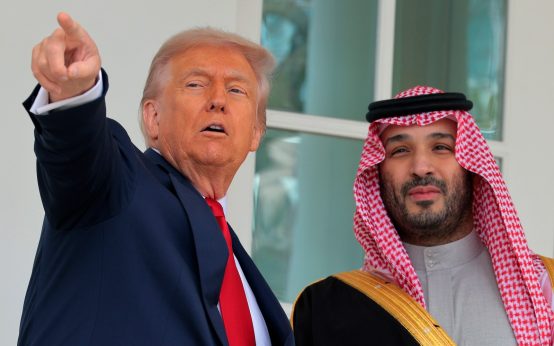 White House Approves F-35 Sales to Saudi Arabia Amidst Regional Tensions
  Inside the Secret Deals Powering the President’s Push to Deport Migrants to Countries Not Their Own
  Navigating the Challenges of Third-Country Deportations
  Midair Altercation on Bangladesh to London Flight