
The U.S.-Venezuela oil agreement stands as a significant geopolitical triumph for the United States. With more than 65 billion barrels of oil secured, the plan aims to enhance American energy dominance, decrease gas prices, support Venezuela’s economic resurgence, and eliminate foreign rivals from the Western Hemisphere.
Venezuela, which initiated the formation of the Organization of the Petroleum Exporting Countries in 1960, now threatens to disrupt the cartel, countering the long-standing manipulation of global oil prices. In a statement, President Trump proclaimed it “The biggest oil deal in world history.” He asserted that the agreement more than doubles American oil reserves, significantly bolsters the oil supply, and promises substantial reductions in gas prices, benefiting Americans and promoting Venezuela’s path to success and prosperity.
The Caracas government granted 100-year concessions for 17 oil fields, known to contain around 65 billion barrels, to North American Blue Energy Partners, a private oil firm. Secretary of State Marco Rubio remarked that the deal exemplifies President Trump’s assertive foreign policy, securing stable reserves and low-cost oil within the hemisphere, while lowering domestic gas prices. Rubio highlighted that it would bring close to $100 billion in private investment, create thousands of well-paying jobs, and stimulate Venezuela’s economic rebuild.
Most resources previously managed or exploited by Russian and Chinese entities or allies of the Chavista regime will now operate under North American Blue Energy Partners. For over 25 years, these resources benefited adversaries such as Cuba, Russia, China, and Iran. That era has ended. The historic agreement aligns with the 2025 National Security Strategy that emphasizes “restoring American energy dominance (in oil, gas, coal, and nuclear) and reshoring vital energy components.”
The strategy document asserts that affordable and plentiful energy will spur job creation in the U.S., lower costs for businesses and consumers, advance reindustrialization, and help maintain a competitive edge in advanced technologies.
Venezuela’s democratic transition aligns with this oil agreement. The U.S. remains committed to supporting democracy, actively working toward crucial reforms within Venezuela’s legal and political landscape, facilitating dialogue for improvements in the Supreme Court, enhancing the National Electoral Council, and advocating the liberation of political prisoners while building credible institutions.
The oil agreement, marked by signatures from Rubio and Secretary of Defense Pete Hegseth, signifies a turning point in energy security. The Pentagon’s vital involvement underscores that energy concerns go beyond commercial interests and enter the realm of national security.
The deal presents mutual benefits. Venezuela attracts investments, revives its oil sector, creates employment, and nurtures growth. Conversely, the U.S. gains energy security and reduced market prices. Despite ongoing challenges, including the impact of Chavista socialism on Venezuela’s democracy and infrastructure, the U.S. is working under the new Monroe Doctrine to restore both economic and democratic frameworks.
Following Operation Absolute Resolve, which saw the capture of Nicolas Maduro, Venezuela’s transformation progresses. Achievements include the confiscation of highly enriched uranium, the capture of a Hezbollah operative, dismantling the Tren de Aragua gang’s leadership, reestablishing diplomatic ties with Israel, and freeing over 1,000 political prisoners.
This oil agreement aligns with a strategic plan comprising stabilization, rebuilding, and democratic transition for Venezuela. Although challenges remain, these transformative times indicate enhanced security, freedom, and prosperity across the Americas.
About the Author: Arturo McFields, a journalist in exile, served as Nicaragua’s ambassador to the Organization of American States. A former member of the Norwegian Peace Corps, he attended the National Defense University’s Security and Defense Seminar, as well as a leadership course at Harvard.
 The Cost of Challenging Beijing
 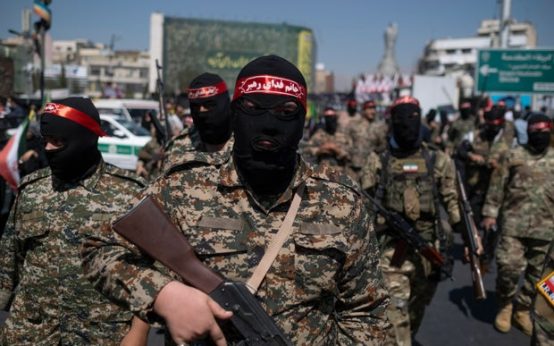 Tensions Escalate in Iran Conflict as Global Leaders Weigh Options
 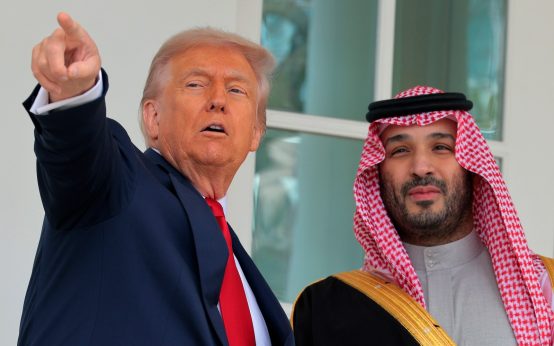 White House Approves F-35 Sales to Saudi Arabia Amidst Regional Tensions
  Inside the Secret Deals Powering the President’s Push to Deport Migrants to Countries Not Their Own
  Navigating the Challenges of Third-Country Deportations
  Midair Altercation on Bangladesh to London Flight