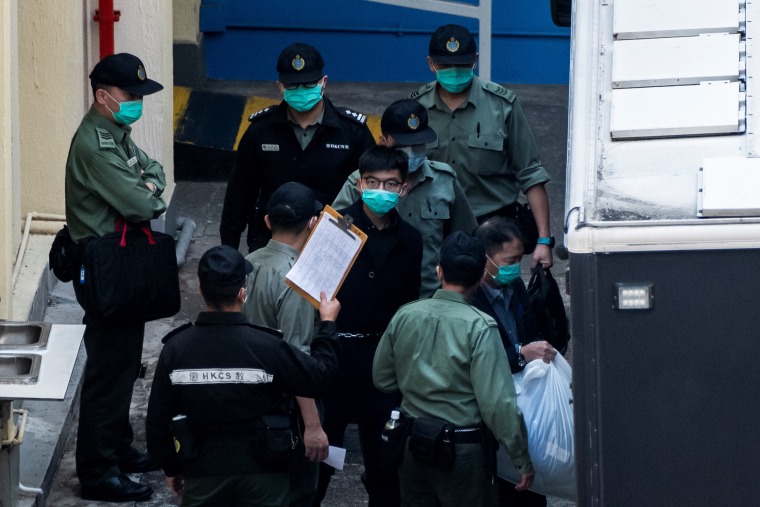
In Hong Kong, Joshua Wong, a noted pro-democracy activist, entered a guilty plea on Wednesday for conspiracy to collude with foreign forces, violating a law imposed by Beijing aimed at safeguarding national security. This legislation has significantly constrained the territory’s vibrant pro-democracy movement.
Wong, who first gained prominence as a student leader, faces his second prosecution under the national security law implemented in 2020. This law was a response to the extensive anti-government demonstrations that occurred the previous year. Wong, dressed in a blue shirt, appeared slimmer during his court appearance.
He is awaiting sentencing, with penalties ranging from three to ten years of imprisonment, or potentially life imprisonment if deemed a serious offense. A guilty plea usually means a reduced sentence. Wong was already serving a prison term of four years and eight months for pleading guilty in another national security-related case involving an unofficial political primary. Prior to his arrest in June 2025 for the collusion offense, he was expected to be released the following January.
Critics argue Wong’s case exemplifies the authorities’ resolve to suppress dissent and stifle civic activism. Conversely, Beijing views Wong as a supporter of Hong Kong independence, a position they strictly oppose.
Wong, 29, was charged alongside Nathan Law and other activists for requesting foreign entities, from July 1 to November 23, 2020, to impose sanctions or engage in hostile actions against Hong Kong and China. Prosecutors highlighted Wong’s promotion of Law’s online petition via Facebook, urging digital forensic companies not to cooperate with police following the law’s enactment. One such company subsequently announced discontinuation of its digital intelligence sales to Hong Kong and China.
The prosecution claims Wong and Law had long intended to lobby internationally for democratic self-determination. Their activities asking foreign forces to enforce sanctions against Hong Kong and China commenced before the security law’s implementation. Following the law’s enactment, Law and others continued efforts globally, engaging foreign politicians and initiating petition campaigns. Wong endorsed these international endeavors from Hong Kong, utilizing foreign media and sharing Law’s content on social media, aiming to urge sanctions and hostile measures, according to the prosecution.
In a work report, Wong reportedly disclosed his role in terminating forensic software supply to police, contacting foreign companies to caution about cooperation with the Chinese government, among other activities.
Before the hearing, a supporter encouraged Wong with a shout of “Hang in there.” His friend Louis Lee mentioned Wong’s life in prison involved reading, studying, learning guitar, and exercising. Lee expressed hope to see Wong freed soon.
Wong acquired public attention in 2012 as a high school student protesting against national education in Hong Kong schools, later becoming a leading figure in the 2014 Occupy Movement. He co-founded Demosisto, a political party, in 2016 with other young activists, including Law, elected as Hong Kong’s youngest legislator that year.
During the leaderless protests in 2019, Wong sought international support for democracy, notably from the U.S. Beijing criticized these actions, accusing him of seeking foreign interference. Demosisto disbanded when the security law was enacted in 2020, deemed essential for maintaining stability.
Numerous activists, including media mogul Jimmy Lai, have been imprisoned under the same law. Some fled to democratic countries like the U.S. and U.K. Hong Kong authorities announced rewards of 1 million Hong Kong dollars ($127,600) for information leading to the arrests of Law and other overseas activists.
 Inside the Secret Deals Powering the President’s Push to Deport Migrants to Countries Not Their Own
  Navigating the Challenges of Third-Country Deportations
 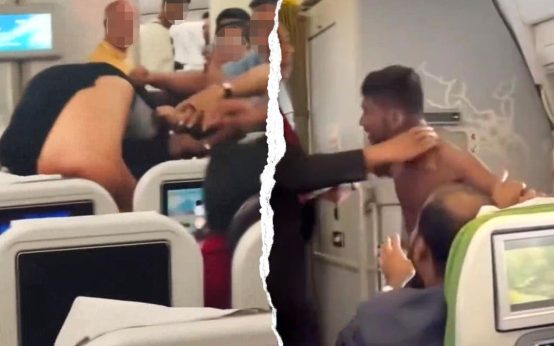 Midair Altercation on Bangladesh to London Flight
 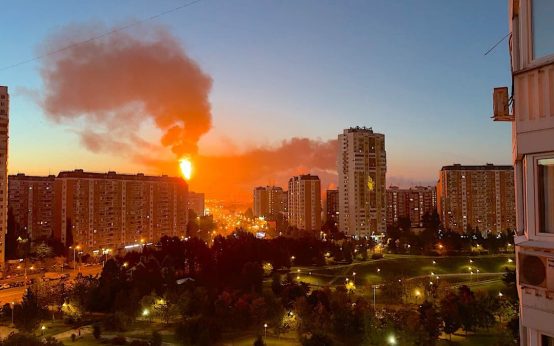 Ukraine Missile and Drone Barrage Hits Russia Amidst Elections
  U.S. Strategic Goals Remain Unmet Amid Prolonged Conflict
  New Photos Reveal Damage from Iranian Strikes in the Middle East